

From Summer Capital to Heritage Trail
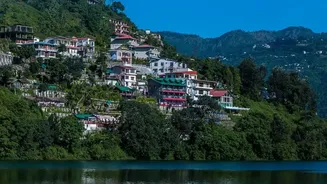
Long before it became a beloved holiday spot for modern travellers, Nainital served as the summer capital of the United Provinces during the British Raj. Established as a hill station in 1841 by a sugar trader named P. Barron, the town quickly grew into
a popular retreat for colonial officials escaping the heat of the plains. This legacy is etched into the very fabric of the town, from its grand buildings to the layout of its promenades. Exploring this history doesn't mean forgoing a paddle on Naini Lake; it means enriching the experience, adding a layer of historical context to the stunning natural beauty. The story of Nainital is written on its slopes, in the architecture of its manors and the quiet dignity of its old institutions.
A Walk Through the Pages of History
The best way to start is on The Mall, the road connecting Mallital (the head of the lake) and Tallital (the foot). While today it’s a bustling hub of shops and restaurants, its origins are as a colonial promenade. From there, a short walk leads to one of Nainital's oldest and most significant colonial structures: St. John in the Wilderness Church. Established in 1844, this neo-Gothic church stands quietly amidst a deodar forest. It was named by the Bishop of Calcutta, Daniel Wilson, who had to stay in an unfinished cabin in the forest when he fell ill while visiting to lay the church's foundation. Inside, a brass plaque memorialises the victims of the devastating 1880 landslide that reshaped parts of the town.
The Grandeur of the Governor's House
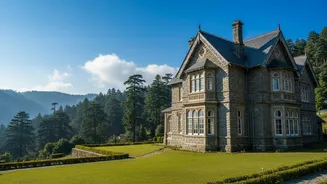
No exploration of colonial Nainital is complete without a visit to the Raj Bhavan, formerly known as Government House. Built between 1897 and 1899, this magnificent structure was designed to be the summer residence of the Governor. Modelled on a Scottish castle with a Victorian Gothic style, the sprawling estate covers over 200 acres and includes a 113-room mansion and a vintage golf course. While it now serves as the residence for the Governor of Uttarakhand, parts of the estate are open to the public for guided tours. Walking through its grand halls, with their wooden staircases and chandeliers, offers a vivid glimpse into the pomp and circumstance of the British Raj.
The Legacy of a Legendary Hunter
For a more personal connection to the colonial era, a visit to Gurney House is essential. This was the residence of the famous hunter-conservationist and author, Jim Corbett. Situated on the Ayarpatta slopes, the charming cottage was built in 1881 and is still a private residence, though the owners often welcome visitors by appointment. The house was constructed using materials from the Corbetts' previous home on Alma Hill, which was damaged in a landslide. Many of Corbett's personal belongings and furniture remain, offering a tangible link to the man who immortalised the Kumaon region in his writing before he left for Kenya in 1947.
Weaving a Colonial Itinerary
Integrating these historical sites into your trip is surprisingly simple. A morning can be dedicated to a heritage walk starting from Mallital, covering St. John in the Wilderness Church and then heading up towards the Raj Bhavan. An afternoon could be spent visiting Gurney House after a customary boat ride on the lake. Many of these colonial-era buildings are clustered around the main town, making them accessible on foot. This approach allows you to experience both facets of Nainital: the lively, recreational hub centered around the lake and the quieter, more contemplative town that lives in the architecture and stories of its past. This dual exploration provides a far richer understanding of what makes this hill station so unique.