







A Trail of Mysterious Stones
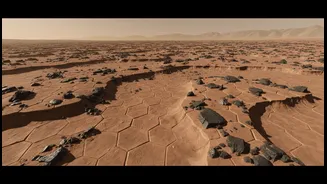
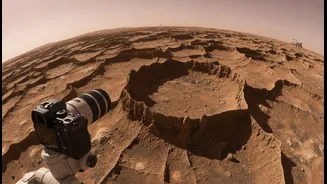
While exploring Gale Crater, NASA's veteran rover, Curiosity, recently came across a peculiar sight: a landscape littered with dark-toned rocks, ranging in size from small pebbles to larger cobbles. This isn't the first time a Mars rover has stumbled
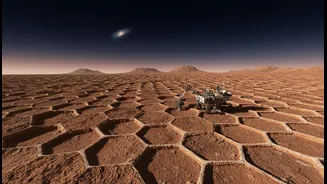
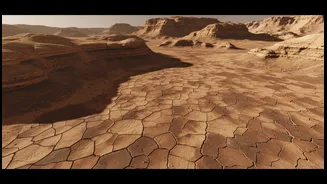
upon such objects, but their presence in this specific location, near an unusual honeycomb-like geological formation, has reignited a debate about their origin. The fundamental question that has scientists scratching their heads is whether these dark stones are native to Mars or if they are extraterrestrial visitors. The answer could rewrite a chapter of the Red Planet's history.
The Nickel Clue
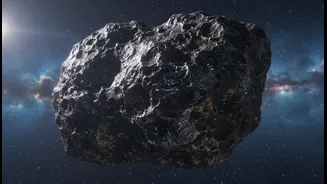
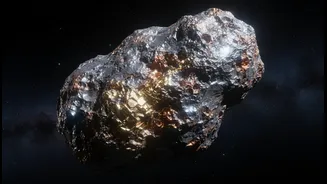
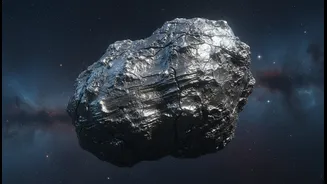
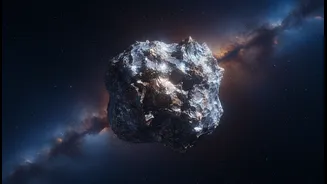
The plot thickens with the presence of nickel. Earlier missions and previous analyses by Curiosity have shown that some of these dark 'float' rocks contain surprising amounts of this metal. On Earth and Mars, nickel is generally a trace element on the surface; most of it sank to the planets' cores during their formation. Its most common surface appearance is within iron-nickel meteorites that have survived their fiery descent through the atmosphere. Because of this, finding nickel-rich rocks scattered on the Martian surface has often led to the logical conclusion that they are meteorite fragments. It has become a reliable indicator for identifying rocks that came from space. However, the story of these particular cobbles may not be so simple.
Deepening the Puzzle
The latest finds from Curiosity are making the straightforward meteorite explanation feel less certain. The rover's science team is now actively questioning if all the dark-toned cobbles can be meteorites. There are other possibilities being considered. Could these rocks have broken away from higher, unknown geological layers on Mars and simply rolled downhill? Were they perhaps flung into Gale Crater from a distant impact event elsewhere on the planet? Each possibility has profound implications. If they aren't meteorites, it means there are Martian geological processes that can create nickel-rich rocks on the surface, a process that is currently not well understood and less common than on Earth. This would introduce a new variable into how scientists analyze the planet's composition.
A Tale of Two Rovers
Interestingly, Curiosity's robotic cousin, the Perseverance rover, has been conducting its own nickel investigation in Jezero Crater. In a different context, Perseverance discovered bedrock with the highest concentrations of nickel ever seen in Martian rock, not just in loose stones. In that case, the nickel was found alongside organic carbon and sulfur in an area that was once waterlogged, suggesting it could have been available for ancient microbial life. While the context is different—Perseverance found nickel embedded in ancient river delta sediments, whereas Curiosity is looking at loose cobbles—it highlights that nickel on Mars has a complex story. It can arrive from space, but it also appears to be part of the planet's own chemical history, potentially one linked to water and even the ingredients for life.
What's Next in the Investigation?
To solve the mystery of the dark cobbles, Curiosity is using its full suite of analytical tools. The rover has been using its ChemCam laser to zap the rocks and analyze their chemical makeup, specifically targeting pieces like a cobble nicknamed 'Cortadera'. Scientists will compare the detailed composition of these newly found rocks to the established signatures of known iron-nickel meteorites and to the typical composition of Martian crust. The goal is to find a definitive match. Are these rocks just like the other meteorites found across Mars, or do they have a unique chemical fingerprint that points to a Martian origin? The answer is locked inside these dark, silent stones, waiting for a rover to uncover it.