



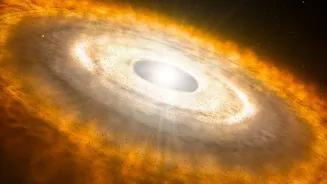
A New Cosmic Quest Called PUFFINS
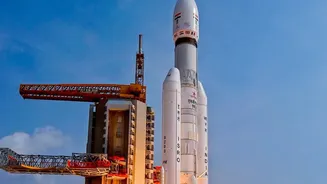
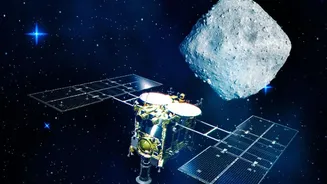
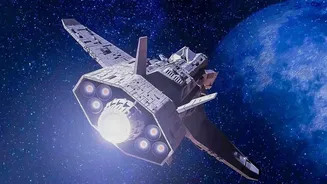
NASA has selected a new $20 million mission named PUFFINS, which stands for Polarimetry in the Ultraviolet to Find Features in Interstellar dust. Scheduled to lift off in 2030, this small satellite telescope is designed to do something remarkably difficult:
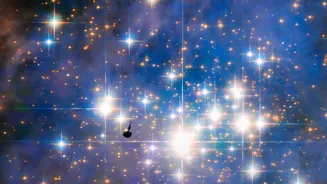
study the properties of tiny dust particles that exist in the vast emptiness between stars. These grains are the raw materials that form stars and planets, but they are notoriously hard to analyse. PUFFINS will employ a technique called ultraviolet spectropolarimetry, which has not been used in space for nearly three decades, to get a fresh look at how this cosmic dust interacts with light. The data it gathers is expected to fill a major gap in our knowledge about the structure and evolution of the universe.
The Scientist Guiding the Mission
At the helm of this important mission is Dr. Ramya Manjunath Anche, a Bengaluru-born astronomer who will serve as the principal investigator. This top scientific role puts her in charge of the entire project, from its development and launch to the ultimate analysis of its findings. Dr. Anche is currently an assistant research professor at the University of Arizona's Steward Observatory. Her selection for this leadership position is part of NASA's Astrophysics Pioneers program, an initiative specifically created to support and elevate early-career scientists by giving them opportunities to lead major space missions.
From Bengaluru to the Stars
Dr. Anche's journey to leading a NASA mission is a story of dedication that began in Devanahalli, near Bengaluru. She was born and raised in the area, a region known for its contributions to India's own space ambitions. Her academic path in India included enrolling at the prestigious Indian Institute of Astrophysics in 2012, which laid the foundation for her future work. She later moved to the United States in 2021 to continue her research, quickly establishing herself as a promising mind in her field. Her rapid ascent to principal investigator of a NASA mission highlights not only her personal brilliance but also the world-class scientific training and passion nurtured within Indian institutions.
Why This Interstellar Dust Matters
The focus of the PUFFINS mission might sound niche, but interstellar dust is fundamental to understanding how everything in the cosmos comes to be. These microscopic grains, some smaller than 50 nanometres, are the building blocks of planets and stars, including our own. They influence how light travels through space and hold clues about the chemical makeup of the galaxy. By studying how starlight is altered as it passes through this dust, scientists can learn about the material involved in planetary formation and the magnetic fields that shape our Milky Way. In essence, PUFFINS is on a quest to understand our cosmic origins by examining the very stardust from which we are made.
A Milestone for Global Science
Dr. Anche's leadership is a significant milestone that extends beyond the scientific community. The mission is a collaborative effort involving researchers from the University of Arizona, the McDonald Observatory, and other institutions worldwide. Notably, it includes key partnerships with Indian institutions, specifically the Inter-University Centre for Astronomy and Astrophysics (IUCAA) in Pune and the Indian Institute of Astrophysics (IIA) in Bengaluru. This collaboration underscores the interconnected nature of modern space science and provides a powerful example of how Indian scientific talent is contributing to and leading some of the world's most advanced research projects, inspiring a new generation of scientists both in India and across the globe.