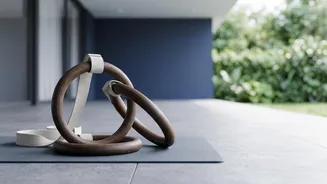









From Stable to Unpredictable
A standard dip on parallel bars is a fantastic exercise for your chest, shoulders, and triceps. The bars are fixed, providing a solid, predictable surface to press from. Ring dips swap that stability for a pair of free-moving gymnastics rings. This simple
change transforms the exercise entirely. The rings can move in any direction, forcing your body to work constantly to prevent them from shaking or drifting apart. This isn't just a harder version of a dip; it's a completely different challenge that requires not just strength, but immense control and stability. The result is a movement that builds a more resilient and coordinated upper body.
The Power of Instability
So, why is this added instability so beneficial? When you perform an exercise on an unstable surface, your nervous system goes into overdrive. To keep you from losing balance, it recruits a larger number of muscle fibers, particularly the smaller, often-neglected stabilizer muscles around your joints. Studies comparing ring dips to bar dips have shown higher muscle activation in the shoulders and rotator cuff. This forced recruitment means you're getting more out of every single repetition. Your body isn't just pushing your weight up; it's actively fighting to control the movement from start to finish, leading to greater strength gains and improved joint health over time.
Muscles That Do the Work
Ring dips are a powerhouse for upper body development. The primary movers are the pectoralis major (chest), triceps brachii (back of the arms), and anterior deltoids (front of the shoulders). These are the same muscles worked in a standard dip. However, the instability of the rings calls a whole team of supporting muscles into action. Your rotator cuffs work tirelessly to stabilize the shoulder joint, your core engages to prevent swinging, and even your forearms get a significant workout from gripping and controlling the rings. This comprehensive muscle engagement is what makes ring dips such an efficient exercise for building functional, real-world strength.
How to Perform a Ring Dip Correctly
Proper form is non-negotiable with ring dips to maximize benefits and minimize injury risk. Start in the 'support position' at the top, with arms fully extended, shoulders pressed down (not shrugged), and the rings close to your body. Initiate the movement by lowering your body slowly and under control. Keep your elbows tucked in, and descend until your shoulders are slightly lower than your elbows. From the bottom, press forcefully back up to the starting support position, ensuring a full lockout with your elbows straight. A key technique is to turn your hands out slightly at the top, which externally rotates the shoulder into a more stable and powerful position.
Common Mistakes to Avoid
The freedom of the rings can invite bad habits if you're not careful. The most common mistake is letting the shoulders roll forward at the bottom of the dip, which puts unnecessary stress on the joint. Another frequent error is flaring the elbows out wide instead of keeping them tucked close to the body. Many people also perform the reps too quickly, relying on momentum rather than muscular control. This not only reduces the effectiveness of the exercise but significantly increases the risk of injury. Focus on slow, deliberate movements, especially during the lowering phase of the dip.
Your Path to the First Rep
Very few people can perform a perfect ring dip on their first try. It's an advanced skill that requires a solid foundation of strength. The best way to start is by mastering the top support hold, simply holding yourself up with straight arms for 20-30 seconds. Once you're stable, you can move on to 'negative' dips, where you start at the top and lower yourself as slowly as possible. Using resistance bands for assistance is another excellent way to build strength through the full range of motion. By focusing on these progressions, you can safely and effectively build the stability and power needed to conquer this challenging and rewarding exercise.