


An Arctic Giant Awakens
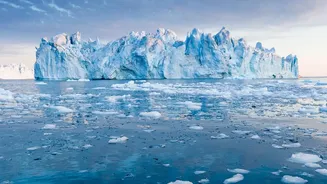
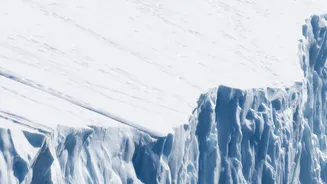
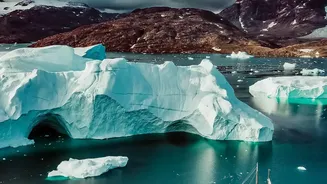
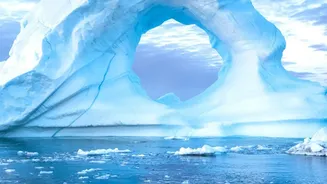
On August 4, 2026, researchers monitoring satellite data watched years of anticipation turn into reality. A massive slab of ice, covering 76 square kilometres and up to 150 metres thick, broke away from the floating tongue of the Petermann Glacier in northwest
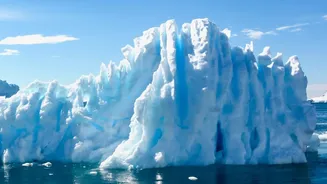
Greenland. This calving event, as it's known, created a tabular iceberg so large it's being called an 'ice island'. To put its scale into perspective for an Indian audience, the newly formed iceberg is larger than the entire city of Chandigarh. This event is Petermann Glacier's most significant ice loss in over a decade, dating back to a similar major break in 2012. Scientists, who had been tracking growing cracks in the glacier for years, captured the separation using Europe's Copernicus Sentinel-1 mission, which can see through clouds and darkness, making it ideal for monitoring the remote polar regions.
The Gatekeeper's Role
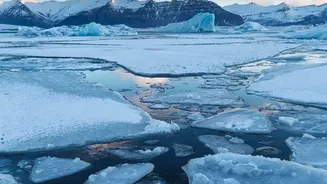
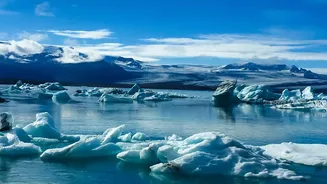
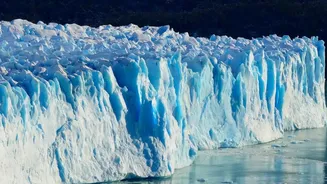
Petermann is one of Greenland's largest and most important glaciers. It ends in a long, floating platform of ice known as an ice tongue or ice shelf, which juts out into the Arctic Ocean. These ice shelves act as a natural buttress, or a brake, slowing the flow of the immense land-based ice sheet behind them from sliding into the sea. When a large piece of this floating shelf breaks off, the buttressing effect is weakened. While the melting of a floating iceberg does not directly or significantly raise sea levels—much like an ice cube melting in a glass of water—the real danger lies in what happens next. With the 'cork' partially removed from the bottle, the glacier behind it can accelerate its march to the ocean, dumping vast quantities of land-based ice into the water and directly contributing to global sea-level rise.
A Pattern of Accelerated Loss
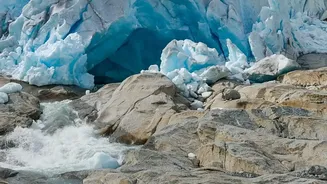
This event is not an isolated incident but part of a troubling pattern for Petermann and the wider Arctic. The glacier experienced other major calving events in 2010 and 2012, and this latest break confirms a trend of instability. The comparison to 2020 is critical; that year saw the collapse of the Milne Ice Shelf in the Canadian Arctic, and this new event at Petermann is the largest since. The Arctic is warming more than three times faster than the global average, and the consequences are becoming undeniable. Warmer ocean waters are melting the ice shelves from below, while higher air temperatures melt them from above, creating a dual assault that weakens their structural integrity. Scientists are already watching other large cracks on what remains of Petermann's ice tongue, predicting that two more large ice islands could break away in the near future, further shrinking this critical buffer.
Why It Matters for India
An event in the distant Arctic may seem remote, but its consequences are global and have direct implications for India. The primary impact is sea-level rise. The Greenland Ice Sheet holds enough frozen water to raise global sea levels by over seven meters if it were to melt completely. As glaciers like Petermann accelerate their discharge, they contribute significantly to the rising waters that threaten India's extensive 7,500-kilometre coastline. Major coastal cities, including Mumbai, Kolkata, Chennai, and Cochin, are highly vulnerable to increased flooding and the eventual submersion of low-lying areas. Beyond direct sea-level rise, the massive influx of freshwater from melting ice into the North Atlantic can potentially disrupt major ocean currents, such as the Atlantic Meridional Overturning Circulation (AMOC). Scientists are studying how these changes could affect global weather patterns, including the stability and intensity of the Indian monsoon, a system vital to the subcontinent's agriculture and economy.