

What is the PRIMA Mission?
PRIMA represents the dawn of a new category of NASA missions known as Probe Explorers. Recommended by the U.S. National Academies of Sciences, this new class is designed to bridge the gap between smaller, more focused missions and colossal, multi-billion-dollar
flagship observatories like the James Webb Space Telescope (JWST). With a project cost cap of approximately $1.2 billion, missions like PRIMA can tackle high-priority scientific questions without the massive budgets of their larger counterparts. Following a detailed evaluation of concept studies, NASA selected PRIMA to advance to its next development phase. If it passes all technical and budget reviews, the telescope is targeted for a 2033 launch for a planned five-year mission. This decision places PRIMA at the forefront of a new, more agile and cost-effective strategy for cosmic exploration.
A New Eye on the Cosmos
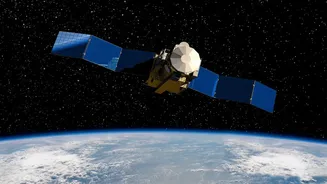
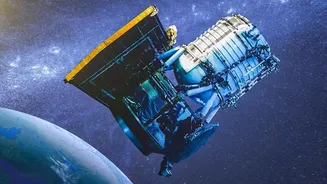
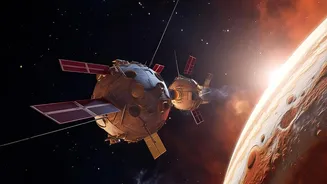
At the heart of PRIMA is a 1.8-metre (5.9-foot) telescope designed to see the universe in far-infrared light. This is a crucial part of the electromagnetic spectrum that remains largely unexplored, falling between the wavelengths observed by infrared space telescopes like JWST and those captured by ground-based radio telescopes. Much of the universe, including the cradles of stars and the cores of galaxies, is shrouded in thick cosmic dust that visible light cannot penetrate. Far-infrared light, however, can pierce through this veil. To achieve the required sensitivity, PRIMA's telescope and detectors will be cryogenically cooled to just a few degrees above absolute zero. This extreme cold prevents the telescope's own heat from overwhelming the faint signals from distant cosmic objects, giving it a massive sensitivity advantage over previous far-infrared missions like the Herschel Space Observatory.
Unlocking Cosmic Secrets
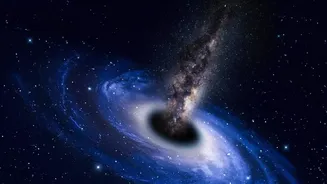
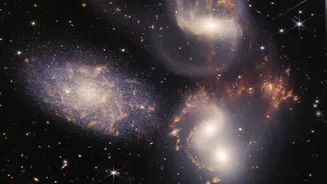
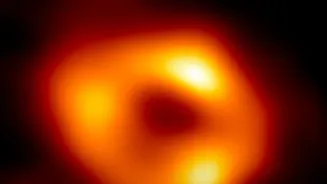
The scientific goals of PRIMA are as ambitious as they are fundamental. The mission will address a wide range of questions about how the universe came to look the way it does today. One of its primary objectives is to study the co-evolution of galaxies and the supermassive black holes at their centers. By observing star formation rates and black hole activity in the early universe, scientists hope to understand the remarkable link between these galactic components. PRIMA will also investigate the origins of planets. It aims to quantify the role of water in the formation of new worlds by studying the protoplanetary disks of gas and dust around young stars. Some of the key spectral lines needed to trace water are only visible in the far-infrared, making PRIMA uniquely suited for this task. Furthermore, the mission will create a comprehensive census of how cosmic dust and heavy elements have built up over time, providing a more complete picture of our cosmic history.
The Price of Discovery
The $1.2 billion cost cap for the PRIMA project covers its design, development, and implementation, but does not include the expense of launching the observatory into space. While this figure may seem enormous, it is a middle ground in the world of space astrophysics. For comparison, the James Webb Space Telescope cost roughly $10 billion at launch. The Probe Explorer class, which PRIMA inaugurates, was specifically created to enable transformative science at a more sustainable cost. The mission will be managed by NASA's Jet Propulsion Laboratory (JPL) and involves collaboration with several other NASA centers and international partners, including the space agencies of Germany, Canada, and Japan. By leveraging international expertise and proven technologies, NASA aims to deliver groundbreaking science that expands on the discoveries of its other great observatories, ensuring a comprehensive and multi-faceted exploration of the universe for years to come.