



A Galaxy Entering Middle Age
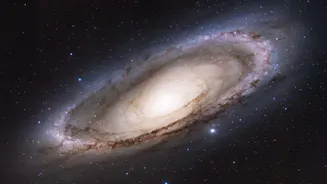
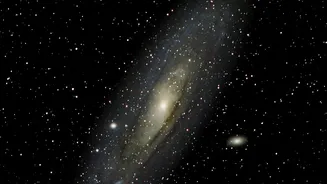
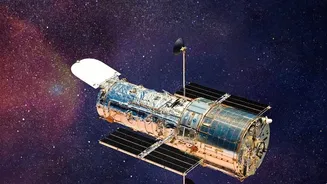
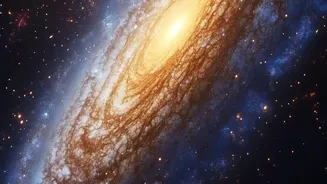
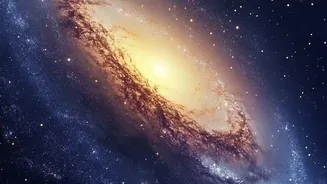
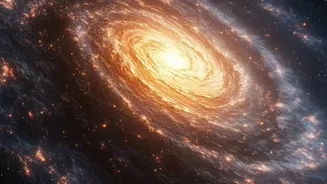
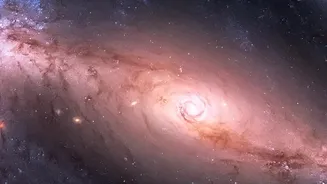
The Andromeda galaxy, a magnificent spiral of over a trillion stars located 2.5 million light-years away, is slowly running out of steam. According to a recent, incredibly detailed study using NASA's Hubble Space Telescope, star formation within our neighbor
has been steadily declining for the past 500 million years. The drop has become particularly sharp in the last 40 million years. Where it once churned out new stars at a respectable rate, its output has now plummeted to just a fraction of its former glory. Astronomers describe this process as a galaxy entering its 'middle age' — transitioning from a vibrant, active hub of creation to a more quiescent, settled state. This winding down isn't a sign of a sudden disaster, but rather the natural life cycle of a massive galaxy.
Reading the Stellar Fossil Record
To uncover this story, scientists undertook a monumental task: mapping the history of about 200 million individual stars across a huge swath of Andromeda's disk. They essentially treated these stars as a 'fossil record' of the galaxy's activity. The method relies on a simple principle: massive, young stars burn hot and blue, but have short lifespans, while older, less massive stars are redder and live for billions of years. By analyzing the color and distribution of stars in different regions, astronomers can create a timeline of when and where star birth was booming and where it has fizzled out. This cosmic archaeology revealed that the recent slowdown is most prominent in a vast, star-forming ring about 32,000 light-years from the galaxy's core, a region that was once a stellar nursery but is now growing quiet.
The Aftermath of a Cosmic Feast
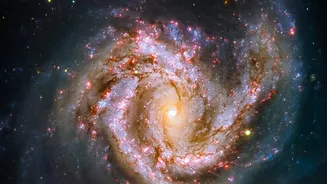
Andromeda's current slowdown is best understood as the calm after a storm. Research indicates that about two billion years ago, the galaxy experienced a colossal burst of star formation. This intense period of activity was likely triggered by a major cosmic event, such as merging with another smaller, gas-rich galaxy. Such mergers inject a fresh supply of gas and dust — the raw fuel for stars — compressing it and kick-starting a frenzy of creation. The current decline appears to be a natural winding down from that dramatic, earlier feast. Having burned through the most accessible fuel in that ancient starburst, the galaxy is now settling into a long and much quieter phase of its existence.
Not to Be Confused With the Big Collision
It's important to distinguish this gradual quenching from another, more famous event on Andromeda's calendar: its eventual collision with our own Milky Way. That galactic merger is still on track to happen in about 4.5 billion years. While the word 'collision' sounds violent, it won't be a demolition derby of stars. Galaxies are mostly empty space, so individual stars are incredibly unlikely to crash into each other. Instead, the two galaxies will pass through one another, their gravitational forces distorting their beautiful spiral arms and eventually merging them into a single, giant elliptical galaxy, sometimes nicknamed 'Milkomeda'. That future merger is a separate process from the internal, systemic slowdown of star birth that Andromeda is experiencing right now.
A Glimpse of Our Own Future
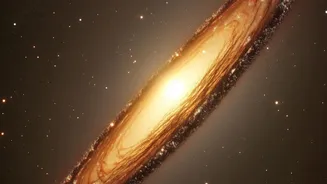
Studying Andromeda is more than just an academic exercise; it's like looking at a preview of our own distant future. As a large spiral galaxy, the Milky Way is expected to follow a similar evolutionary path. It too has a limited reservoir of gas in its vast halo, and once that fuel for new stars is used up or becomes too diffuse, our own galaxy will begin the same process of winding down. The vibrant, star-filled skies we know are characteristic of a galaxy in its active phase. By watching Andromeda's transition into a quieter, 'retired' state, we get a front-row seat to the long-term fate that awaits not just our neighbor, but likely our own cosmic home as well.