




The Solar System’s Deep Freeze
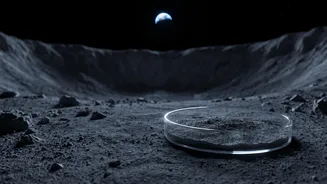
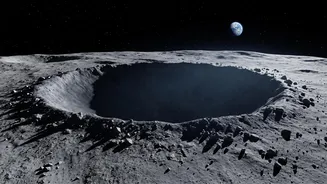
Near the Moon's poles are craters and depressions that sunlight has not touched for potentially billions of years. Known as Permanently Shadowed Regions (PSRs), these are some of the most frigid places in our solar system, with temperatures plunging to brutal
lows. Because the Moon has very little axial tilt, the sun never rises high in the sky at the poles, allowing even shallow craters and ridges to cast permanent shadows. For years, scientists have been interested in these PSRs as potential reservoirs of water ice. Now, it seems they might also serve as unlikely shelters for microbial life. The key is that these shadows don't just block heat; they also block the intense, sterilizing ultraviolet (UV) radiation from the sun, which was previously thought to be the biggest barrier to life surviving on the lunar surface.
Putting Earth's Toughest Life to the Test
A recent study led by scientists at NASA's Goddard Space Flight Center decided to investigate just how hospitable these dark pockets might be. They didn't send microbes to the Moon, but rather did the next best thing: they used detailed environmental maps from NASA’s Lunar Reconnaissance Orbiter to simulate the conditions in three regions near the lunar south pole. The team then modeled how five different types of Earth microbes, known for their resilience in spaceflight environments, would fare. These included bacteria like Deinococcus radiodurans, known for its radiation resistance, and fungi like Aspergillus niger, a common black mould that has surprisingly been found surviving on the exterior of the International Space Station.
Surprising Signs of Survival
The results were surprising. While the models showed that none of the microbes could actively grow or reproduce, some could survive for days, weeks, or potentially even months in a dormant state. Fungi, in particular, proved to be hardier than the bacteria. The black mould, Aspergillus niger, was the most resilient of the group, able to withstand even areas with some indirect UV exposure. Inside the most deeply shadowed craters, models suggested that all five tested microbes could survive for at least a week. This doesn't mean the Moon is teeming with life. Survival and growth are very different things. For the microbes to thrive, they would need a more habitable environment with essentials like liquid water, which the Moon lacks. However, the fact that they can persist in a dormant state, known as cryptobiosis, is a major discovery.
A New Challenge for Future Astronauts
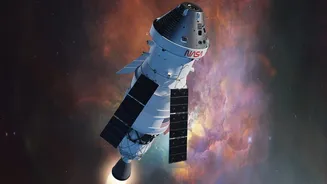
These findings have significant implications for the future of space exploration, especially for NASA's Artemis program, which aims to land astronauts near the lunar south pole. Humans are natural explorers, and they inevitably carry their microbial passengers with them. A single bootprint could deposit millions of bacteria onto the lunar soil. If these microbes can survive, they could contaminate the very areas scientists want to study for pristine, ancient lunar chemistry or signs of the origins of life. This concept is known as 'forward contamination', and it's a serious concern for planetary scientists. As planetary scientist Prabal Saxena, who led the study, explained, distinguishing between what was originally on the Moon and what we brought with us becomes much harder. Spacecraft landing on the Moon currently have no requirements for sterilization, which this study suggests may need to be reconsidered.