


Understanding Venus's Big Moment
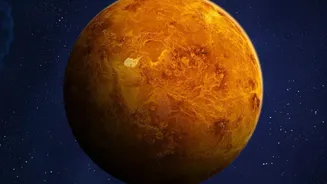
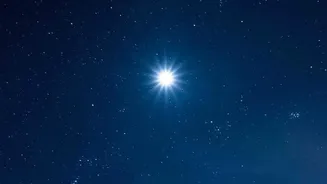
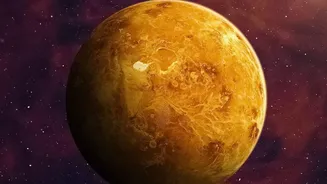
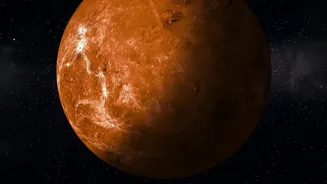
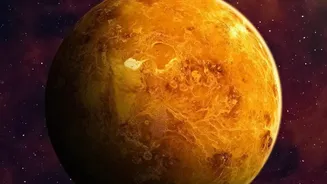
So, what exactly is an 'evening elongation'? In simple terms, it is the point in Venus's orbit where it appears farthest from the Sun in our sky. Because Venus orbits closer to the Sun than Earth does, we only ever see it trailing the sunset (as an 'Evening
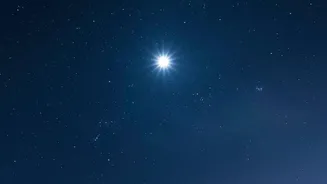
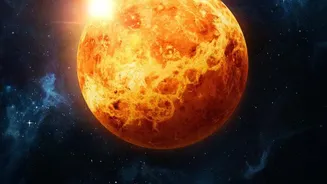
Star') or preceding the sunrise (as a 'Morning Star'). On August 15, 2026, Venus will reach its greatest eastern elongation. This means it will hang in the western sky for a longer time after sunset, looking like an exceptionally bright, unblinking star. Shining at a brilliant magnitude of -4.4, it will be the third brightest object in the sky, after only the Sun and the Moon, making it impossible to miss.
How to Spot Venus From India
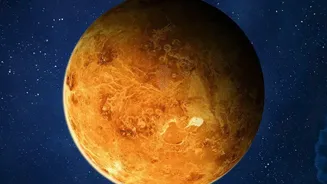
The good news is that you won't need any special equipment to see Venus. Its sheer brightness makes it easily visible to the naked eye, even from city suburbs with some light pollution. On the evening of August 15th, simply look towards the western sky about 30 to 60 minutes after sunset. As the twilight deepens, Venus will emerge as a dazzling point of light. For observers in India, the planet will be well-placed for viewing. If you do have a pair of binoculars or a small telescope, you’ll get an even better view. With optical aid, you might be able to see that Venus is not perfectly round; at its greatest elongation, it appears as a 'half-Venus', similar to a first-quarter Moon.
Bonus Show: The Perseid Meteor Shower
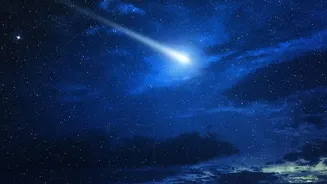
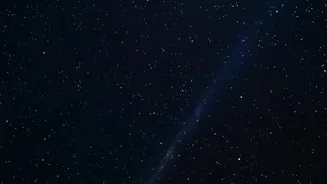
Venus isn't the only celestial attraction this August. The famous Perseid meteor shower is also active, peaking on the nights of August 12th and 13th. This annual event occurs as Earth passes through the trail of debris left by Comet Swift-Tuttle. This year's shower is particularly promising because the peak coincides with a new moon, meaning the skies will be dark and free from moonlight, creating ideal conditions for spotting meteors. While the peak is a couple of days before Venus's elongation, the shower remains active throughout mid-August, so you might catch a few shooting stars while you're out looking for the Evening Star. For the best chance, find a dark location after midnight and look towards the northeast.
More August Sky Treasures
While Venus commands the evening, early risers can catch a different show. A 'planet parade' featuring multiple planets will be visible in the pre-dawn sky around mid-August. Before sunrise, look to the east to spot Mars and Saturn, which will be visible to the naked eye. Jupiter and Mercury will also be in the morning sky, though lower on the horizon and more challenging to spot. Also, on August 28th, a partial lunar eclipse will be visible, where a portion of the Moon passes through Earth's shadow. August 2026 is truly a packed month for skywatchers of all levels.
Tips for the Best Viewing Experience
To make the most of these celestial events, a little preparation goes a long way. Find a viewing spot with a clear, unobstructed view of the western horizon for Venus and the eastern horizon for the morning planets. Try to get away from the glare of city lights, as darker skies will reveal more stars and fainter meteors. Give your eyes at least 15-20 minutes to fully adjust to the darkness; this will dramatically increase what you can see. Finally, be patient. Celestial events unfold slowly. Bring a comfortable chair, maybe a warm drink, and enjoy the cosmic performance.