







The Multi-Billion Dollar Agreement
In late July 2026, Johnson & Johnson announced a proposal to pay at least $5.5 billion to resolve the vast majority of lawsuits alleging its talc-based products caused ovarian cancer. This agreement aims to close the chapter on an estimated 76,000 claims
that have been consolidated in federal and state courts. Unlike the company's previous, failed attempts to use a subsidiary's bankruptcy to manage the claims, this settlement was negotiated more directly with the plaintiffs' lawyers. For the deal to be finalized, it requires a high participation rate, with at least 95% of eligible claimants needing to agree to the terms. If the threshold is met, payments could begin as early as 2027, marking a potential end to one of the largest mass tort litigations in recent history.
What the Settlement Can Resolve
For Johnson & Johnson, the primary goal of the settlement is to achieve financial and legal certainty. After more than a decade of costly litigation, which included some massive jury awards against it, the company is seeking to cap its liability and put the issue behind it. A successful settlement would resolve the claims of tens of thousands of women, providing a structured and predictable payout mechanism instead of the unpredictable nature of individual jury trials. For the claimants, it offers a guaranteed, albeit potentially smaller, compensation without the risk and delay of going to court, where victories are not assured. Essentially, the agreement is designed to resolve the financial and legal conflict for both sides, providing a pragmatic end to a protracted and expensive fight.
What a Settlement Cannot Prove
Crucially, a settlement is a business decision, not a scientific verdict or an admission of guilt. Johnson & Johnson has consistently maintained that its talc products are safe and do not cause cancer. Agreeing to pay billions does not change that public stance. A settlement allows the company to avoid the need to disprove the link between its products and cancer in tens of thousands of individual court cases. Likewise, the claimants, by accepting the settlement, do not have to meet the difficult legal burden of proving that talc specifically caused their cancer, a challenge highlighted by recent court rulings. The agreement effectively sidesteps the central scientific question that has fueled the entire litigation, opting for financial resolution instead of a definitive legal or factual finding.
The Unresolved Scientific Debate
The core of the lawsuits has always been the alleged link between talc and cancer, specifically ovarian cancer and mesothelioma (a cancer linked to asbestos). Plaintiffs have argued that talc particles can travel to the ovaries and cause inflammation, or that the talc itself was contaminated with asbestos, a known carcinogen. However, the scientific community remains divided. Some studies have suggested a weak association, while larger, prospective studies have often found no significant link. Regulatory bodies also have differing classifications. This scientific ambiguity is a key reason the litigation has been so complex. A judge recently questioned plaintiffs' ability to provide admissible evidence that talc specifically caused their cancer, casting doubt on many cases. The settlement, therefore, comes at a time when the legal and scientific foundations of the claims were facing increased scrutiny.
The End of an Era for a Household Product
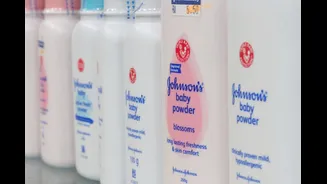
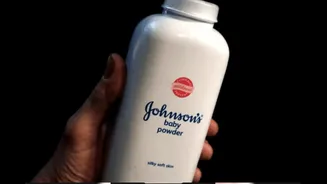
Regardless of the settlement's outcome, the controversy has already prompted major changes. Citing a decline in sales and what it called "misinformation" about the product's safety, Johnson & Johnson discontinued the sale of its talc-based baby powder in the U.S. and Canada in 2020, followed by a worldwide halt in 2023. The company has since switched to a cornstarch-based formula for all its baby powders sold globally, including in India. This move effectively retired an iconic product that had been a staple in households for generations. The decision underscores the immense pressure from both the public and the ongoing litigation, even as the company continues to defend the safety of the original product. The era of J&J's talc-based powder is over, concluded by market forces and legal battles rather than a scientific consensus.