



The First Cautious Step
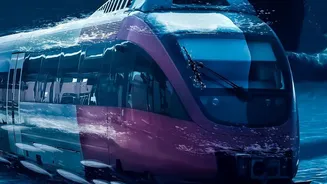
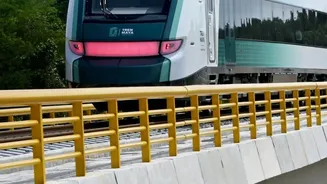
The South Western Railway's Mysuru Division has officially commenced field trials for a Vande Bharat Express on the proposed Bengaluru-Mangaluru route. This isn't just a routine check; it's a highly specialized technical assessment to determine if the semi-high-speed
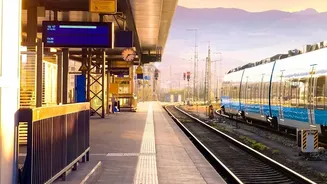
train can safely operate on this notoriously difficult line. A specially manufactured 20-car Vande Bharat rake, equipped with an Automatic Emergency Braking (AEB) system, arrived from the Integral Coach Factory in Chennai for these tests. Personnel from the Research Designs and Standards Organisation (RDSO) are on board to scrutinize every detail, from braking and acceleration to stability, under real-world conditions. These trials, scheduled to continue for several days, represent the first concrete move to evaluate the feasibility of a service that has been anticipated for years.
The Ghat Section Conundrum
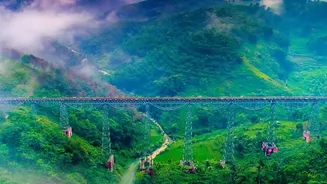
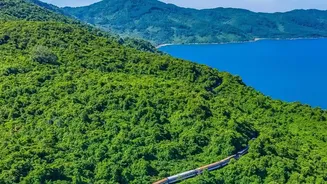
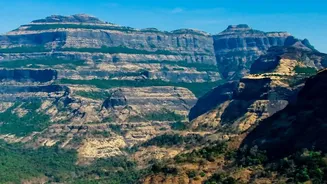
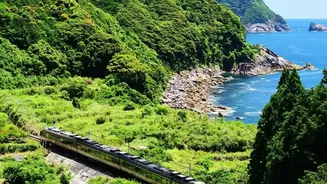
The entire project hinges on one critical 55-kilometre stretch: the Sakleshpur-Subrahmanya Road ghat section. This is one of the most technically demanding railway lines in the country, featuring a steep gradient of 1 in 50, meaning the track rises one metre for every 50 metres travelled. The section is a complex web of 57 tunnels, 226 bridges, and over 100 sharp curves, making high-speed travel a significant engineering challenge. Currently, the maximum permitted speed is a cautious 30 kmph. Conventional trains require the help of 'banker' locomotives (additional engines) to be attached and detached, a time-consuming process that isn't practical for the seamless design of a Vande Bharat Express. This is why the trials are focused on testing the train's own ability to handle the terrain, particularly its advanced braking systems.
A Specially Engineered Solution
The Vande Bharat rake being used for these trials is not a standard model. It has been custom-built with an Automatic Emergency Braking (AEB) system specifically for this route. This safety feature is designed to automatically apply the brakes if the train exceeds the speed limit on the treacherous ghat section, reducing the risk of accidents on steep gradients. The entire Bengaluru-Mangaluru line was recently fully electrified, a prerequisite for Vande Bharat operations that took nearly two years to complete through the complex ghat terrain alone. The successful completion of these trials and subsequent safety clearances from the Commissioner of Railway Safety are mandatory before any commercial service can be considered.
The Promise of Faster Connectivity
Should the service get the green light, it promises to revolutionize travel between Karnataka's state capital and its primary coastal city. Currently, the journey by train can take anywhere from nine to twelve hours. A Vande Bharat service could potentially slash this travel time significantly, offering a faster, safer, and more comfortable alternative to road and existing rail options. This would be a major boon for business travelers, tourists, students, and families who frequently travel between the two economic hubs. While there has been some speculation about the final route and whether it might extend to Madgaon, Goa, or skip certain stations in Mangaluru, railway officials have clarified that the immediate focus is on ensuring the operational viability of the Bengaluru-Mangaluru connection.
Boosting Economic and Tourism Prospects
The introduction of a Vande Bharat service would have far-reaching economic implications beyond just passenger convenience. It is expected to provide a significant boost to the tourism industry in coastal Karnataka, making it easier for travelers from Bengaluru and beyond to access the beaches of Mangaluru, the temples of Udupi, and other regional attractions. Furthermore, the improved connectivity will foster closer ties between the IT and biotech hub of Bengaluru and the port-based economy of Mangaluru, potentially stimulating trade, commerce, and professional mobility. For the thousands who commute for work and education, a reliable, high-speed link would be a game-changer, strengthening the economic and social fabric of the entire region.