







A Strategic Shift, Not a Sell-Off
Recent statements from officials have made it clear that while India is aggressively opening its space sector to private enterprise, the Indian Space Research Organisation (ISRO) itself is not for sale. ISRO Chairman V Narayanan and other officials have sought
to quell speculation, stating that the organisation will remain a government entity, central to the nation's space programme. The core idea is not to diminish ISRO's role but to redefine it. The goal is to create a more dynamic and expansive space ecosystem where ISRO acts as the brain, focusing on advanced research and development, while private companies provide the industrial muscle to scale up production and commercial services. This move is designed to boost India's share of the global space economy, which is targeted to grow from its current estimate of around $8.4 billion to $44 billion by 2033.
ISRO’s New Frontier: Research and Exploration
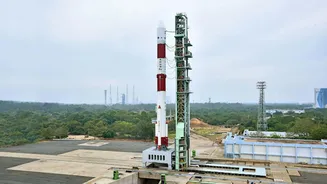
Under this new framework, codified in the Indian Space Policy 2023, ISRO will pivot away from the routine manufacturing of established systems like the Polar Satellite Launch Vehicle (PSLV). Instead, its vast scientific talent will be redirected towards pushing the boundaries of space technology. This includes spearheading frontier research, developing next-generation and reusable launch systems, and executing complex national missions. Key future projects like the Gaganyaan human spaceflight mission, the Bharatiya Antariksh Station (Indian Space Station) planned for 2035, and a crewed mission to the Moon by 2040 will remain squarely in ISRO’s domain. The organisation will continue to lead deep-space exploration and missions of strategic national importance, ensuring government control over critical capabilities.
Meet the New Enablers: IN-SPACe and NSIL
To make this new public-private model work, the government has created two key bodies. The first is the Indian National Space Promotion and Authorisation Centre (IN-SPACe). Acting as an autonomous single-window agency, IN-SPACe serves as the regulator and promoter for all non-governmental space activities. It's the gateway for private firms, authorising their launches, satellite establishments, and ensuring they have access to ISRO's facilities and expertise. The second body is NewSpace India Limited (NSIL), which functions as ISRO’s primary commercial arm. NSIL is tasked with commercialising the technologies developed by ISRO. It manages the production of operational launch vehicles and satellites by industry, provides launch services on a commercial basis, and markets space-related products globally.
What This Means for Private Space Companies
This policy shift is a massive opportunity for India's burgeoning private space sector, which has grown from a handful of startups in 2020 to over 450 today. Companies can now participate in end-to-end space activities, from building rockets and satellites to providing downstream data services. For example, a consortium including Hindustan Aeronautics Limited (HAL) and Larsen & Toubro is set to take over PSLV production. This model allows private innovation to flourish, as seen with companies like Skyroot Aerospace, which launched India's first private rocket, and Dhruva Space, which manufactures satellites. By transferring mature technologies, ISRO is essentially creating a ready-made market and supply chain, allowing private industry to manufacture at scale, innovate on existing platforms, and compete globally.