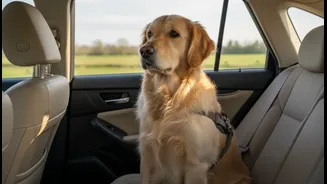




The Undeniable Danger of a Hot Car
First, let's be clear: cars are death traps in warm weather. Even on a seemingly mild day, the temperature inside a vehicle can skyrocket. Research shows that on a day that is 22°C outside, a car's interior can reach a deadly 47°C within an hour. A study
in the journal Pediatrics found that most of this temperature rise happens within the first 30 minutes. Cracking a window or parking in the shade makes almost no significant difference to this rapid heating. Dogs and cats cannot sweat like humans to cool down; they rely on panting. In the confined, oven-like environment of a car, panting is ineffective. Heatstroke can occur when a dog's body temperature reaches just 41°C, leading to organ failure, brain damage, and death in as little as six minutes.
Know Your Pet’s Specific Risk
Not all pets face the same level of risk. Certain factors dramatically increase susceptibility to heatstroke. Brachycephalic (flat-faced) breeds like Pugs, Bulldogs, and Persian cats are especially vulnerable because their shortened airways make panting less efficient. Puppies and senior pets, as well as those who are overweight or have pre-existing medical conditions like heart or respiratory disease, are also at much higher risk. Beyond physical traits, consider your pet’s temperament. An anxious animal’s stress can cause them to pant more, accelerating overheating. Before even considering leaving a pet in a car, you must have a deep understanding of their specific health and breed predispositions.
The Very Narrow 'Safe' Window
So, when could it ever be acceptable? Experts agree the conditions must be perfect, and the duration extremely short. Generally, it should only be considered for a maximum of five minutes when the outside temperature is below 21°C and above freezing. The weather should be overcast, not sunny, to prevent the greenhouse effect inside the car. The pet must be healthy, not a high-risk breed, and calm. The only truly safe scenario is if a responsible adult stays in the car with the pet, keeping the air conditioning or heating running. Any situation that involves you leaving the vehicle unattended, even for what seems like a moment, introduces a significant risk. A five-minute errand can easily be delayed, turning a low-risk situation into a tragedy.
A Modern Solution: The 'Pet Mode' Exception
Technology is offering a new, safer alternative. A growing number of electric vehicles (EVs) from brands like Tesla, Kia, and Nio now include a 'Pet Mode' or 'Dog Mode'. This feature allows the owner to lock the car while keeping the climate control system running, maintaining a set, safe temperature inside. Crucially, many of these systems also display a message on the car's large central screen, informing passersby that the pet is safe and the climate control is active. This prevents well-intentioned bystanders from breaking a window to 'rescue' a pet that is not in danger. However, manufacturers caution that this feature should only be used for short periods, and the owner is still responsible for their pet's safety, as a low battery or system error could disable the function.
Smarter Alternatives to Waiting
In almost every case, the safest choice is to find an alternative to leaving your pet in the car. If you're on a long road trip, plan your stops around pet-friendly rest areas. For quick errands, consider using a drive-thru for food or banking. If you're shopping, patronise pet-friendly stores that allow your companion to come inside with you. Another option is the 'buddy system'—bring a friend who can wait with your pet outside while you run your errand. Ultimately, the most foolproof alternative is often the simplest: if your destination isn't pet-friendly, leave your furry friend at home where they are guaranteed to be safe and comfortable.