






A Planet's Unbalanced Budget
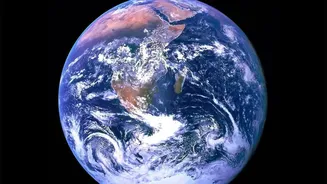
Think of Earth's climate like a bank account, but for energy. The planet receives energy from the sun (a deposit) and radiates energy back into space (a withdrawal). For a stable climate, these two must be in balance. However, due to increasing greenhouse
gases trapping heat, Earth now has a positive energy imbalance—it's taking in more than it lets go. This excess energy causes the planet to warm. While we've known about this imbalance for years, a new NASA dataset provides an unprecedented look at how this plays out at the poles, which act as the planet's primary radiators.
Two Years of Polar Surveillance
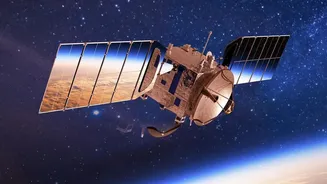
The new insights come from NASA's PREFIRE mission, which stands for Polar Radiant Energy in the Far-InfraRed Experiment. Since mid-2024, two CubeSats have been orbiting and measuring a specific type of energy: far-infrared radiation. This is a crucial part of the story because nearly 60% of the heat Earth vents into space is in this far-infrared form, yet it had never been systematically measured at the poles until now. The mission has now captured two full years of seasonal cycles, showing how the Arctic and Antarctic "breathe" heat throughout the year and providing a continuous record of these critical energy changes.
Why the Poles Matter So Much
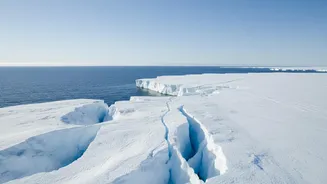
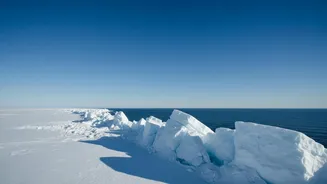
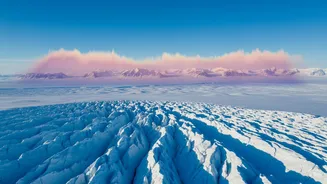
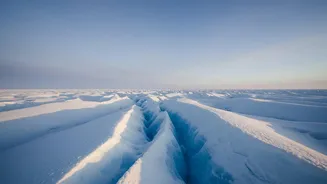
The polar regions are warming significantly faster than the rest of the planet, a phenomenon known as polar amplification. A key reason is the albedo effect: bright, white ice reflects solar energy back into space. As that ice melts, it exposes darker ocean or land underneath, which absorbs more heat, creating a feedback loop that accelerates warming. The PREFIRE data is designed to help scientists better understand the intricate processes—from cloud formation to ice melt—that govern how much heat is retained versus how much escapes, especially in these hyper-sensitive regions.
Global Consequences of Polar Heat
What happens in the Arctic and Antarctic doesn't stay there. The health of the polar regions directly influences global systems. Melting ice sheets contribute to sea-level rise, while changes in polar temperatures can disrupt the jet stream, leading to more persistent and extreme weather patterns in mid-latitude regions like North America and Europe. By providing more accurate measurements of the polar energy budget, the PREFIRE mission aims to improve climate models. Better models lead to more reliable forecasts for everything from future sea-level rise to changes in weather, shipping routes, and storm formation.