





The Familiar Smog Returns
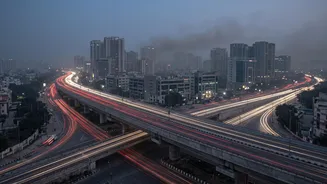
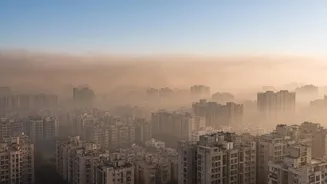
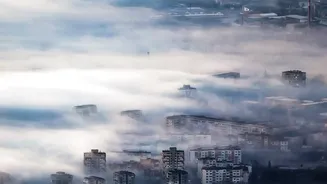
As the monsoon withdraws, Delhi-NCR is once again grappling with a significant dip in air quality. The first week of October 2026 has been the most polluted in three years, with the average Air Quality Index (AQI) settling at 171. While this falls in the 'moderate'
category, several monitoring stations across the region have already recorded 'poor' and 'very poor' air quality, with PM2.5 and PM10 particles being the dominant pollutants. This early spike is a clear indicator that the capital's months-long battle with toxic air has begun.
A Perfect Storm of Pollutants
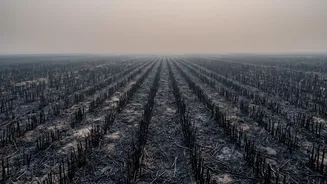
The sharp decline in air quality every winter is not a coincidence but the result of a convergence of factors. Meteorologically, lower temperatures and calmer winds in winter create a phenomenon called temperature inversion. This traps a layer of cool, dense air, along with pollutants, close to the ground like a lid, preventing them from dispersing. Compounding this is the smoke from large-scale paddy stubble burning in the neighbouring states of Punjab and Haryana, a practice farmers use to quickly clear fields for the next crop. While data from early October 2026 shows a significant reduction in farm fires in Punjab and Haryana compared to previous years, incidents are still being reported and remain a major concern.
Delhi's Own Contribution
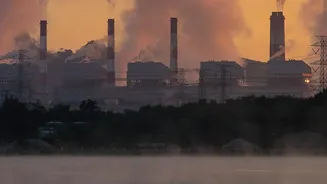
While stubble burning is a significant regional factor, Delhi's pollution is also intensely local. A 2018 study attributed 41% of the capital's air pollution to vehicular emissions, 21.5% to dust (from roads and construction), and 18% to industries. Heavy traffic, ongoing construction projects, and industrial exhaust continuously pump pollutants like PM2.5 into the atmosphere. These fine particles are particularly dangerous because they can penetrate deep into the lungs and even enter the bloodstream, leading to severe health issues.
The Government's Action Plan
To combat the annual crisis, the Commission for Air Quality Management (CAQM) has implemented the Graded Response Action Plan (GRAP). This is a set of emergency measures that are enforced in stages as the air quality worsens. Stage I, which came into effect on October 1, includes stricter enforcement of the 'No PUCC, No Fuel' rule, where vehicles without a valid Pollution Under Control Certificate can be denied fuel. It also involves strict dust control measures at construction sites and a ban on open waste burning. As pollution levels rise, subsequent stages can trigger more severe restrictions, such as banning certain categories of older vehicles, stopping construction activities, and implementing work-from-home policies.
Serious Health Risks and How to Protect Yourself
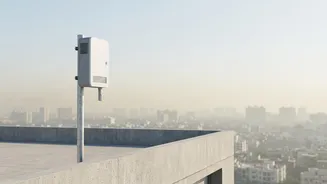
The health impact of Delhi's polluted air is severe and well-documented. Short-term exposure can cause coughing, throat irritation, and shortness of breath. Long-term exposure is linked to chronic conditions like asthma, bronchitis, reduced lung capacity, heart disease, stroke, and even cancer. Children are especially vulnerable, with studies showing irreversible lung damage in millions of kids in Delhi. To protect yourself and your family, it is crucial to monitor the daily AQI. On days with 'poor' or 'severe' air quality, limit outdoor activities, especially for children and the elderly. Using N95 or FFP2 masks when outside can help filter pollutants. At home, using air purifiers with HEPA filters can significantly improve indoor air quality. Staying hydrated and eating a diet rich in antioxidants can also help the body fight off the inflammatory effects of pollution.