






What Exactly Is a Beam Board?
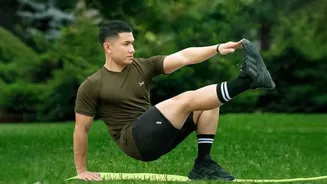
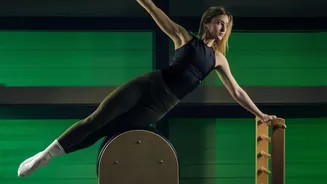
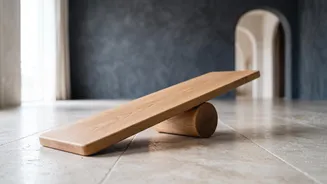
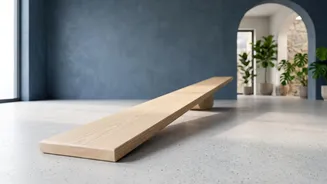
Imagine a gymnast's balance beam, but lower to the ground and designed for general fitness. That's the essence of a beam board. It’s a narrow, often slightly raised platform that creates an unstable surface for you to perform exercises on. While traditional
strength training happens on a solid floor, the beam introduces an element of instability. This simple change fundamentally alters the exercise, transforming a standard squat or plank into a dynamic stability challenge that engages your body from head to toe. The goal isn't just to complete the rep, but to control your body's position in space while doing so.
The Science of Stabilisation
The magic of the beam board lies in a principle called instability training. When you stand on a wobbly surface, your body must constantly make tiny adjustments to keep you from falling. This forces the recruitment of small, often-neglected stabilising muscles in your ankles, hips, and, most importantly, your core. Every repetition requires intense focus and communication between your brain and muscles, a process known as proprioception—your body's awareness of its position in space. By challenging this sense, you're not just working the major muscle groups; you're training your entire neuromuscular system to be more reactive and efficient.
Deeper Core Strength and Better Posture
Forget endless crunches. Beam board workouts build deep core strength in a functional way. Your core—which includes your abs, obliques, and lower back—has to fire continuously to keep you centered on the beam. This is different from isolated ab exercises, as it trains the muscles to work together as a stabilizing unit, just as they do in daily life. The result is a stronger, more integrated core that supports better posture. Many people find that consistent practice helps them stand taller and reduces the kind of back pain associated with weak postural muscles.
Injury Prevention and Enhanced Coordination
One of the most significant benefits of this type of training is injury prevention. By strengthening the stabilising muscles around your joints (like the ankles and knees) and improving your body’s positional awareness, you become more resilient to unexpected twists and turns in sports and everyday life. This enhanced proprioception means your body can react faster to prevent a fall or an awkward landing. Athletes often use instability training to gain a competitive edge, as it improves coordination and agility for dynamic movements. But these benefits are just as valuable for anyone who wants to move through their day with more confidence and control.
Getting Started on the Beam
Intrigued? Getting started is simpler than you might think. The key is to progress gradually. Begin with the most basic challenge: simply balancing. Try standing on the beam, first with two feet, then on a single leg. Hold the position and focus on keeping your body stable. Once you feel confident, you can introduce simple movements. Walk slowly from one end to the other, heel-to-toe. From there, you can attempt basic bodyweight exercises like squats, lunges, or even planks with your feet on the beam. Always prioritize control and form over speed. If you have access to a fitness professional, working with them can help ensure you’re performing the movements safely and effectively.