






A New Chapter in Green Mobility
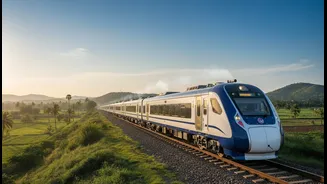
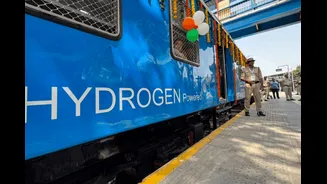
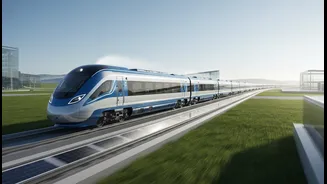
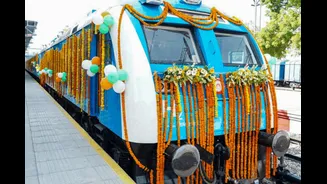
On July 17, 2026, India officially joined a select group of nations by launching its first hydrogen-powered passenger train. This 10-coach train, capable of carrying approximately 2,600 passengers, began operations on the 89-kilometre route between Jind
and Sonipat in Haryana. More than just a new piece of hardware, the train represents a significant achievement under the 'Aatmanirbhar Bharat' (Self-Reliant India) and National Green Hydrogen Mission initiatives. It signals a determined push to decarbonise one of the world's largest railway networks and reduce its dependence on fossil fuels, aiming for net-zero emissions by 2030.
How the Smokeless Engine Works
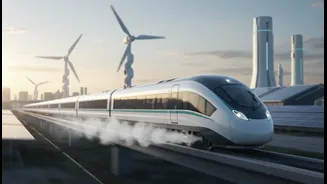
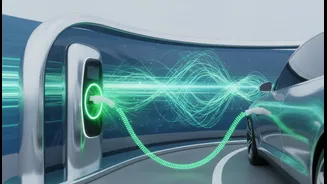
So, how does a train run on hydrogen? Instead of a diesel engine, the train uses an advanced onboard system called a fuel cell. This technology works like a mini power plant. Hydrogen, stored in high-pressure tanks on the train, is combined with oxygen drawn from the air. This electrochemical reaction produces electricity, which powers the motors that turn the wheels. The beauty of this process is its only byproduct: clean water vapour and heat. There is no smoke, no soot, and zero carbon emissions at the point of use, making it a powerful tool for improving air quality in densely populated rail corridors. Any excess energy generated, for instance during braking, is captured and stored in batteries to improve efficiency.
An Indigenous Powerhouse
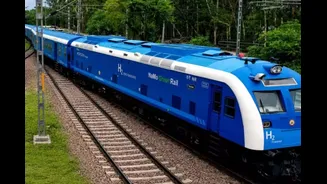
What makes this project particularly noteworthy is its scale and indigenous development. While other countries like Germany and China have deployed hydrogen trains, they are typically smaller, two or four-coach units. India's 10-coach configuration, comprising eight passenger cars and two power cars, is the largest of its kind in regular service globally. The train was developed through a collaboration of Indian entities. The project was led by Indian Railways, with the Research Designs and Standards Organisation (RDSO) handling technical specifications. Hyderabad-based Medha Servo Drives integrated the complex hydrogen propulsion system, retrofitting it onto an existing Diesel Electric Multiple Unit (DEMU) rake, while the Integral Coach Factory (ICF) handled the coach design.
Building an Entire Ecosystem
Running a hydrogen train requires more than just the train itself. A complete support ecosystem has been established. At Jind, Indian Railways has built the country's largest railway hydrogen storage and refuelling facility, capable of storing nearly 3,000 kg of hydrogen. This plant produces the hydrogen on-site through a process called electrolysis, which uses electricity to split water into hydrogen and oxygen. Given that hydrogen is highly flammable, safety was paramount. The train is equipped with numerous detectors for any potential leaks, heat, or flames, and the entire system, including the refuelling station, underwent a rigorous independent safety assessment by the German certification agency TÜV SÜD.
The Track Ahead
The Jind-Sonipat line will serve as a real-world pilot, providing crucial data on performance, costs, and maintenance in everyday operating conditions. The operational speed is set at 75 km/h for this section. The success of this project could pave the way for deploying more hydrogen trains, particularly on routes where electrification is geographically difficult or not economically viable, such as heritage and hill railways. Challenges remain, of course. The high initial costs of both the trains and the production of 'green' hydrogen (produced using renewable energy) are significant hurdles. However, as technology matures and production scales up, these costs are expected to fall, making hydrogen a more competitive alternative to diesel in the long run.