








The Great Data Rush
India is witnessing an unprecedented explosion in its data centre capacity. Driven by government data localisation policies, a surge in cloud computing, the rollout of 5G, and the dawn of mainstream AI, the demand for local data storage has skyrocketed.
Global tech giants and domestic conglomerates are pouring billions into building hyperscale facilities across the country. Recent industry reports highlight the sheer scale of this growth, with new capacity additions in the first half of 2026 showing a 59% annual increase. Projections indicate that India's total data centre capacity, which stood at 1.8 GW in mid-2026, could surge to over 7 GW by 2030. This expansion is essential for powering everything from UPI payments to OTT streaming and corporate AI strategies, positioning India as a crucial digital hub.
A Billion-Watt Problem
Data centres are the invisible engines of the digital economy, but their power consumption is anything but invisible. These facilities, packed with thousands of servers, require massive amounts of uninterrupted, high-quality electricity to run 24/7. Cooling these server farms alone accounts for a substantial portion of their energy use. An AI-focused 100 MW data centre can consume as much electricity as hundreds of thousands of Indian households. As India's capacity expands, the sector's electricity consumption is expected to jump from less than 1% of the national total to around 3% by 2030, making it one of the fastest-growing power consumers in the country. This intense, concentrated demand is putting immense pressure on local electricity grids, especially in existing data centre clusters like Mumbai, Chennai, and Hyderabad.
The Twin Challenges: Grid Stability and Clean Energy
The data centre boom exposes two fundamental challenges in India's energy landscape. The first is grid reliability. Data centres have zero tolerance for power cuts or voltage fluctuations, but India's grid, particularly outside major metropolitan areas, still struggles with stability issues and transmission bottlenecks. Frequent outages, even for a few seconds, can cause millions in losses and disrupt critical services. The second challenge is the source of the power. With a global push for sustainability, data centre clients are increasingly demanding that their data is powered by green energy. While India has made huge strides in renewable energy, hitting its 2030 non-fossil fuel capacity target years ahead of schedule, this power is intermittent. Solar and wind can't provide the constant, round-the-clock power that data centres require without robust energy storage solutions, which remain expensive and not yet deployed at scale.
Forging a Greener, Stronger Path
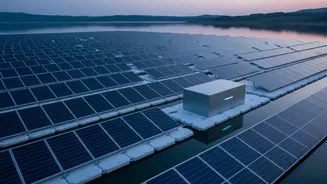
Addressing this energy trilemma—reliability, availability, and sustainability—is now a top priority for the industry and government. Data centre operators are actively exploring new solutions. One strategy is to move new projects away from strained city centres to new locations where power infrastructure can be planned from scratch. Many are also becoming 'anchor customers' for new renewable energy projects that combine solar, wind, and battery storage to provide 24/7 green power. These hybrid models are becoming increasingly competitive. Furthermore, innovations in liquid cooling and energy-efficient hardware are helping to reduce the overall power footprint of new facilities. For its part, the government is focusing on strengthening the national transmission grid, although progress has been slower than targeted. The success of these efforts will be crucial, as access to reliable and clean power is now seen as the key differentiator for new data centre investments.