
The Race to the First Run
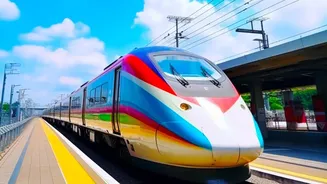
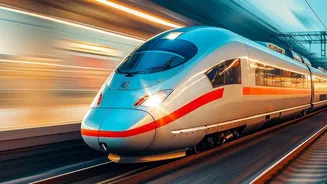
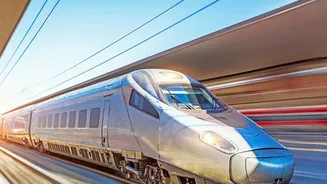
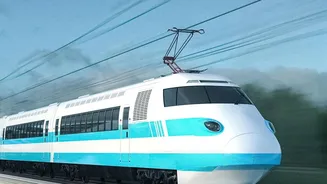
According to Union Railway Minister Ashwini Vaishnaw, the first high-speed train, which is being built indigenously, is expected to be on the tracks for testing by May or June of 2027. This crucial phase will take place on a section of the corridor in Gujarat,
where construction has been advancing at a rapid pace. The initial operational launch is slated for a stretch between Surat and Bilimora in August 2027. This phased rollout is a strategic approach to ensure all systems are tested and integrated smoothly before the entire 508-kilometre corridor becomes fully operational. Following a testing period of two to four months, the first section of the service is expected to be opened to the public.
A Monumental Undertaking
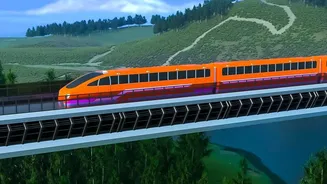
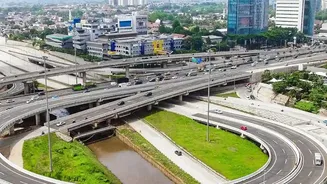
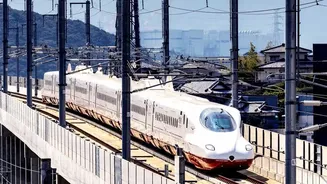
The Mumbai-Ahmedabad High-Speed Rail (MAHSR) project is an engineering feat of immense scale. The project involves constructing hundreds of kilometres of elevated viaducts, multiple river bridges, and even India's first undersea rail tunnel beneath Thane Creek. As of mid-2026, significant progress has been made, particularly in Gujarat. Reports indicate that pier work has been completed over more than 450 km, and viaducts—the elevated structures that will carry the tracks—have been erected over 350 km. The construction of stations is also well underway, with modern facilities planned for cities like Vadodara, Surat, and Thane. The project is being developed using Japan's renowned Shinkansen technology, designed for operational speeds of 320 km/h, which will slash travel time between the two financial hubs to just under two hours.
Overcoming Hurdles and Delays
The journey to this point has not been without its challenges. The project has faced significant hurdles, including initial delays in land acquisition, particularly in Maharashtra, and setbacks caused by the COVID-19 pandemic. However, construction has gathered substantial momentum in recent years. Officials report that work on critical sections, like the stretch from Surat to Vapi, is nearing completion. The project is divided into multiple phases, with the Gujarat portion seeing faster progress. The completion of the full corridor, connecting Mumbai's Bandra Kurla Complex (BKC) to Sabarmati in Ahmedabad, is anticipated by 2029.
Beyond Just Speed: The Economic Vision
The bullet train is more than just a fast mode of transport; it's envisioned as a catalyst for economic growth. The corridor is expected to create an economic zone spanning the two states, boosting commerce, trade, and tourism. By providing a swift and reliable connection between two of India's most important business centres, it aims to enhance productivity and create new opportunities for industries along the route. Furthermore, the project serves as a massive employment generator and a platform for technology transfer, with India now manufacturing key components indigenously. The successful implementation of the MAHSR is also expected to serve as a blueprint for seven other high-speed rail corridors planned across the country, fundamentally transforming long-distance travel in India.
What Lies Ahead on the Track to 2027
With much of the civil construction advancing, the focus is now shifting towards the complex tasks of track laying, electrification, and installing the advanced signalling systems. The National High Speed Rail Corporation Limited (NHSRCL) has installed thousands of masts for the overhead power lines and has begun laying the reinforced concrete track beds in several sections. Contracts have also been signed for specialised machinery required to maintain the rolling stock, ensuring the system's long-term reliability. The coming months will be critical as these different workstreams converge to prepare the Surat-Bilimora section for the historic trial runs, marking a definitive step towards India joining the elite club of nations with high-speed rail networks.