


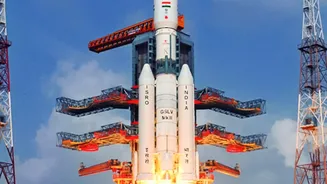
From Workhorse to Lifeline
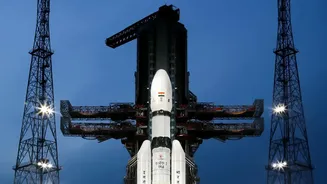
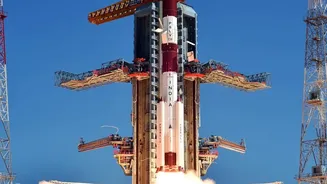
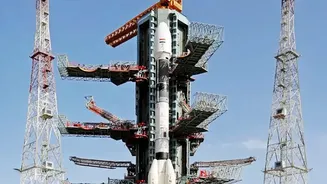
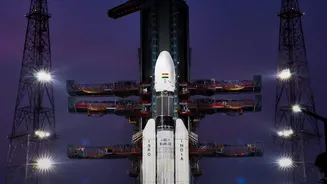
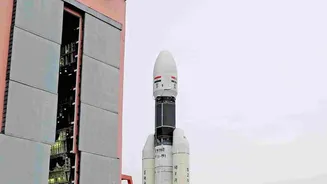
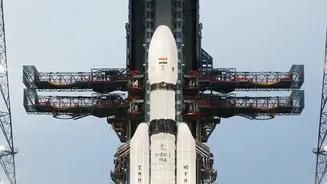
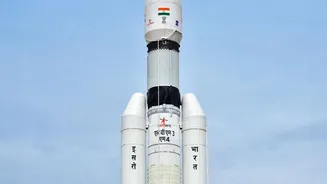
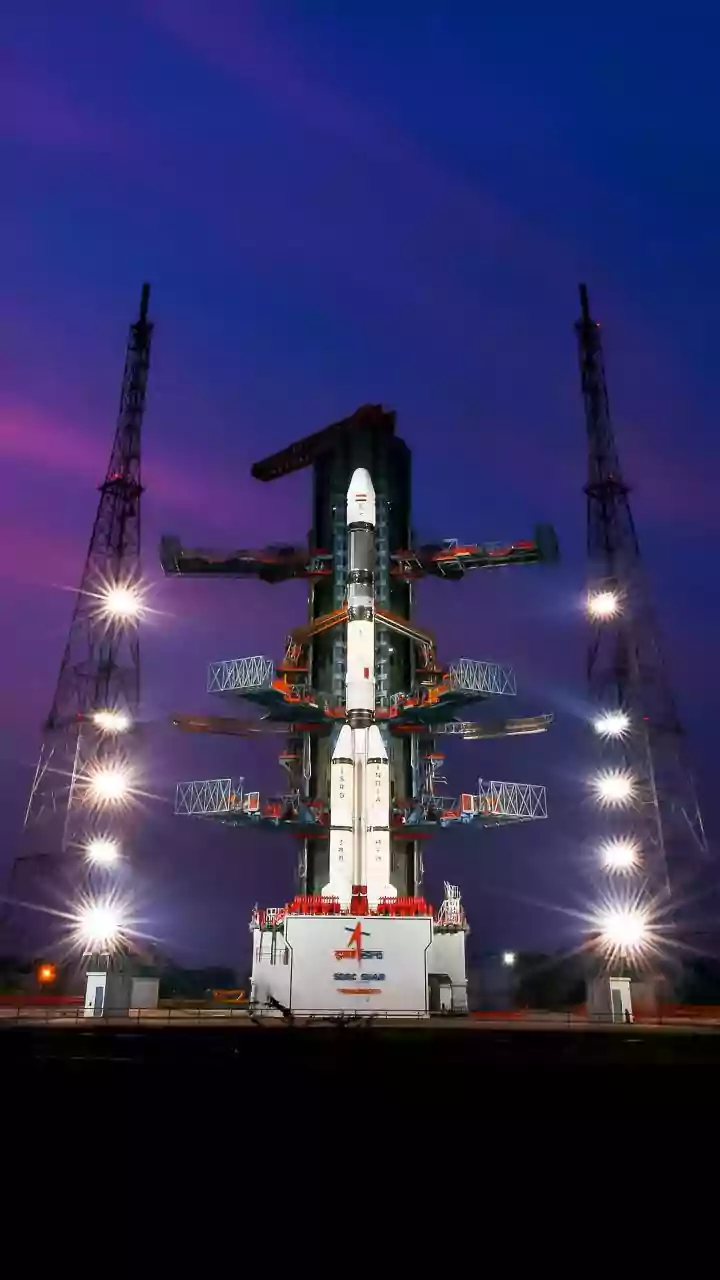
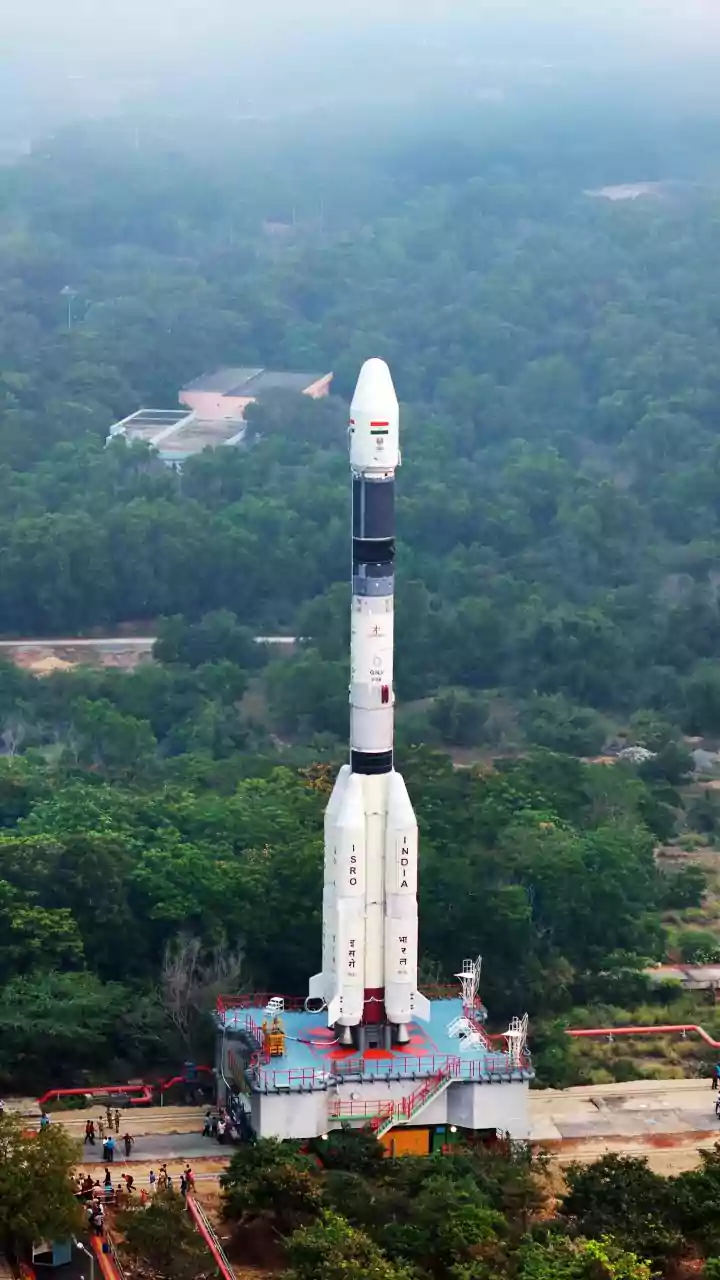
The launch vehicle for Gaganyaan is a modified version of ISRO's trusted Launch Vehicle Mark-3 (LVM3), the same family of rocket that successfully launched the Chandrayaan missions to the Moon. This powerful three-stage rocket is being re-engineered and christened
the Human-Rated LVM3, or HLVM3. The term 'human-rating' signifies an exhaustive process of ensuring every single component of the rocket is reliable enough for human travel. Unlike a satellite launch, where a failure results in a lost payload, a crewed mission demands safety above all else, protecting the astronauts at every stage of the flight. This involves re-configuring all systems on the LVM3 to meet much stricter safety and reliability standards.
Smarter, Safer Systems
A key part of the human-rating process involves upgrading the rocket's 'brain' and 'nervous system'. The HLVM3 will feature robust avionics with quadruple redundancy in its navigation and guidance computers. This means there are multiple backup systems ready to take over instantly if a primary system fails, a non-negotiable feature for crewed missions. The propulsion stages—solid, liquid, and cryogenic—have all undergone extensive ground testing to prove their reliability under the higher safety margins demanded by the programme. In July 2026, the government informed Parliament that the development and ground testing of all of the HLVM3's propulsion stages and structures were complete.
The Ultimate Safety Net: Crew Escape System
Perhaps the most critical safety feature added to the HLVM3 is the Crew Escape System (CES). This system is an emergency measure designed to act like an ejector seat for the entire crew capsule. In the event of an emergency on the launch pad or during the ascent, the CES uses a set of powerful, quick-acting solid motors to pull the crew module and its astronauts to a safe distance from the malfunctioning rocket. ISRO has developed and static-tested five different types of motors required for this crucial system. The performance of the CES has been successfully demonstrated in flight during the first Test Vehicle mission (TV-D1), which was a major milestone for the program.
Testing, Testing, and More Testing
Confidence in the HLVM3 is built through a relentless campaign of testing. Before the first uncrewed flight, ISRO is conducting a series of demonstrator missions. These include integrated air-drop tests (IADT) to validate the parachute-based deceleration system, and Pad Abort Tests to verify the Crew Escape System's function on the launch pad. According to an ISRO official in early October 2026, about 95% of the initial phase tests for the Gaganyaan programme have been completed. The first uncrewed experimental mission, which will validate many of these new technologies for the first time in an integrated flight, is targeted for the fourth quarter of 2026. This flight will be followed by further uncrewed missions before the first crewed flight is attempted.
Redundancy as a Rule
The core philosophy behind human-rating is redundancy. This means having backup systems for all critical components to ensure fault tolerance. For Gaganyaan, this applies not just to the rocket but to the entire mission architecture. Major facilities have been established, including a dedicated Gaganyaan Control Centre and a Crew Training Facility. ISRO has also worked out detailed recovery plans with the Indian Navy and Coast Guard to safely retrieve the crew after they splash down in the ocean. Every aspect of the mission, from the rocket's structural integrity to the ground support network, is being built with multiple layers of safety to ensure the well-being of the Indian 'Gaganauts'.