




The Zero-Gravity Crumb Problem
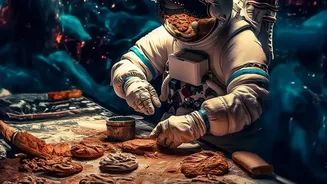
On Earth, crumbs from a piece of toast or a biscuit are a minor annoyance, easily swept away. In the microgravity of a spacecraft, they become tiny, free-floating projectiles. These particles don’t fall to the floor; instead, they drift indefinitely.
This poses a serious risk to both astronauts and equipment. A stray crumb could be inhaled, get into an astronaut's eye, or, more critically, clog delicate instruments, air vents, or computer systems. To prevent this, foods taken to space must be non-friable. This is why astronauts on the International Space Station often use tortillas instead of bread for sandwiches. For the Gaganyaan mission, Indian food scientists are meticulously designing meals that hold together, ensuring the safety of the crew and the integrity of the spacecraft.
Winning the War Against Spoilage
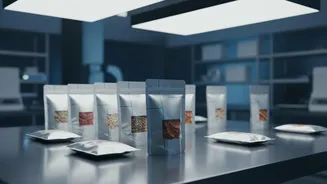
Space missions require food that can last for months, or even years, without refrigeration. This necessitates advanced preservation techniques to prevent spoilage from bacteria, mould, and enzymes. The Defence Food Research Laboratory (DFRL) in Mysuru, which has been at the forefront of developing India’s space menu, employs methods like irradiation and retort processing. Irradiation uses radiation to sterilise food, killing microorganisms without making the food radioactive. Retort processing involves heating food in its sealed package to a high temperature to ensure it's commercially sterile, much like canning but with flexible pouches. These methods ensure that the meals remain safe and nutritious throughout the mission, from launch to the astronauts' return to Earth.
Managing Moisture in Microgravity
Excess moisture is another significant concern. Not only does it contribute to spoilage, but water is also a heavy and precious resource in space. Many space foods are dehydrated or freeze-dried to make them lightweight and compact for transport. This process involves removing almost all the water content, which drastically reduces weight and extends shelf life. Astronauts then rehydrate these meals in orbit using a specific amount of water, often added directly into the food pouch. Controlling moisture also helps maintain the right humidity levels inside the spacecraft, a closed environment where excess water vapour can cause problems for equipment and comfort. The food developed for Gaganyaan astronauts will come in ready-to-eat, semi-solid, and dehydrated forms that can be easily reconstituted.
A Taste of Home in Outer Space
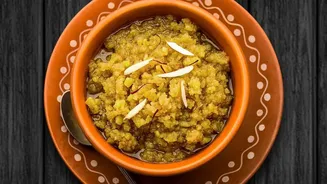
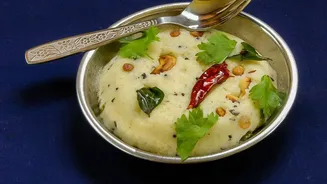
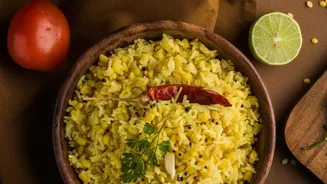
Beyond the technical challenges, providing familiar and comforting food is crucial for the psychological well-being of astronauts. A taste of home can be a powerful morale booster on long and demanding missions. Recognizing this, the DFRL and the ICMR-National Institute of Nutrition have curated a menu that features a variety of Indian dishes. The prospective menu for Gaganyaan includes items like vegetable biryani, moong dal halwa, idli sambar, egg rolls, and khichdi. These dishes are specially adapted for space — for instance, with reduced spice levels and a thicker consistency — to be palatable in microgravity, where astronauts often experience a dulled sense of taste. Special containers have also been developed to help the crew drink liquids like water and juices.