




The Race to Retrieve Martian Secrets
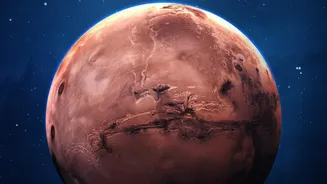
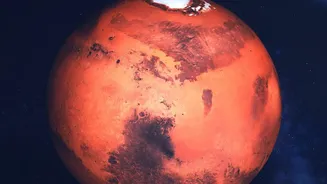
The headline refers to one of the most ambitious goals in modern space exploration: bringing pieces of the Red Planet to Earth for the first time. Two major, separate efforts are underway with a remarkably similar target date. The most prominent is the Mars
Sample Return (MSR) campaign, a complex partnership between NASA and the European Space Agency (ESA). Concurrently, the China National Space Administration (CNSA) is developing its own ambitious mission, known as Tianwen-3, which also aims to deliver Martian soil and rock to Earth in July 2031. Both missions are driven by the same monumental scientific prize: the chance to analyze Martian material in sophisticated laboratories on Earth, searching for clues about the planet's history and whether it ever harbored life.
NASA and ESA’s Interplanetary Relay
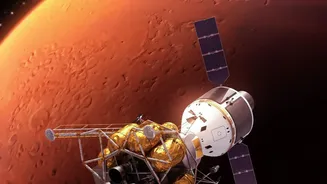
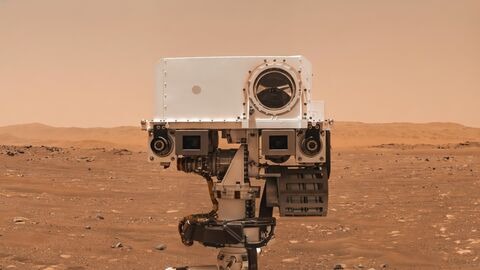
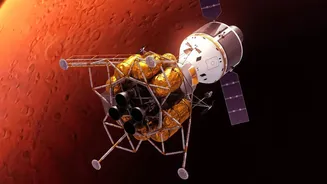
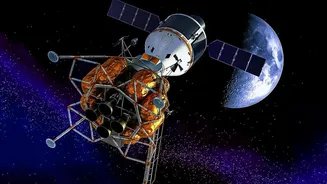
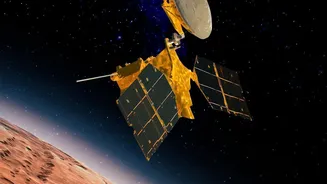
The NASA-ESA plan is a multi-stage, multi-spacecraft endeavor of incredible complexity. It begins with the Perseverance rover, which has been drilling and caching rock and soil samples in Jezero Crater since it landed in 2021. The next phase involves sending a Sample Retrieval Lander to Mars. This lander would deploy a system to collect the tubes left by Perseverance. Those samples would then be loaded into a small rocket called the Mars Ascent Vehicle (MAV), which would launch from the Martian surface—a first in human history—and place the sample container into orbit around Mars. Finally, an ESA-built Earth Return Orbiter would rendezvous with the sample container, capture it, and begin the long journey back to Earth. This architecture has undergone significant review to reduce cost and complexity, but the core 'relay race' concept remains the foundation of the mission.
China's Direct Approach
China's Tianwen-3 mission is taking a different, more consolidated approach. The plan involves two launches around 2028. One rocket will send a lander and ascent vehicle to Mars, while another will launch an orbiter and Earth-return module. The lander will gather its own samples—at least 500 grams—using a robotic arm and potentially a drilling system. After collection, the ascent vehicle will launch from the lander, meet up with the waiting orbiter, transfer the sample container, and the orbiter will then fly back to Earth. If successful, Tianwen-3 could potentially deliver its samples just ahead of the NASA-ESA mission, marking a major milestone for China's rapidly advancing space program.
The Ultimate Scientific Prize
Why go through all this trouble for a few handfuls of rock? The scientific payoff would be revolutionary. While rovers like Perseverance have amazing onboard instruments, they cannot compare to the cutting-edge laboratory equipment available on Earth. Scientists could analyze the returned samples for definitive biosignatures—fossilized evidence of ancient microbial life. The samples would also allow for precise dating of Martian geological events, transforming our understanding of how the planet formed and evolved. This knowledge is crucial for reconstructing Mars's past climate, determining when it lost its water, and assessing potential hazards and resources for future human missions. These samples would be studied for decades, much like the Apollo moon rocks, providing new discoveries for generations of scientists.
The Challenge of a 2031 Delivery
Targeting a 2031 arrival is incredibly ambitious. These missions push the boundaries of robotic and autonomous technology. Launching a rocket from another planet, performing an automated rendezvous in Mars orbit, and safely returning a payload to Earth are all monumental engineering challenges that have never been attempted together. Both the NASA/ESA and Chinese missions are operating on tight schedules that depend on favorable launch windows, which only occur every 26 months. Any significant delay in development or testing could push the return date back by years. Furthermore, budget constraints are a constant pressure on the multi-billion-dollar MSR campaign. While 2031 remains the target for China's mission, recent reviews of the NASA-ESA timeline suggest its return might slip to the mid-2030s. Regardless of the exact date, the decade is poised to be a pivotal one for planetary science.