




Explore Kumartuli, Where the Goddess Takes Form
Long before the festival's five main days, the magic begins in the narrow, clay-dusted lanes of Kumartuli in North Kolkata. This historic potters' quarter is where generations of artisans, known as 'kumors', give shape to the divine. Walking through their
workshops, you can witness the entire creation process, from straw-and-bamboo frames to the final, masterful painting of the goddess's eyes. Visiting Kumartuli offers a profound, behind-the-scenes look at the incredible craftsmanship that is the foundation of the entire festival. It’s an essential first stop to appreciate the artistry before you see the finished idols in the pandals.
Visit a Bonedi Bari for a Glimpse of Tradition
For a journey back in time, step away from the massive themed pandals and into a 'Bonedi Bari' or the ancestral home of one of Kolkata's old aristocratic families. These families have been celebrating Durga Puja for centuries, long before the community 'pandals' became widespread. Pujas at homes like the Sovabazar Rajbari, which started in 1757, are steeped in heritage. Here, the focus is on age-old rituals, the traditional 'ek-chala' style idol (where all deities are in a single frame), and a more intimate, spiritual atmosphere that contrasts with the public spectacle elsewhere. Many of these homes in North Kolkata open their gates to visitors, offering a unique and peaceful way to experience the festival's historical roots.
Experience the North-South Pandal Divide
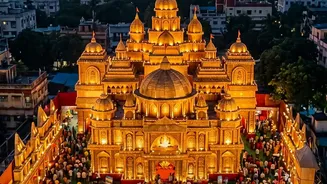
Pandal hopping is the quintessential Durga Puja activity, but not all pandals are the same. Kolkata has a distinct cultural divide between its northern and southern neighbourhoods. North Kolkata pandals, like the famous Bagbazar Sarbojanin, often prioritize tradition and nostalgia, showcasing classic idol designs and a deep-rooted community feel. In contrast, South Kolkata is the hub of innovation and grand themes. Here, pandals like Suruchi Sangha or Chetla Agrani are known for their spectacular, art-forward installations that can replicate world monuments or explore complex social issues. Experiencing both zones is key to understanding the festival's full creative range, from reverent tradition to ambitious public art.
Soak in the 'Adda' Culture at College Street
To understand the intellectual heart of Kolkata, a visit to College Street is a must, even amidst the festive chaos. This area, the world's largest second-hand book market, is home to the legendary Indian Coffee House. During Puja, it remains a vital hub for 'adda'—a cherished Bengali tradition of freewheeling, intellectual conversation. While the city celebrates, the spirit of adda continues here, offering a different kind of festive energy. It's a place to take a break from pandal hopping, sip on coffee, and soak in the cultural and literary atmosphere that defines Bengali life, a perfect blend of romance and intellect.
Witness the Immersion at the Ghats on Dashami
The festival culminates on Vijaya Dashami with the 'visarjan', or idol immersion. The city's ghats, the steps leading down to the Hooghly River, become a focal point of intense emotion and activity. Ghats like Babughat, Ahiritola Ghat, and Baje Kadamtala Ghat are prime locations to witness the grand processions. Accompanied by drum beats and chants of 'Bolo Durga Mai Ki Jai', families and communities bid a poignant farewell to the goddess, promising to welcome her back next year. It's a powerful and moving spectacle that encapsulates the cycle of celebration, conclusion, and hopeful anticipation. To manage the process and protect the river, authorities now use mechanical systems like conveyor belts at major ghats for the immersions.