









Not Your Average Computing
At its heart, the issue is that artificial intelligence doesn't 'think' like a traditional computer program. Running a website or a corporate database involves relatively predictable, sequential tasks. AI, especially modern generative AI, is a different
beast entirely. It relies on processing enormous datasets through complex mathematical operations, all at the same time. This kind of parallel processing is fundamentally different from what the central processing units (CPUs) that power most traditional computing are designed for. This distinction is the starting point for understanding why AI needs its own specialized, and much larger, home.
Training vs. Inference: A Tale of Two Tasks
The world of AI computing is broadly divided into two main phases: training and inference. Training is the incredibly intensive process of teaching an AI model. It involves feeding the model colossal amounts of data—texts, images, or code—and having it adjust billions of parameters over weeks or months to learn patterns. This is the heavy lifting, a bit like sending a student to medical school for years. Inference, on the other hand, is the model in action. It's what happens when you ask a chatbot a question or use an AI to generate an image. While a single inference task is much lighter than training, they happen millions or billions of times a day, demanding instant, low-latency responses. Each phase has different, but equally demanding, infrastructure needs.
The Unprecedented Thirst for Power
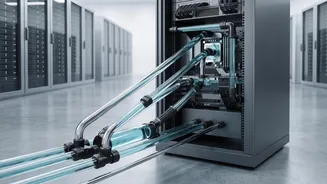
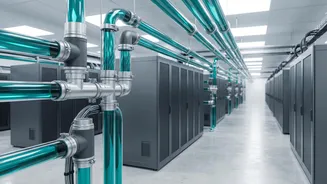
This specialized, always-on hardware consumes a staggering amount of electricity. An AI-focused data centre can use as much power as 100,000 homes or more. Some of the largest new facilities are being designed to consume over 1 gigawatt of power, equivalent to the energy use of an entire city. Global electricity demand from data centres is projected to double between 2022 and 2026, largely fueled by AI. This isn't just about the chips themselves; roughly 40% of a data centre's power can go towards cooling systems to prevent the densely packed servers from overheating. This immense energy thirst is now a primary constraint on where and how fast new capacity can be built, creating a major challenge for power grids worldwide.
Why GPUs Became the New Gold
This need for massive parallel processing led developers to Graphics Processing Units (GPUs). Originally designed to render complex graphics for video games, GPUs are built with thousands of smaller cores that excel at performing many calculations simultaneously. This architecture turned out to be perfectly suited for the mathematical operations at the core of AI, like matrix and vector calculations. As a result, GPUs, particularly those from industry leader NVIDIA, have become the backbone of AI data centres, accelerating training times from years to weeks and making modern AI possible. While CPUs are still vital, AI workloads have made GPUs indispensable, creating a massive new market for these specialized chips and driving huge investments in the companies that design them.
The Scale of the Build-Out
The confluence of these factors—specialized hardware, dual workloads, and immense power and cooling needs—has ignited a global construction boom. Projections estimate that capital expenditure on AI infrastructure could reach over US$31 trillion by 2050, with annual spending more than doubling from 2026 levels. The market for AI-specific data centres is forecast to grow from around $21 billion in 2026 to over $133 billion by 2034. This isn't a one-time build, either. Unlike traditional infrastructure, the hardware inside these centres, particularly the GPUs, is expected to be upgraded every few years to keep pace with innovation, ensuring a cycle of continuous investment for the foreseeable future.