






The Unseen Backbone of Digital India
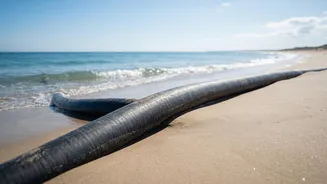
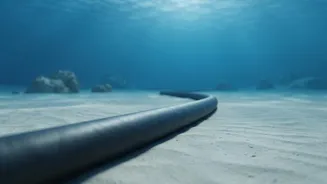
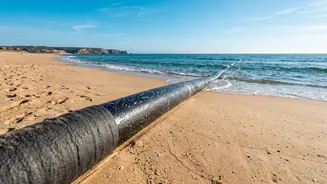
Submarine cables are the unsung heroes of the digital age, carrying over 95% of all intercontinental internet traffic. These bundles of fibre-optic wires, laid across the ocean floor, are the physical foundation of our increasingly online world. For India,
a nation with over a billion internet users and one of the world's fastest-growing digital economies, they are nothing short of a strategic asset. Everything from financial services and cloud computing to critical government communications and AI development depends on the high-speed data these cables transmit between India and the rest of the globe. They are the primary reason Indians can connect with global networks, making them the lifeline of the country's communication grid.
Mumbai's High-Stakes Concentration
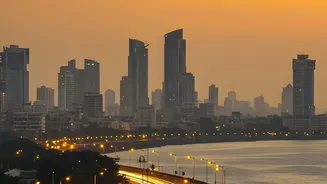
The core of India's vulnerability lies in a significant geographical imbalance. Of the 18 major intercontinental submarine cables connecting India, at least 13 of them come ashore along a narrow, six-kilometre stretch of coastline near Mumbai's Versova beach. This single area handles the vast majority of India's data traffic to Europe, the Middle East, and Africa. This intense concentration creates a critical single point of failure. While Mumbai's status as a commercial hub made it a logical landing point historically, this over-reliance now poses a substantial risk to the nation's connectivity and digital stability.
What is the Concentration Risk?
The risk is that a single localised event could have a disproportionately massive impact. A natural disaster like an earthquake or cyclone, an industrial accident, or even a ship dragging its anchor in the wrong place could physically sever multiple cables at once. Such an incident could disrupt huge portions of India's international internet bandwidth, leading to widespread slowdowns and outages. This would affect everything from business operations and banking to daily communications for millions of people. Beyond accidents, the concentration also presents a security vulnerability. The Telecom Regulatory Authority of India (TRAI) has recognized these dangers, recommending that submarine cables and their landing stations be treated as critical national infrastructure.
Building Resilience with New Routes
Fortunately, a concerted effort is underway to de-risk India's internet infrastructure by diversifying its cable landing points. Several new high-capacity submarine cable systems are being constructed to create a more distributed and resilient network. Projects like Reliance Jio's India-Asia-Xpress (IAX) and India-Europe-Xpress (IEX) are creating new international gateways. The IAX system, for instance, adds landing stations in cities like Chennai, Digha, and Machilipatnam. Other major projects, including 2Africa, SEA-ME-WE-6, and the Microsoft-backed I-2SEA, are also set to bolster connectivity to both the west and east, with new landing points in Chennai and other coastal cities. This strategy of geographic diversification is crucial for ensuring that a problem in one location does not cripple the entire country's connection to the global internet.