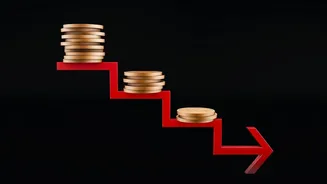









Relying on a fixed monthly income from your mutual fund investments feels secure and predictable. But when the market takes a dip, this very strategy can silently eat away at your long-term wealth, a risk many investors overlook.
The Comfort of Consistent Cash Flow
For many people, especially
retirees, a Systematic Withdrawal Plan (SWP) is a popular tool for creating a regular income stream. You invest a lump sum in a mutual fund and instruct the fund house to redeem a fixed amount—say, ₹25,000—every month. This automates your cash flow, making it easy to manage day-to-day expenses without having to manually sell units each time. The appeal is obvious: it provides the discipline and predictability of a monthly salary, making financial planning seem straightforward. However, this simplicity hides a significant vulnerability to market fluctuations.
The Hidden Cost in a Falling Market
The problem with a fixed withdrawal amount arises when markets turn south. The Net Asset Value (NAV), or the price of each unit of your mutual fund, goes down. To get the same fixed amount of cash, the fund has to sell more of your units. For example, if your SWP is for ₹10,000 and the NAV is ₹100, you sell 100 units. But if the market falls and the NAV drops to ₹80, you now have to sell 125 units to get the same ₹10,000. You are essentially selling more of your assets at a lower price, which is the opposite of a sound investment strategy. This is a risk that many investors don't consider when setting up a 'set and forget' withdrawal plan.
The Long-Term Damage: Sequence of Returns Risk
This effect is compounded over time and is known as the 'sequence of returns risk'. This is the danger of experiencing poor market returns early in your withdrawal phase. Selling more units during a downturn leaves you with a smaller investment base. When the market eventually recovers, that smaller base means your portfolio's recovery is stunted. You have fewer units left to benefit from the rebound. Two people could have the same average return over their retirement, but the one who faced a market fall early in their withdrawal journey will run out of money much sooner. This can permanently impair the long-term health and longevity of your retirement corpus.
A Smarter Alternative: The Bucket Strategy
A more resilient approach is the 'bucket strategy'. This involves dividing your retirement savings into three or more buckets based on when you'll need the money. Bucket 1 (Short-Term): This holds one to three years' worth of living expenses in very safe and liquid instruments like bank fixed deposits, liquid funds, or ultra-short-term debt funds. You draw your monthly income from this bucket, insulating it from market volatility. Bucket 2 (Mid-Term): This is for expenses you anticipate in the next three to seven years. It can be invested in less volatile instruments like corporate bond funds or hybrid funds. Bucket 3 (Long-Term): This bucket holds the rest of your corpus, invested in growth assets like equity mutual funds, meant for the long haul. The goal is to let this portion grow to beat inflation over time. You only replenish the first two buckets from this one when market conditions are favourable, not during a downturn.
Adopting a Flexible Withdrawal Mindset
Beyond the bucket strategy, the key is to remain flexible. Instead of a fixed amount, consider a dynamic withdrawal plan where you withdraw a certain percentage of your portfolio's current value. This means you naturally take out less money when the market is down and more when it's up. Some financial planners also suggest a 'guardrails' approach, where you reduce withdrawals by a certain percentage if your portfolio value drops below a predefined threshold. Another simple tactic is to review your SWP amount annually and consider reducing it temporarily if the market has fallen sharply. The goal is to avoid being forced to sell assets at the worst possible time, thereby preserving your capital for the long run.