





Beyond the Mainstream Narrative
When we picture the freedom struggle, we imagine grand rallies in Delhi, the Salt March to Dandi, or revolutionary acts in Calcutta and Lahore. These moments are, without question, pillars of Indian history. However, this focus on urban centres and high-profile
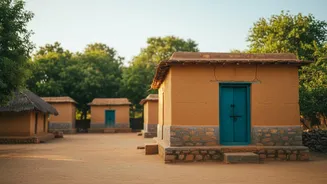
events often obscures a vital truth: the fight for independence was a vast, decentralised movement that drew its strength from every corner of the subcontinent. In countless hamlets and tribal settlements, ordinary farmers, labourers, and villagers rose up against colonial rule. These places, often isolated by geography, became crucibles of resistance, hosting secret meetings, organising local revolts, and making immense sacrifices that rarely found their way into official records. Their stories show that the desire for freedom was not an elite-driven phenomenon but a grassroots yearning that permeated the very soul of the nation.
Eram: The 'Pilgrim of Blood'
In the Bhadrak district of Odisha lies the village of Eram, a place that earned the tragic moniker 'Rakta Tirtha' or 'Pilgrim of Blood'. Because of its remote, water-logged location, it became a strategic hub for Congress leaders to hold secret meetings during the Quit India Movement of 1942. On September 28, 1942, about 5,000 peaceful protestors gathered on the village grounds to plan their opposition to British rule. Alarmed by the growing rebellion, a police force led by DSP Kunjabihari Mohanty surrounded the unarmed gathering. In a horrifying echo of the Jallianwala Bagh massacre, the police opened fire without warning. The field was bounded on three sides, offering no escape. In minutes, 29 people were killed, including a woman named Pari Bewa, and many more were injured. The Eram massacre stands as one of the single deadliest police firings during the Quit India Movement, yet it remains far less known than other atrocities of the era. It serves as a grim reminder of the price paid by rural communities who dared to defy the empire.
Vidurashwatha: The Jallianwala Bagh of the South
Years before the Quit India Movement, another village wrote its own chapter of defiance in blood. Vidurashwatha, a small village in present-day Karnataka, is known as the 'Jallianwala Bagh of the South' for a tragic incident that occurred on April 25, 1938. As part of the 'Flag Satyagraha' sweeping across the Mysore kingdom, local freedom fighters decided to hoist the Congress flag during a large annual fair in the village, defying prohibitory orders. A crowd of around 10,000 people had gathered when police lathi-charged and eventually opened fire on them. Accounts vary, but it is widely believed that over 32 people were martyred that day. The massacre sent shockwaves through the region and forced the Mysore government to negotiate with the Congress. Mahatma Gandhi himself condemned the incident and sent Sardar Vallabhbhai Patel and Acharya Kripalani to take stock of the situation. The resulting pact led to the recognition of the Congress as a political body and granted permission to hoist the tricolour, a major victory won at a terrible cost.
Issuru and the Power of 'Free Villages'
Some villages went even further than protest; they declared themselves independent. In 1942, Issuru, a village in Karnataka's Shivamogga district, became the first village in the state to drive out British officials and establish its own parallel government, or 'prati-sarkar'. The villagers, inspired by Gandhi's 'Do or Die' call, refused to pay taxes, and children were appointed as 'officials' in the new local administration. This bold declaration of freedom was met with brutal suppression. When British authorities attempted to regain control, a violent confrontation resulted in the deaths of a police officer and a revenue official. The crackdown that followed was merciless; five young men were hanged for their role in the uprising, and many others were imprisoned. The story of Issuru, along with similar movements in places like Satara, highlights a radical aspect of the freedom struggle where rural communities didn't just resist but actively began to govern themselves.