






Artificial Intelligence is no longer a futuristic concept in hiring—it's here. As companies across India adopt AI to screen resumes and manage applicants, a critical question emerges: what happens to the wisdom of experienced human staff?
What AI Is Actually Doing in Hiring
In today's competitive
job market, a single opening can attract thousands of applications, making manual review nearly impossible. This is where AI steps in. AI-powered tools, like Applicant Tracking Systems (ATS), are now widely used to perform high-volume, repetitive tasks. They can screen resumes for keywords, match candidates to job descriptions, and even conduct initial interactions via chatbots that answer questions and schedule interviews. The goal is to automate the top of the hiring funnel, allowing recruiters to receive a pre-vetted shortlist of candidates so they can focus on more strategic work. This significantly reduces the time-to-hire and helps companies manage the overwhelming number of applicants common in the Indian market.
The Promise of Efficiency and Objectivity
The primary benefit of AI in recruitment is a massive boost in efficiency. By automating tasks like resume screening, AI frees up human recruiters to concentrate on higher-value activities like interviewing and relationship building. Proponents also argue that well-designed AI can help reduce human bias. By focusing on objective criteria like skills and qualifications, these systems can potentially ignore demographic factors that might unconsciously influence a human reviewer. This creates a more consistent and standardized evaluation process for all applicants at the initial stage. For large organisations, this data-driven approach promises not just speed, but a fairer, more scalable way to find top talent.
The Hidden Risks of Algorithmic Bias
Despite promises of objectivity, AI is not immune to bias. In fact, it can sometimes amplify it. AI systems learn from historical data provided by the company. If that data reflects past discriminatory hiring patterns—for example, favouring candidates from certain universities or demographics—the algorithm will learn and automate those same biases. Research has shown that some AI screening tools can produce demographic disparities. A Stanford study found that AI systems could disproportionately reject applicants from minority groups. This creates what's known as an 'algorithmic monoculture', where the same types of candidates are repeatedly favoured, undermining diversity efforts. Without careful and continuous human oversight, these tools risk perpetuating the very inequalities they were meant to solve.
Where Human Judgement Remains Irreplaceable
This is where the value of experienced staff becomes undeniable. While AI excels at processing data, it struggles with the nuances of human interaction. Experienced recruiters and hiring managers are essential for evaluating qualities that can't be quantified on a resume, such as emotional intelligence, cultural fit, communication style, and leadership potential. A human can understand the context behind a non-traditional career path or a gap in employment, seeing resilience where an algorithm might see a red flag. They can read non-verbal cues in an interview, challenge assumptions, and assess a candidate's potential to grow with the company. These are decisions that require empathy, intuition, and a deep understanding of team dynamics—skills that remain firmly in the human domain.
The Future:
Augmenting,
Not Replacing
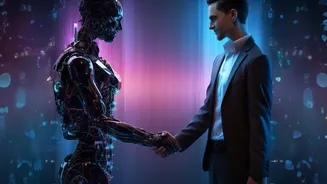
The most effective hiring strategies of the future will not be a battle of AI versus humans, but a partnership between the two. Leading organisations are adopting a 'human-in-the loop' model, where technology assists rather than decides. In this framework, AI handles the data heavy lifting—sourcing,
screening,
and scheduling—which provides a consistent and efficient foundation.
This frees up experienced HR professionals to focus on the most critical parts of the process:
building relationships with candidates,
conducting in depth interviews,
assessing strategic fit,
and making the final,
nuanced hiring decision.
The role of the recruiter evolves from a processor of applications to a strategic talent advisor,
leveraging AI insights to make smarter,
more informed choices.