




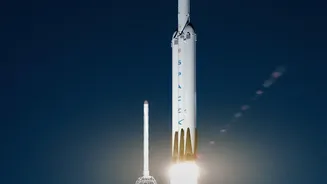

The Catch Heard 'Round the World
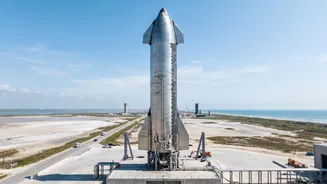
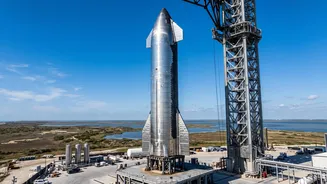
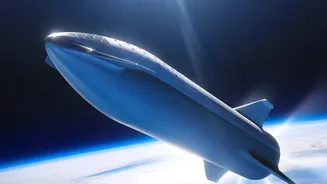
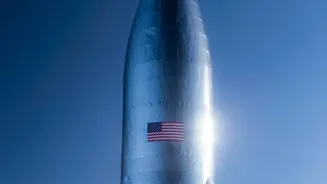
The historic moment unfolded at SpaceX's Starbase facility in Texas, concluding an ambitious 22.5-hour mission that began the previous day. After launching into orbit and deploying a payload of 26 Starlink satellites, the Starship upper stage, known as Ship
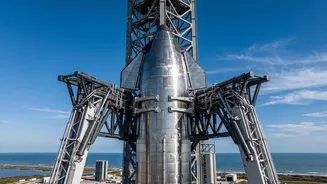
42, performed 14 laps around Earth. It then began its fiery descent, re-entering the atmosphere and executing a 'belly-flop' maneuver to slow down before flipping to a vertical orientation. In the flight's final, breathtaking moments, the massive spacecraft descended between two giant 'chopstick' arms on the launch tower, which closed to securely grab the vehicle, suspending it in midair just moments after its final landing engine shut down. “We caught a Starship, and now everything changes,” announced SpaceX's Dan Huot during the live broadcast, his voice filled with emotion.
How 'Mechazilla' Works
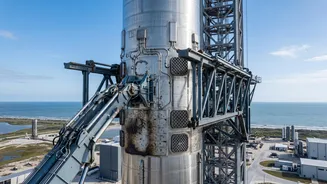
The system responsible for the catch, nicknamed 'Mechazilla', is central to SpaceX's strategy for rapid reusability. The launch tower, standing approximately 146 meters tall, is equipped with two large, hydraulically operated arms. These arms are not just for catching; they are also used to stack the Starship spacecraft on top of the Super Heavy booster before launch. The rationale for this system is to eliminate the need for heavy, cumbersome landing legs on the rocket stages. By shedding the weight of landing gear, both the booster and the ship can maximize their payload capacity. The catch sequence is an intricate dance of autonomous technology. The returning rocket communicates its precise location to the tower, which positions the arms for the catch. As the vehicle descends, radar sensors provide final adjustments, and a system of shock absorbers helps to gently absorb the momentum of the several-hundred-ton rocket stage, bringing it to a soft stop.
The Billion-Dollar Gamble on Reusability
While visually spectacular, the catch is far more than a technical stunt; it's a critical step in a profound business strategy. The entire Starship program is built on the premise of making an orbital rocket system fully and rapidly reusable, similar to an airplane. Catching the stages with the launch tower is the fastest way to get them ready for another flight. This approach avoids the delays and costs associated with ocean splashdowns and complex recovery logistics. Successfully reusing both the booster and the upper stage could radically reduce the cost of access to space. This economic shift is what underpins CEO Elon Musk's ambitions for massive satellite constellations like Starlink and, eventually, the settlement of Mars. While Flight 15 was not a complete success—the Super Heavy booster aborted its own catch attempt and was diverted to a splashdown in the Gulf of Mexico due to a fuel issue—the successful upper-stage recovery is considered the more challenging feat and a monumental step forward.
What This Success Means for the Future
Proving the upper-stage catch is possible unlocks the next phase of Starship's development. With Ship 42 recovered intact, SpaceX engineers can now inspect a vehicle that has been to orbit and back, assessing the performance of its heat shield and engines. This data is invaluable for validating their designs and improving future iterations. The focus will now shift to demonstrating consistency and speed. The company needs to prove it can reliably catch both stages in a single mission and dramatically shorten the refurbishment time between flights. Previous re-flights of Super Heavy boosters took several months. The ultimate goal is to reduce that turnaround to mere days or weeks. This successful catch, deemed the 'holy grail of spaceflight' by commentators, makes the prospect of frequent, low-cost flights to orbit seem much closer to reality, paving the way for projects like NASA's Artemis moon missions and beyond.