




The Post-Monsoon Advantage
September marks a welcome transition for sky-watchers in India. The primary reason for the enhanced clarity is the withdrawal of the southwest monsoon. For months, high humidity and cloud cover have obscured the cosmos, but as this weather system retreats,
it effectively scrubs the atmosphere clean. Dust and other particulates are washed out, and the lower humidity means less haze. This results in the transparent, steady skies that are ideal for stargazing. Furthermore, as we move towards the autumnal equinox, the nights grow progressively longer, providing an extended canvas to observe the universe. It is this combination of cleaner air and more dark hours that puts September's skies squarely in focus.
The Autumnal Equinox: A Celestial Balancing Act
Around September 23 this year, the Earth will reach the autumnal equinox. This is not an event you can 'see' in an instant, but a significant milestone in our planet's orbit. On this day, the Sun shines directly on the equator, and the length of day and night are nearly equal across the globe. For observers in the Northern Hemisphere, including all of India, it marks the official start of autumn. Think of it as a celestial gear-shift, heralding the cooler temperatures and clearer nights to come. It’s a great reminder of the planetary mechanics that govern our seasons and a perfect moment to appreciate our place in the solar system.
A Parade of Bright Planets
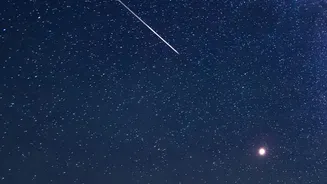
September 2026 is a fantastic month for planet-spotting, with several worlds visible to the naked eye. Venus will be unmissable, reaching its peak brightness for the year on September 18. Look for it as a dazzling, star-like point of light low in the western sky just after sunset. Early risers will be rewarded, too. In the pre-dawn hours, you can spot Mars, which will appear reddish, and the giant planet Jupiter. On the morning of September 8, the crescent Moon and Jupiter will appear very close together in the eastern sky, creating a beautiful pairing. Saturn will also be visible for much of the night, appearing as a bright, steady light.
The Legendary Harvest Moon
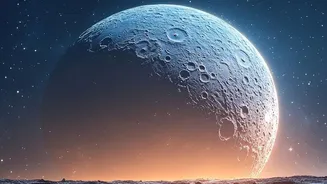
The month's celestial highlight is undoubtedly the full moon on the night of September 26. This is the famous Harvest Moon, the full moon closest to the autumnal equinox. It will reach its peak illumination at 10:19 PM IST. The name comes from a practical purpose: before electricity, the bright light of this full moon, rising around sunset for several evenings, gave farmers extra time to bring in their crops. When you watch it rise, notice its deep yellow or orange colour, an effect caused by its light travelling through more of Earth's atmosphere. As a bonus, the planet Saturn will appear near the Moon on this night, making for a memorable sight.
Your Guide to Getting Started
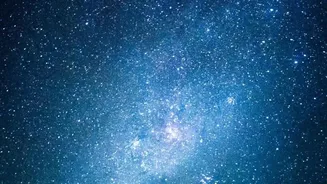
The best part about September's sky is its accessibility. You don't need expensive equipment; your eyes are the only tool you truly need. For the best experience, try to find a location away from bright city lights, as light pollution can wash out fainter stars. Give your eyes about 20-30 minutes to fully adapt to the darkness—avoid looking at your phone screen during this time. You can use a stargazing app to help identify constellations like the Great Square of Pegasus, which will be visible, or the bright stars of the Summer Triangle setting in the west. From a dark location, you may even spot the faint, milky band of our own galaxy arching overhead.