






The alarm goes off. You know you should exercise, but the thought of another monotonous jog or solo gym session makes you hit snooze. There's a better way to start your day: short, light, and playful group games that make fitness feel fun again.
The Challenge of the Morning Routine
Starting
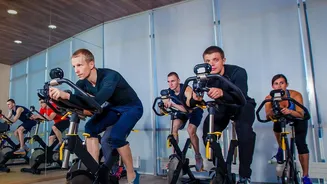
the day with exercise has proven benefits, from boosting your mood and energy levels to improving focus throughout the day. Yet, for many, the biggest hurdle isn't waking up; it's the sheer repetitiveness of most morning workouts. Running the same route or cycling on a stationary bike can quickly lead to boredom, making it easy to abandon the habit altogether. When exercise feels like a chore, motivation plummet s. This is where the power of play comes in. By shifting the focus from enduring a workout to enjoying an activity, you change the entire dynamic.
Why Group Games Boost Motivation
Introducing gamification—the use of game-like elements such as points, competition, and teamwork—into fitness can dramatically increase consistency. Studies have shown that the social aspect of group exercise provides a powerful mix of accountability and support. When you know a friend or a team is waiting for you, you're less likely to skip. Furthermore, playing a game distracts from the physical exertion. You become so involved in the objective that you forget you're working out. This social connection and sense of fun can reduce stress and improve your overall mental and emotional well-being. It transforms exercise from a solitary task into a shared, enjoyable experience.
Golden Rules for Morning Games
To be effective, morning fitness games should follow a few key principles. First, keep them short. A 15-to-20-minute game is long enough to get your heart rate up and release mood-boosting endorphins without feeling overwhelming. Second, the intensity should be light to moderate. The goal is to energize your body, not exhaust it before the day has even begun. A gentle start prepares your muscles and mind for the day ahead. Finally, the focus should be on participation, not peak performance. The spirit of the game is about moving together and having fun, which fosters a positive and sustainable habit.
Making Games Inclusive for Everyone
Perhaps the most crucial element is ensuring the games are adaptable for different fitness levels. An inclusive environment welcomes everyone, regardless of their physical ability, and prevents anyone from feeling left out or discouraged. Modifications are key. For instance, if a game involves jumping jacks, a participant can modify by doing seated arm raises or stepping side-to-side. Instead of running, a person can walk. The rules should be flexible, allowing players to choose the intensity that feels right for their body. This approach ensures that the activity is challenging enough for the fit, yet accessible enough for beginners or those with physical limitations, creating a truly supportive community.
Simple Game Ideas to Get Started
You don't need complex equipment or rules to start. Here are three simple ideas: 1. Builders and Bulldozers: Scatter a dozen small cones in a defined area, with half standing up (builders) and half knocked over (bulldozers). Divide into two teams. On 'go', the builders race to stand cones up while the bulldozers knock them over. Play for 60-90 seconds, rest, and repeat. 2. Fitness Relay: Set up two lines. The first person in each line performs an exercise (like 10 squats), runs to a designated point and back, and then tags the next person. The next person does a different exercise (like 10-second plank). The first team to finish wins. Modify exercises for different abilities. 3. Balloon Polo: Set up two goals on opposite ends of a room or yard. Using a balloon, teams try to score on the opposing goal without letting the balloon touch the ground. The unpredictable movement of the balloon keeps everyone moving and laughing.