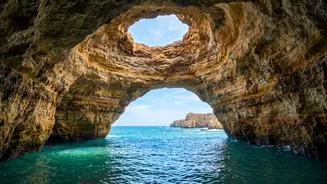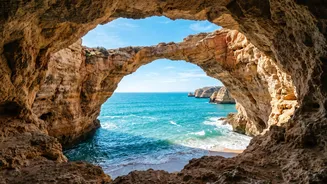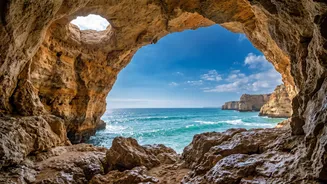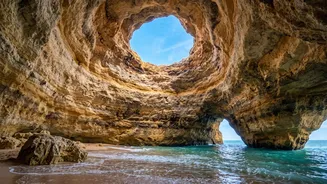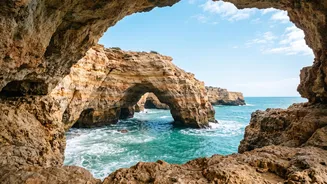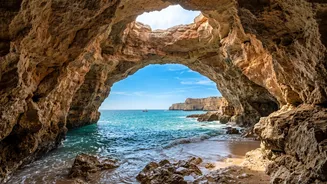



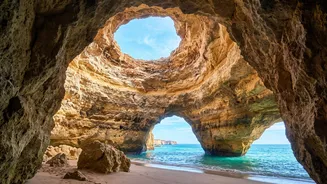
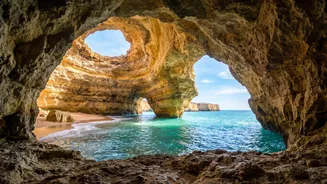
Carved by millennia of wind and waves, the sea caves of Portugal's Algarve coast are a spectacle of natural artistry. These golden limestone grottos and majestic arches draw travellers from across the globe, eager to witness their beauty firsthand.
A Coastline Sculpted by Time
The
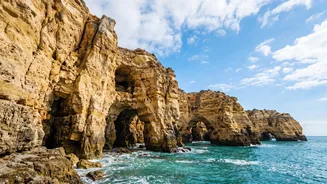
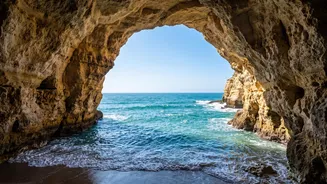
Algarve's dramatic coastline is a geological masterpiece millions of years in the making. The region's cliffs are predominantly composed of Miocene-era limestone, a relatively soft rock that is susceptible to erosion. Over eons, the relentless force of the Atlantic Ocean, combined with wind and rain, has painstakingly sculpted this landscape. This process of 'karstification' dissolves the limestone, creating a network of sinkholes, fissures, and, most famously, sea caves. What visitors see today—the towering arches, hidden beaches, and cathedral-like grottos—is the stunning result of this ongoing natural artistry, a living gallery of geological history.
Benagil: The World-Famous Sea Cave
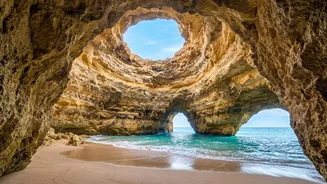
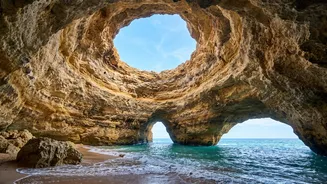
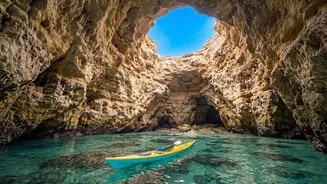
Arguably the most famous sea cave in all of Portugal is Algar de Benagil. Its celebrity status is largely due to a distinctive circular opening in its ceiling, known locally as 'the eye', which allows sunlight to stream down, illuminating the sandy beach within and the turquoise water. This natural skylight creates a truly magical, cathedral-like atmosphere that has become a social media sensation. Located near Benagil Beach, the cave is only accessible from the water. Recent regulations, implemented for safety, prohibit swimming into the cave or landing on its interior beach. Visitors can experience this natural wonder only as part of a licensed boat tour or a guided kayak or stand-up paddleboard (SUP) excursion.
Ponta da Piedade's Golden Grottoes
Just south of the city of Lagos lies Ponta da Piedade, a different but equally breathtaking stretch of coastline. This headland is a labyrinth of golden rock pillars, hidden grottoes, and spectacular natural arches. Local fishermen and tour guides have given many of the formations descriptive names like 'The Elephant', 'The Living Room', and 'The Arch of Triumph'. The best way to explore this area is by taking a small boat tour from the Lagos Marina. These smaller vessels can navigate the narrow passages and enter the caves, offering an intimate perspective of the intricate formations. Alternatively, you can admire the scenery from above by walking the clifftop boardwalks and descending a steep staircase to water level.
How to Experience the Caves
There are several ways to explore the Algarve's sea caves, each offering a unique experience. Larger tour boats departing from marinas like Albufeira, Portimão, and Lagos can cover long stretches of coastline, often showing visitors 15–20 caves on a single trip. For a closer look, smaller boats are ideal for navigating into narrower grottos like those at Ponta da Piedade. For the more adventurous, guided kayak and SUP tours provide the most intimate way to experience the caves. These tours allow you to paddle at your own pace, get water–level views, and explore smaller passages that boats cannot reach. It's important to note that for Benagil Cave, self–guided kayak rentals are no longer permitted; you must be part of an official tour.
Planning Your Visit
The best time to visit the Algarve for cave exploration is during the shoulder seasons of spring (March–June) and autumn (September–October). During these months, the weather is pleasant, the sea is generally calm, and the summer crowds have thinned out. July and August offer the calmest seas but are also the busiest and most expensive months, so booking tours in advance is essential. Winter tours are possible but are more frequently cancelled due to rough sea conditions. Regardless of the season, the first tour of the morning is often recommended for the calmest water and fewest crowds. For the best light inside Benagil Cave, a late morning tour is often suggested, as the sun is positioned directly over the oculus.