






What Sparked the Privatisation Debate?
Concerns within ISRO and among the public grew after statements suggested that the space agency would eventually transition out of manufacturing launch vehicles and operating routine satellite missions. This led employee associations to seek formal clarification
about the future of the organisation, fearing that core functions were being handed over to private entities, potentially diminishing ISRO's role. The discussion is part of a broader shift in India's space policy, which began in 2020 and was formalised in the Indian Space Policy 2023, designed to open the sector to private companies.
ISRO's Official Clarification
In response to the growing speculation, ISRO Chairman V. Narayanan and the agency itself have stated categorically that ISRO is not being privatised. Officials clarified that ISRO will remain a government organisation and India's main institution for advanced space research, strategic missions, and planetary exploration. The chairman acknowledged the genuine concerns of employees and assured them that the goal is not to privatise the agency but to expand the entire Indian space ecosystem to meet growing national and global demands. The country's need for launch vehicles is estimated at around 50 per year, a capacity that requires the involvement of the entire Indian space industry, not just ISRO alone.
Partnership, Not Privatisation: The New Model
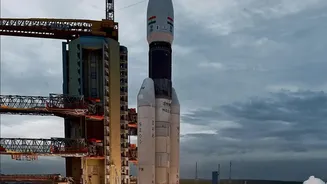
The government's new policy distinguishes between privatisation and private sector participation. Privatisation would mean selling ownership of ISRO, which officials have denied. Instead, the strategy is to encourage partnership, where private companies take over mature, routine activities like manufacturing the workhorse Polar Satellite Launch Vehicle (PSLV). This model allows private firms to bring in investment and scale up production, while ISRO focuses its resources on cutting-edge research and development. This is part of a plan to grow India's space economy from around $8.4 billion to over $44 billion by 2033.
The Role of IN-SPACe and NSIL
To manage this new ecosystem, the government has created two key bodies. The Indian National Space Promotion and Authorisation Centre (IN-SPACe) acts as a single-window agency to promote, authorise, and supervise the activities of non-governmental entities (NGEs) in the space sector. It facilitates access to ISRO's facilities and technology for private players. NewSpace India Limited (NSIL), ISRO's commercial arm, is responsible for commercialising space technologies. This includes managing commercial launch contracts and transferring ISRO-developed technologies to the industry, turning public research into commercial enterprise.
What's Next for ISRO?
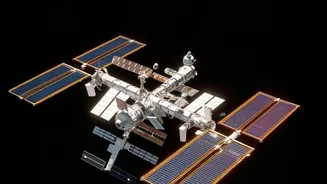
By offloading routine manufacturing, ISRO is freeing up its scientists and engineers to concentrate on more ambitious, frontier missions. The agency's future focus will be on advanced research, deep-space exploration like missions to Venus and Mars, the Gaganyaan human spaceflight programme, and developing a long-term roadmap for a sustained human presence in space, including the Bharatiya Antariksh Station planned for 2035. ISRO will continue to develop next-generation technologies like reusable launch vehicles (RLVs) and advanced propulsion systems, ensuring it remains at the forefront of global space innovation.