



The dust has settled on the US midterm elections. Now, for India, the real work begins: deciphering what a reconfigured US Congress means for the vital economic partnership between the two nations. The reality is more complex than just a win-loss tally.
A New Political Landscape in Washington
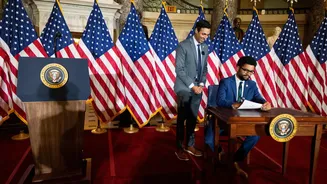
The November 2026 midterm elections have resulted in a significant shift in Washington's power dynamics, with the Democratic party securing control over both the House of Representatives and the Senate. This outcome reshapes the final two years of President Donald Trump's second term, introducing a divided government. While the President's executive authority, particularly in foreign policy and trade, remains substantial, he will now face a Congress led by the opposition. This new reality means that any legislative agenda will require negotiation and compromise, and presidential policies will face far greater scrutiny from congressional committees. For India, this isn't just internal US politics; it sets the stage for how economic issues, from trade deals to visa policies, will be handled.
Trade and Tariffs: More Scrutiny, Same Protectionism?
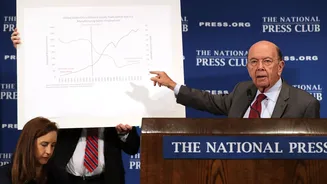
A key question for New Delhi is whether a Democratic-controlled Congress will temper the Trump administration's protectionist trade stance. The consensus among analysts is mixed. On one hand, Democratic control means more oversight of trade policies and could challenge the President's ability to impose tariffs unilaterally. However, a broader trend of economic nationalism has support in both parties, with many Democrats also favouring policies that protect American manufacturing and workers. Experts suggest that while an interim trade deal between India and the US may not be directly affected as it might not require congressional ratification, the overall environment of trade uncertainty is likely to persist. The President could still use existing executive powers to apply pressure on trade partners, and some analysts believe the election results might even embolden him to seek a quick trade deal with India as a political 'win'.
The Unwavering Tech and Defense Partnership
Despite political shifts, the strategic and technological partnership between India and the US is expected to remain a pillar of the relationship. There is strong bipartisan consensus in Washington on the importance of collaborating with India to counter China's influence. Key initiatives like the U.S.-India initiative on Critical and Emerging Technology (iCET), launched in 2023 to deepen cooperation in areas like semiconductors, AI, defence, and space, are built on this shared strategic interest. These programs are steered by national security bodies in both countries, giving them a degree of insulation from partisan politics. Therefore, momentum on co-development in defence, building resilient semiconductor supply chains, and other high-tech collaborations is expected to continue, regardless of which party controls Congress.
The H-1B Question: A Change in Tone, Not Law
For India's vast IT sector and skilled professionals, US immigration policy is a critical issue. While a Democratic-led Congress is generally seen as more sympathetic to immigrants, immediate relief on H-1B visas and green card backlogs is unlikely. The President retains significant executive authority to implement immigration rules through agencies like the Department of Homeland Security. Recent administrative actions, including proposals for higher visa fees and changes to wage calculations, were implemented without congressional approval. While a Democratic Congress can increase scrutiny, hold hearings, and block new restrictive legislation, it cannot easily reverse existing regulations. Any fundamental change to immigration law, such as altering the annual H-1B cap or country-based green card limits, would require a new bill to pass both chambers and be signed by the President, a difficult prospect in a divided government.