

A Lonely Journey into the Dark
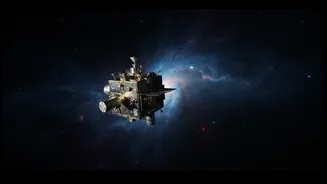
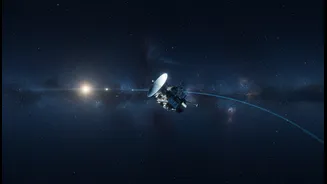
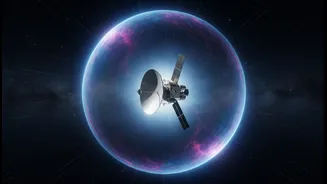
Launched in 2006, NASA's New Horizons spacecraft is a veteran explorer. After its historic flyby of Pluto in 2015 and a visit to the Kuiper Belt Object Arrokoth in 2019, it continues to speed away from Earth at nearly 300 million miles per year. Now,
more than 5.7 billion miles away in the Kuiper Belt, the spacecraft faces two fundamental challenges that threaten the remainder of its mission: a dwindling power supply and an immense communication gap. Its nuclear battery, a radioisotope thermoelectric generator (RTG), produces less energy each year, requiring engineers to be incredibly frugal with power. At the same time, the one-way travel time for a radio signal has stretched to over eight hours, making real-time control impossible. Imagine sending a text and having to wait over 16 hours for a reply—that's the reality for the New Horizons mission team.
Teaching an Old Probe New Tricks
To solve these problems, NASA engineers have sent a remarkable software update across the solar system. This isn't a simple patch; it’s a fundamental upgrade to the spacecraft’s autonomy logic, essentially giving it a more independent brain. The new programming is specifically designed to manage the unique conditions of deep space, allowing New Horizons to operate more efficiently with less intervention from its human controllers on Earth. The fault protection software was updated to improve its ability to function much farther from the sun than it was originally designed for. This allows the probe to monitor its own health, manage its scientific instruments, and execute tasks without waiting for instructions, which are now significantly delayed by the vast distances.
The Power-Saving Imperative
Every watt is precious aboard New Horizons. The spacecraft was designed to operate on less than 200 watts, and its plutonium power source naturally decays over time. The new autonomous systems play a crucial role in power management. By making smarter decisions on its own, the spacecraft can minimize the use of its thrusters for attitude control and reduce the power demands of its subsystems. It can now manage its science observations and data collection more efficiently, powering up instruments only when absolutely necessary and entering hibernation modes for long stretches to conserve energy. The team has programmed a series of hibernation periods, with the current one being the longest of the mission, designed to save wear and tear and preserve fuel for potential future observations.
A New Lease on Scientific Life
This newfound autonomy isn't just about survival; it's about extending the scientific life of the mission. While it continues its journey through the Kuiper Belt, New Horizons is still working. Even in hibernation, it passively collects data on the charged-particle environment of the Sun's outer heliosphere and the dust levels in this unexplored region. The upgrade ensures the spacecraft can continue these valuable observations and remain ready should a new, reachable Kuiper Belt Object be discovered in its path. This allows the mission to continue gathering groundbreaking data from a region of space that no other spacecraft is currently exploring in the same way. The goal is to keep New Horizons operational until it exits the Kuiper Belt entirely, which is expected around 2028 or 2029.