



A Partnership in the Stars
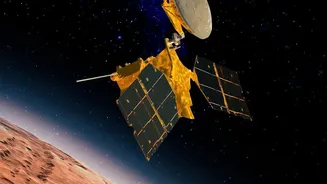
The future of space exploration is increasingly collaborative. A prime example is the growing synergy between the United Arab Emirates (UAE) and Indian space science communities. While India's own Mars Orbiter Mission (Mangalyaan) was a landmark achievement,
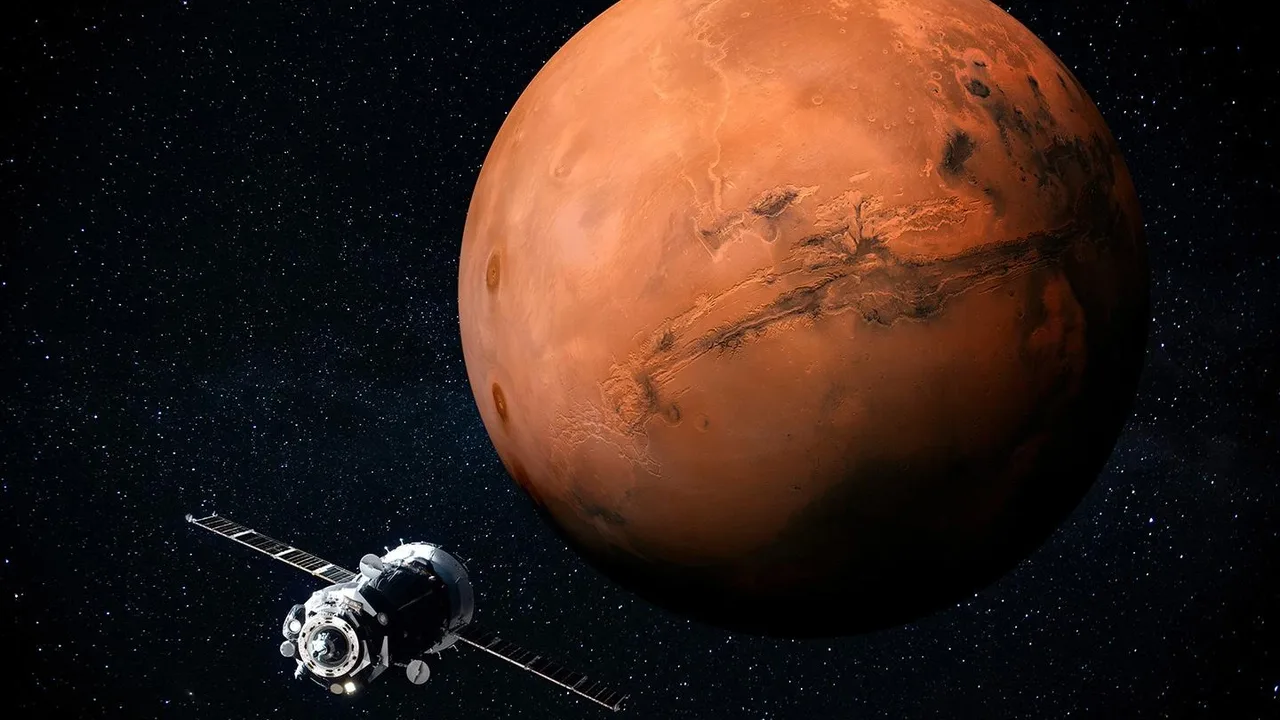
the UAE's Hope Probe, which entered Martian orbit in 2021, has created fresh opportunities. The UAE Space Agency has made the probe's data available to 200 research institutes globally, and Indian scientists are among those leveraging this open-access policy to deepen their understanding of Mars. This collaboration builds on a relationship established years ago, with the Indian Space Research Organisation (ISRO) and the UAE Space Agency forming a joint working group to share expertise. This partnership allows Indian researchers to supplement their own findings and contribute to a more complete global picture of the Red Planet.
More Than a Dusty Red Rock
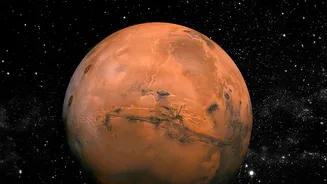
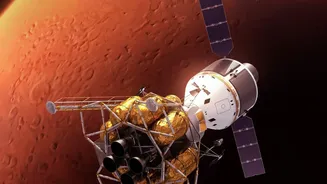
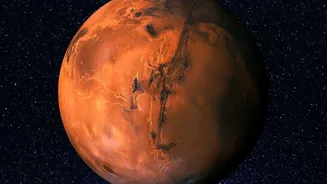
The headline's promise of looking 'beyond dust and ice' points directly to the Hope Probe's unique mission. While many missions have focused on Martian geology, Hope is designed as the first true Martian weather satellite. Its three advanced instruments—an imager, an infrared spectrometer, and an ultraviolet spectrometer—work together to create a complete picture of the planet's atmosphere. Unlike other orbiters that observe the same spot at the same time each day, Hope has a unique, large orbit that allows it to watch different parts of the planet at all times of day and across all seasons. This provides a holistic view of the Martian climate system, tracking everything from daily weather cycles and giant dust storms to how the lower and upper atmospheres interact. It’s this comprehensive atmospheric data that is proving invaluable.
Unlocking Atmospheric Secrets
So what exactly are scientists learning? The Hope Probe is helping answer one of the biggest questions about Mars: how it lost its once-thicker atmosphere and flowing water. The spacecraft's instruments measure the rates at which hydrogen and oxygen—the building blocks of water—are escaping from the top of the atmosphere into space. This provides crucial clues about the planet's climate evolution. Furthermore, Hope has captured stunning and detailed images of Martian auroras. It has observed different types of these light shows, including a newly identified 'patchy proton aurora' that challenges existing theories about how the solar wind interacts with the planet's dayside atmosphere. These discoveries go far beyond surface-level observations, revealing the dynamic and complex processes still shaping Mars today.
Complementing India's Own Missions
The data from Hope doesn't just stand alone; it enriches the findings from other missions, including NASA's MAVEN orbiter and India's own Mangalyaan. ISRO officials have noted that Hope's data on large-scale dust movements and the loss of atmospheric gases will be crucial input for planning India's next Mars mission, Mangalyaan-2. While Mangalyaan provided incredible high-resolution images and data from its own suite of instruments, Hope's ability to provide a global, all-day weather map fills in critical gaps. The collaboration is a two-way street; data is exchanged between space agencies like NASA, ISRO, and the UAE Space Agency to ensure the safety of all active spacecraft and to enhance the scientific returns for everyone involved. By combining these different datasets, scientists can build a much more robust model of Mars.