

The Solar System’s Missing Planet
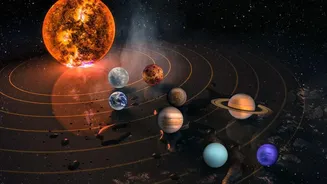
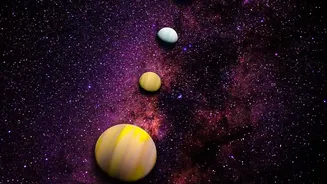
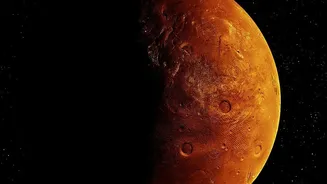
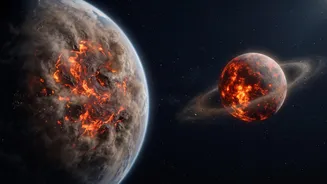
When astronomers look at other star systems, they see a common type of planet that our own solar system mysteriously lacks: the “super-Earth.” These are rocky worlds larger than Earth but smaller than Neptune. Their prevalence elsewhere makes their absence
here a significant puzzle. For years, scientists have wondered why our planetary family is so different. Did super-Earths simply never form here? Or did they form and then disappear? This question has led researchers to consider more dramatic, and destructive, possibilities about our cosmic origins. The answer might not be out in the distant cosmos, but hidden deep within our own Sun.
A Theory of Cosmic Cannibalism
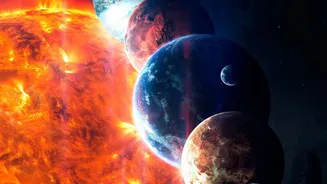
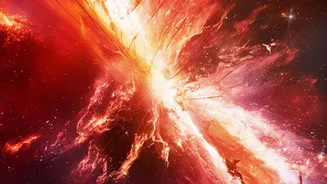
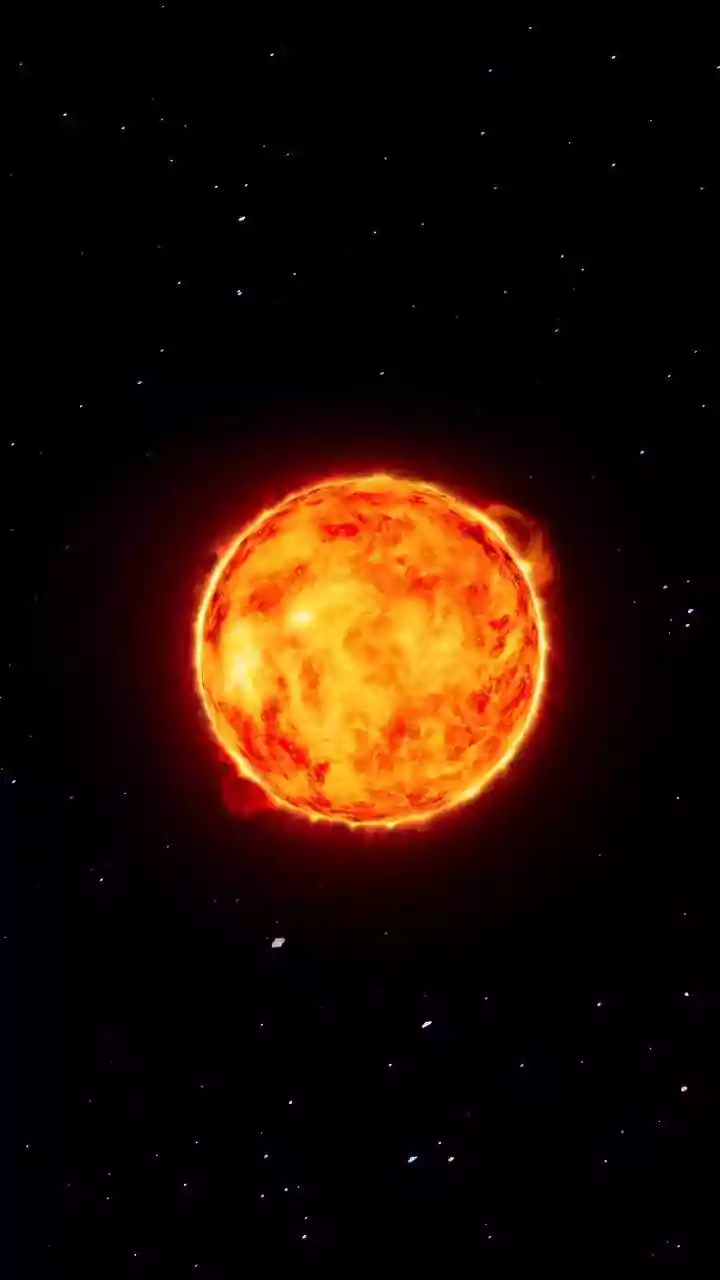
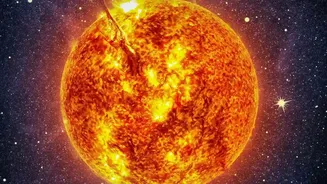
A recent hypothesis offers a startling explanation: our young Sun may have swallowed a super-Earth whole. According to computer models developed by a team of researchers, a planet several times the mass of Earth could have formed in the inner solar system billions of years ago. In the turbulent environment of the early protoplanetary disk—the swirl of gas and dust from which planets are born—this massive planet's orbit could have decayed. Over millions of years, it would have spiraled closer and closer to the infant Sun until it was eventually engulfed, vanishing into the star's fiery interior.
The Hunt for Chemical Fingerprints
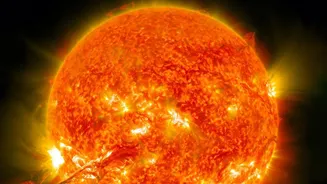
While the planet itself would have been vaporized, scientists believe it didn't disappear without a trace. The theory suggests this cosmic collision would have left a lasting chemical fingerprint deep inside the Sun. Planets are made of different materials than stars, which are primarily gas. By dumping several Earth masses of heavy elements like iron and silicon into the Sun, the event would have subtly altered its internal composition. Researchers found that adding a super-Earth to models of the Sun’s evolution helps explain several long-standing mysteries, such as the Sun's unusually low level of lithium and certain structural details that standard models can't account for.
An Architecture Shaped by Destruction
So, what does this ancient act of planetary destruction mean in practice? It could fundamentally change our understanding of how our solar system came to be. The migration and eventual destruction of this large, inner planet would have had a profound gravitational impact. Its journey toward the Sun could have cleared out a significant amount of material from the inner solar system, effectively starving the region where Mercury, Venus, Earth, and Mars would later form. This destructive event may be the very reason our inner planets are relatively small and why there is a notable gap where super-Earths are found in other systems.
Why This Lost Planet Matters for Earth
The absence of a super-Earth may have been a crucial factor in allowing life to flourish on our planet. A massive planet lurking in the inner solar system could have destabilized the orbits of the other rocky worlds, including Earth. Its gravitational influence might have prevented Earth from settling into the stable, predictable orbit it enjoys today. In some scenarios of early planetary chaos, Jupiter's own inward and outward migration is thought to have swept a first generation of planets into the Sun. The new theory adds another layer, suggesting a super-Earth met this fate on its own. The ultimate takeaway is that the calm, orderly solar system we know today may be a direct result of a violent, planet-consuming past that paved the way for our existence.