





Why Tokyo Needs a Plan B
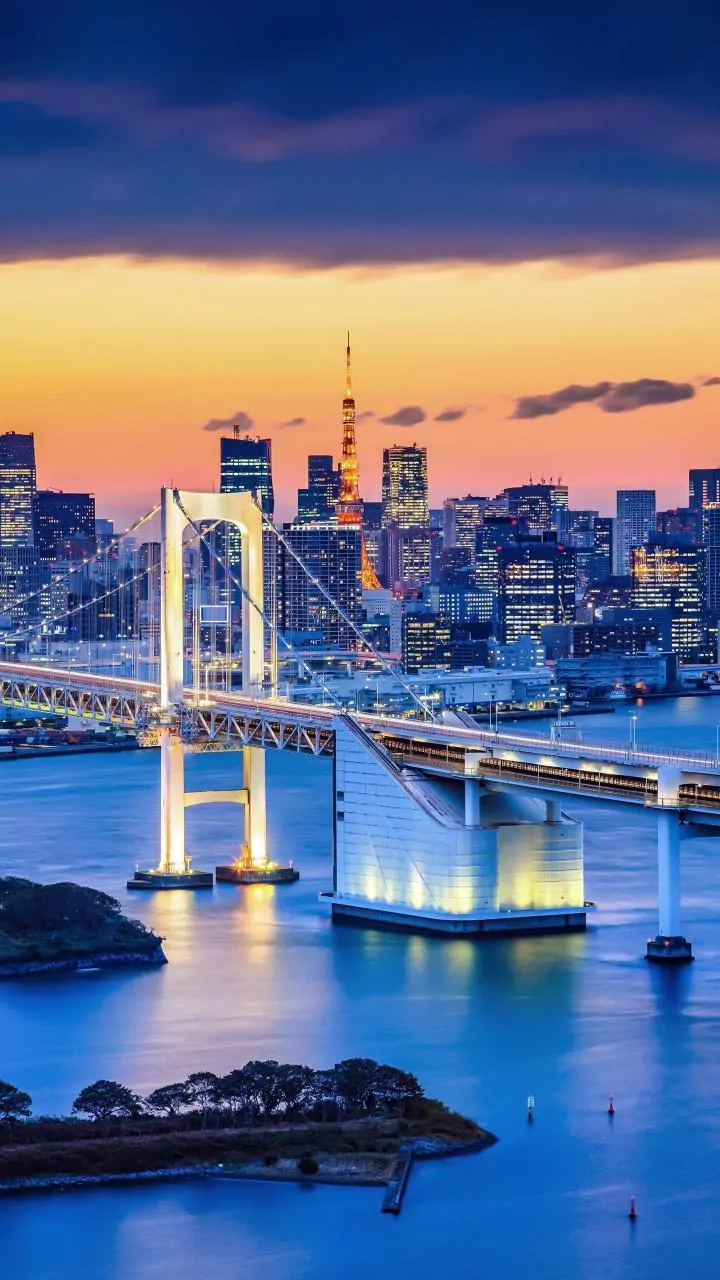
Tokyo is the political, economic, and cultural heart of Japan, but it sits in one of the most seismically active zones on Earth. The Japanese government estimates there is a 70% probability of a magnitude-7 or higher earthquake hitting the metropolitan
area within the next 30 years. Such a catastrophe could paralyse the nation's entire administrative and financial infrastructure, as the Prime Minister's Office, the National Diet (parliament), and central ministries are all concentrated there. Beyond natural disasters, the plan also aims to address what is described as an "overconcentration" of people and economic power in Tokyo, which is home to roughly 30% of the population and generates about a fifth of the country's GDP. The idea is to create resilience by ensuring the government can continue to function and to spur economic growth in other regions.
The New 'Sub-Capital' Framework
In late July 2026, Japan's Diet passed a bill creating a legal framework to designate one or more regions as secondary, or "sub-capital," locations. This isn't about relocating the capital permanently. Instead, these designated areas would temporarily take over essential government functions if Tokyo were incapacitated. The new law empowers the government to formulate a basic policy and selection criteria within a year. The Prime Minister will ultimately make the final decision on which locations are chosen, following an evaluation by an expert committee. More than one area can be selected, leading to the concept of a shared backup role distributed across the country. This idea isn't entirely new—discussions about relocating capital functions have occurred for decades—but the recent legislation gives it concrete momentum.
The Prefectures Vying for the Role
Immediately following the bill's passage, several prefectural governors expressed strong interest in being designated. The leading contenders include Osaka, Fukuoka, and Aichi prefectures. Governors from Hokkaido and Miyagi have also shown interest. The governor of Aichi, home to Nagoya and automotive giant Toyota, declared his intention to be the "first in the nation" to bid for the role. The governor of Osaka, a major economic hub, has also been a vocal proponent, suggesting that multiple core areas could help drive Japan's future growth. To qualify, these regions must be geographically located where they are unlikely to be affected by the same disaster that hits Tokyo. They must also possess sufficient infrastructure, a significant population and economy, and the administrative capacity to handle government operations in a crisis.
What 'Backup Capital' Really Means
Being a backup capital doesn't mean building a new Tokyo. The primary role is one of emergency continuity. The designated prefectures would need to be ready to host core administrative bodies and ensure decision-making can continue uninterrupted. This might involve establishing secondary government buildings or relocating some public institutions over time. However, there are complex administrative hurdles. For cities like Osaka and Fukuoka, which have a high degree of autonomy, a key requirement is establishing a smooth system of cooperation with the prefectural government. This can be done through a partnership agreement or by reorganizing the city into special wards, similar to Tokyo—a politically complex process that has faced public opposition in the past in Osaka. Designated regions are expected to receive benefits like tax incentives and deregulation to support their development.
Politics and the Path Forward
The plan is not without controversy. Some critics argue the law is designed to favour Osaka, the political stronghold of the Japan Innovation Party, which is a junior partner in the ruling coalition government. The inclusion of the sub-capital plan was reportedly a key part of the coalition agreement. This has led to accusations of political favouritism, with some opponents dubbing the legislation the "Osaka Special Treatment Act." Despite these debates, the government is required to move forward and define its basic policy within the next year. The key questions that remain to be answered are which specific national functions will be located in which regions and how responsibilities will be divided, not just in an emergency but also during normal times to promote decentralization.