



The Challenge of Finding Your Way on the Moon
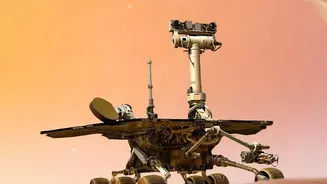
For decades, navigating in space has relied on a tried-and-true but cumbersome method: constant communication with Earth. Giant antennas from the Deep Space Network track spacecraft, landers, and rovers, calculating their position and sending instructions.
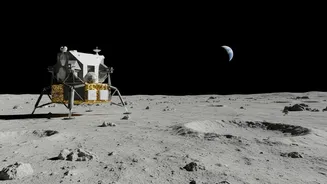
This process is reliable but slow and resource-intensive. For a rover on the Moon, this means every potential movement is carefully planned and executed from hundreds of thousands of kilometres away. The communication delay, while only a couple of seconds, makes real-time driving impossible and limits the scope of exploration. As NASA and its international partners plan for a long-term, sustainable presence on the Moon under the Artemis program, this reliance on Earth becomes a major bottleneck. Building a lunar base, mining for resources, and conducting complex science all require assets that can operate and navigate independently.
Introducing a GPS for the Moon
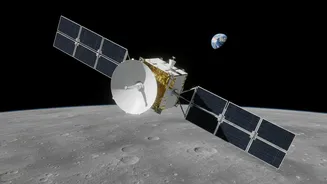
The solution is a concept that will feel familiar to anyone with a smartphone: a dedicated lunar navigation system. NASA is developing a framework called LunaNet, an ambitious architecture designed to provide communication and navigation services across the Moon, much like the internet and GPS do on Earth. A key piece of this puzzle is a technology demonstration called the Lunar GNSS Receiver Experiment, or LuGRE. This special receiver is designed to do something incredible: catch the faint signals from Earth's own Global Navigation Satellite Systems (GNSS), which include the familiar GPS from the US and Europe's Galileo system, and use them to find its position at the Moon. This would give lunar spacecraft, rovers, and even astronauts a way to navigate in real-time, completely independent of Mission Control.
How It Works: Catching Signals in Deep Space
GPS satellites are designed to blanket the Earth with signals, but they aren't aimed at the Moon. However, the signals don't just stop at the edge of our atmosphere. They continue out into space, and although the main lobe of the signal is directed downwards, faint 'sidelobes' of energy spill out in other directions. The LuGRE payload is equipped with a highly sensitive receiver and a high-gain antenna specifically designed to detect these extremely weak signals nearly 400,000 kilometres from their source. The concept has already been proven at high altitudes, with one mission successfully getting a GPS fix over 112,000 miles away. LuGRE's objective was to prove this is possible in lunar orbit and, most importantly, on the lunar surface, a feat it successfully demonstrated. This proves that the same satellite constellations we use to find a coffee shop can also guide explorers across craters.
The Artemis Connection: Empowering Future Missions
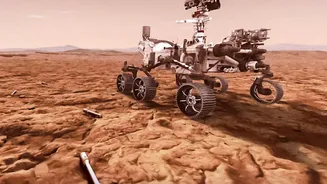
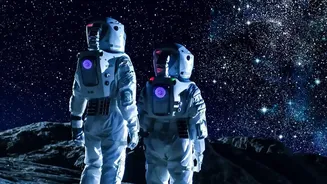
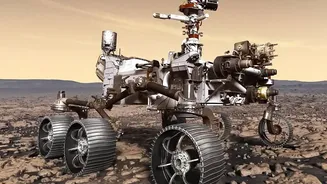
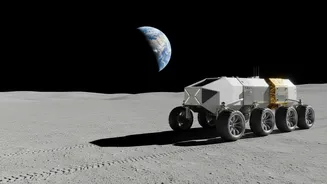
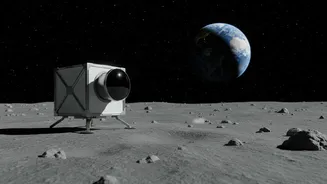
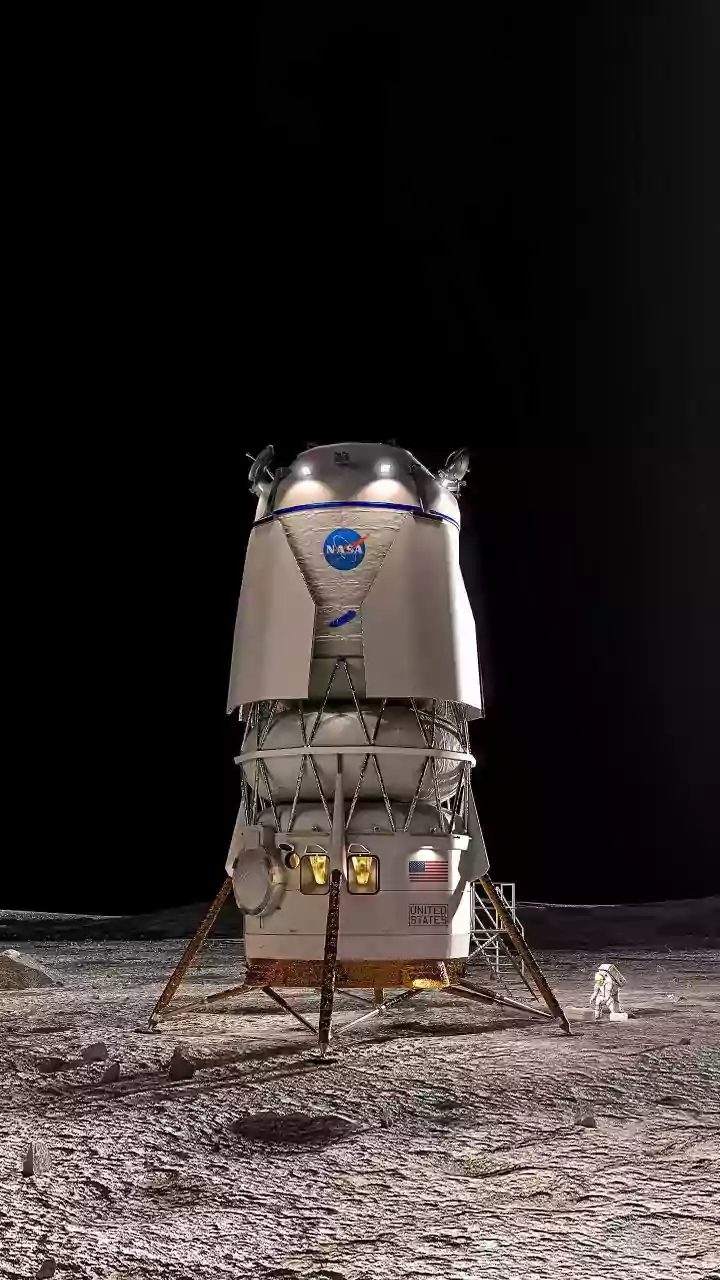
This technology is not just a clever experiment; it is a cornerstone of the entire Artemis program. Future missions envision a bustling lunar South Pole, with astronauts driving advanced Lunar Terrain Vehicles (LTVs), robotic rovers prospecting for ice in shadowed craters, and landers delivering supplies to a permanent base camp. None of this is practical if every asset needs to be micromanaged from Earth. Autonomous navigation is essential. With a LunaNet system in place, an LTV could navigate to a geological site on its own, a science rover could reposition itself to get better sunlight for its solar panels, and astronauts could explore with the confidence of having a reliable map and positioning system. It transforms lunar exploration from a series of carefully choreographed sorties into a sustained, dynamic human and robotic presence.
Beyond a Dotted Line on a Map
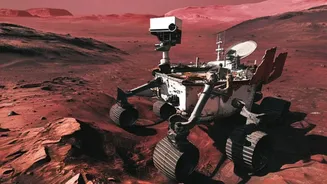
The ability to navigate autonomously unlocks a cascade of other capabilities. Future rovers will not only know where they are but will be able to make their own decisions. Combining navigation data with advanced sensors like LiDAR and cameras, a rover can create 3D maps of its surroundings, detect hazards like rocks or steep slopes, and plot the safest and most efficient path to its destination without human intervention. This capability is crucial for long-duration missions where rovers might operate for months or years. This new generation of smart, autonomous vehicles will be able to build structures, transport cargo between outposts, and conduct scientific surveys over vast areas, laying the physical and digital infrastructure for a true lunar economy.