







What Was the Test?
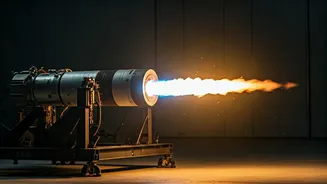
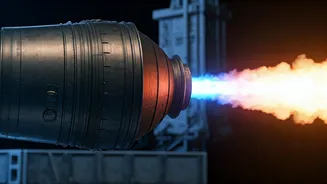
On July 3, 2026, engineers at the Satish Dhawan Space Centre in Sriharikota successfully conducted the first static ground test of a new solid motor. This motor is the powerhouse for a newly developed rocket called the Sub-Orbital Launch Vehicle for Experiments,
or SOLVE. During the test, the motor was fired while held stationary to the ground, allowing scientists to measure its performance and ensure all parameters met their predictions. ISRO confirmed the test was a complete success, with the motor performing exactly as expected.
A Vehicle for Parachute Testing
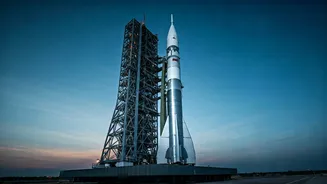
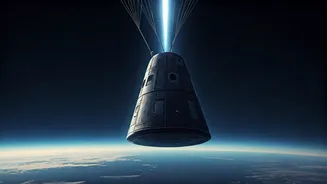
The SOLVE vehicle isn't designed to go into orbit. Instead, it has a very specific and critical job: testing the complex parachute system for the Gaganyaan crew module. For India to send astronauts to space and bring them back safely, the capsule they travel in must be able to slow down from incredible speeds as it re-enters Earth's atmosphere. This is where the parachutes come in. The SOLVE rocket will carry a test version of the crew module to an altitude of between 10 and 17 kilometres. After separating from the rocket, the module will deploy a sequence of 10 different parachutes to ensure a controlled and gentle splashdown in the sea. This recent test proves that the motor built to launch these crucial test flights is ready for the task.
Why This Motor Is Special
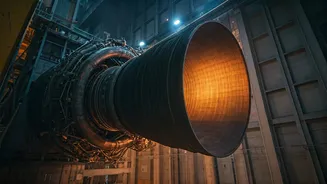
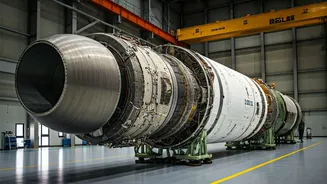
While based on the design of the proven strap-on motors from ISRO's workhorse PSLV rocket, the SOLVE motor has been significantly modified for its unique role in the Gaganyaan program. Engineers have developed it with a special slow burn-rate propellant and a straight nozzle. It also includes a secondary injection thrust vector control system, which allows the vehicle to be steered during its short flight. These modifications give ISRO greater flexibility to simulate the diverse and challenging conditions the crew module might face during an actual mission, making the parachute tests more reliable and comprehensive.
The Bigger Picture for Gaganyaan
This successful test is another piece of the giant puzzle that is the Gaganyaan mission. The overall goal is to launch a crew of three astronauts into an orbit 400 kilometres above Earth for a three-day mission and return them safely. Before putting humans on board, ISRO is committed to a rigorous testing schedule, including several uncrewed flights. This methodical approach, testing every component from engines to escape systems to parachutes, is fundamental to ensuring the safety of the 'Gaganyatris'—the astronauts selected for this historic endeavour. This static fire test for the SOLVE vehicle is a critical step in a long series of validations that pave the way for the first uncrewed, and eventually crewed, flights.