




What Was Discovered in Ladakh?
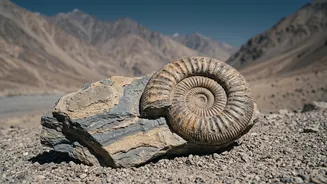
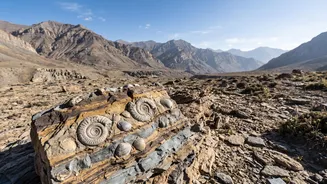
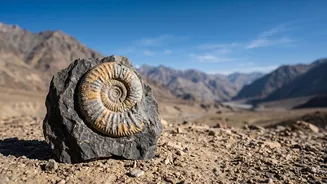
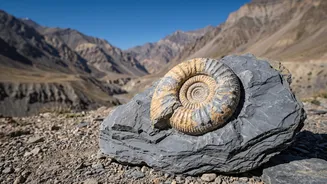
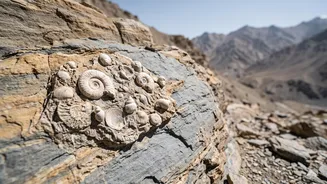
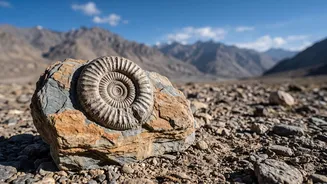
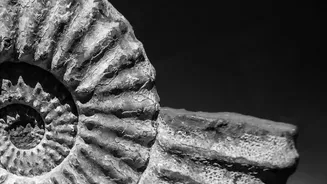
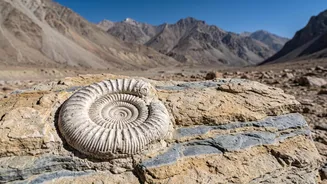
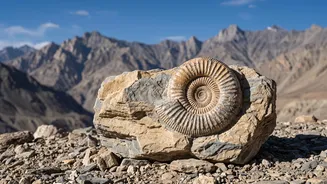
In September 2026, geologist Dr. Ritesh Arya announced the discovery of a rich collection of Eocene marine fossils in the Nyoma area of Ladakh's Changthang region. The find is dominated by spiral-shaped gastropods (snails), bivalves, and oyster-like specimens.
Preliminary analysis dates these fossils to approximately 34-38 million years ago. This discovery was made during a geological expedition by Dr. Arya, who is the founder of the Tethys Fossil Museum. He noted that the fossils bear a striking resemblance to those commonly found in the Subathu Formation in the outer Himalayas, but finding them this far east in Ladakh was a genuine surprise.
Sea Fossils in the Mountains? The Tethys Ocean Story
Finding marine life thousands of metres above sea level is a direct consequence of one of the most dramatic events in Earth's history: the formation of the Himalayas. Around 50 million years ago, the landmass that is now the Indian subcontinent collided with the Eurasian plate. Before this collision, a vast body of water called the Tethys Ocean separated the two continents. As the Indian plate pushed northward, the Tethys Ocean began to shrink. The immense pressure of the colliding plates forced the land to buckle and rise, trapping and uplifting ancient seabeds. The fossils found today are the preserved remains of the creatures that once lived in that long-vanished ocean. They are physical proof that the mighty Himalayas were once at the bottom of the sea.
Understanding the 'Subathu Marine Link'
The term 'Subathu Marine Link' refers to the Subathu Formation, a well-known sequence of sedimentary rocks found in the Himalayas. These rock layers, composed of limestone and mudrock, were deposited in a shallow marine environment during the Eocene epoch (roughly 56 to 34 million years ago). They represent the final stages of the Tethys Ocean before it completely disappeared as the Indian and Asian continents converged. The fossils within the Subathu Formation act as crucial markers for geologists. The discovery in Nyoma is significant because it suggests this shallow sea extended much farther east into Ladakh than previously confirmed. It helps scientists map the ancient coastline of the Tethys with greater accuracy.
Why This Find Matters (Without the Hype)
The headline's call to understand the find 'without the hype' is an important one. This discovery doesn't completely rewrite the history of the Himalayas, but it adds a critical, high-resolution detail to the existing timeline. For scientists, the key takeaway is the potential eastward extension of the Subathu sea. It helps refine our understanding of the exact palaeogeography—the ancient geography—of the region just before the final, major uplift of the Himalayan range. Dr. Arya and his team's findings will now undergo detailed study to confirm the species, their precise age, and their exact geological context. This is not about a single 'breakthrough' that changes everything, but rather a crucial piece of a massive geological puzzle that confirms and elaborates upon decades of scientific theory about the mountain-building process.
A Different Ladakh, Millions of Years Ago
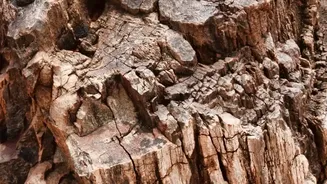
The combination of these marine fossils with other finds in the region, such as fossilised palms and wood, paints a picture of a Ladakh that is unrecognisable today. Instead of a cold, high-altitude desert, this evidence points to a warm, near-coastal environment during the Eocene. The landscape was likely a transitional zone where marine ecosystems met subtropical land environments. The fossils tell a story of a dramatically different climate and geography, providing tangible evidence of the immense geological forces and climatic shifts that have shaped the Indian subcontinent over millions of years. This single discovery connects the barren landscapes of modern Ladakh to the warm, shallow waters of an ancient ocean.