


The Contenders: A Tale of Two Roots
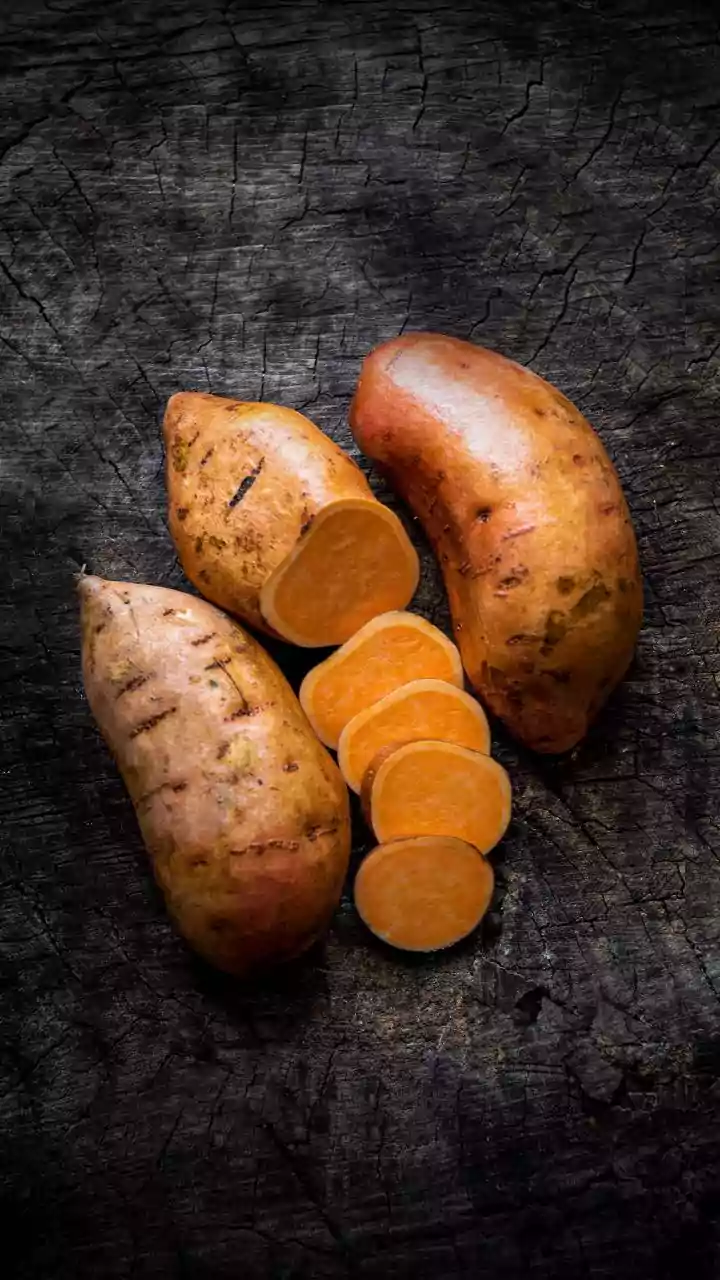
On the surface, carrots and sweet potatoes seem quite similar. Both are root vegetables, celebrated for their orange hue which signals a high content of beta-carotene. They are fixtures in everything from comforting sabzis and hearty soups to healthy
juices and even sweet treats like gajar ka halwa. While both are undeniably healthy, their nutritional profiles have key differences that might make one a better fit for your specific dietary goals. We'll compare them based on a standard 100-gram serving to keep the playing field level.
Energy Density and Calorie Count
Energy density refers to the number of calories in a given amount of food. Foods with low energy density provide fewer calories per gram, which can be beneficial for weight management as you can eat a larger volume. Here, carrots have a clear advantage. A 100-gram serving of raw carrots contains around 41 calories, whereas the same amount of sweet potato has about 76 to 86 calories. This is primarily because sweet potatoes are starchier and contain more carbohydrates (about 17-20 grams) compared to carrots (around 9.6 grams). If your main goal is weight loss or managing calorie intake, carrots are the lower-energy-density option, allowing for a bigger serving with fewer calories.
The Vitamin Showdown
Both vegetables are famous for Vitamin A, crucial for vision, immune function, and skin health. Our bodies convert the beta-carotene in these veggies into Vitamin A. While both are excellent sources, sweet potatoes often have a slight edge, with a single baked sweet potato potentially offering over 400% of your daily recommended dose. However, per calorie, carrots can provide a more concentrated punch of Vitamin A. Beyond this, sweet potatoes generally offer more Vitamin C, B5, and B6. Carrots, on the other hand, are a significantly better source of Vitamin K, which is essential for blood clotting and bone health.
A Mine of Minerals
When it comes to minerals, the competition is tight, but sweet potatoes tend to pull ahead in several categories. They are a richer source of manganese, copper, and potassium. Potassium is particularly important for regulating blood pressure, and sweet potatoes contain slightly more than carrots. However, the differences for some minerals like iron and calcium are often minimal. Both vegetables contribute valuable minerals to your diet, helping with everything from nerve function to building strong bones, so including a variety is always the best strategy.
Fibre and Blood Sugar Impact
Fibre is essential for digestive health and feeling full. Both vegetables are good sources of fibre, which helps feed beneficial gut bacteria. In terms of their effect on blood sugar, we look at the Glycemic Index (GI). The GI measures how quickly a food raises blood sugar levels. Here, carrots have a lower GI. Raw carrots have a very low GI of around 16-35, while even boiled carrots stay in the low range at about 39. Sweet potatoes have a higher GI, which can range from 44 for boiled to 61 or higher for baked. For individuals managing blood sugar, carrots might be the more stable choice.
The Culinary and Health Verdict
So, which orange vegetable should you choose? The truth is, you can't go wrong with either. The 'better' choice depends entirely on your personal health objectives. For lower calories, lower carbs, and a smaller impact on blood sugar, carrots are the winner. For a higher dose of energy-giving complex carbs, more protein, and a greater overall concentration of certain vitamins and minerals like manganese and Vitamin B6, the sweet potato is a champion. The best approach is not to pick one over the other but to enjoy both. Their unique nutritional profiles complement each other. Roasting both vegetables with a little healthy fat, like olive oil, can also help your body better absorb their fat-soluble vitamins, including the all-important beta-carotene.