




The Galaxy's Quiet Giant
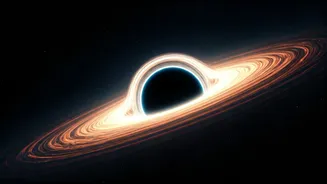
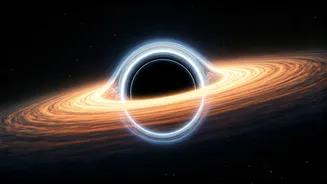
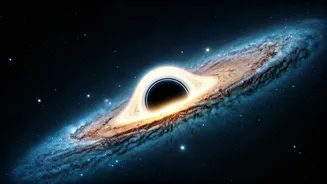
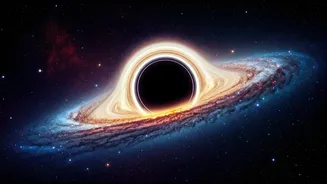
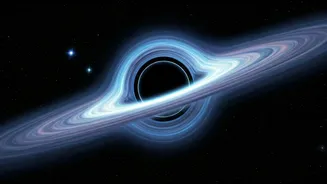
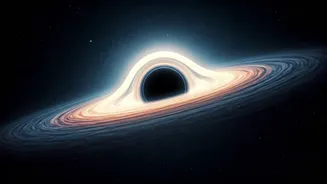
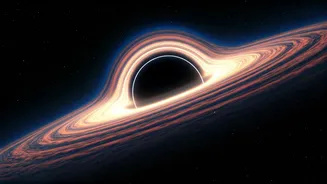
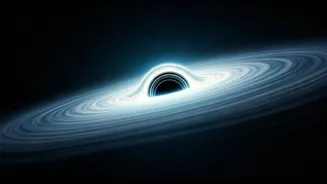
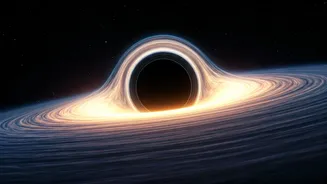
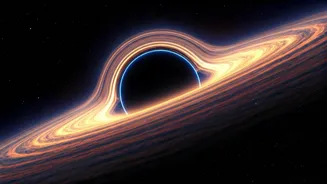
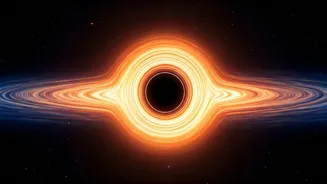
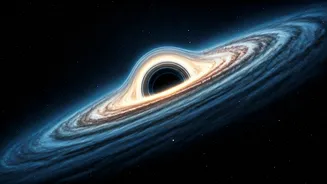
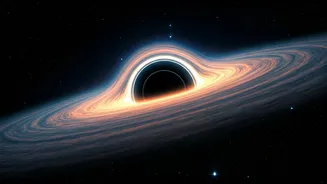
At the center of our Milky Way, about 27,000 light-years from Earth, lurks a supermassive black hole named Sagittarius A, or Sgr A for short. With a mass about four million times that of our sun, it’s a gravitational monster. For decades, scientists have
theorized that as black holes feed on surrounding gas and dust, they should also expel some of this material in the form of powerful winds or jets. While this has been observed in more active, distant galaxies, our own Sgr A remained a puzzle. It appeared unusually quiet, leading to a 50-year search for any sign of a cosmic exhale. Its diet is so meager it’s been compared to a human eating a single grain of rice over a million years, making any potential wind incredibly faint and hard to detect.
A 50-Year Mystery Solved
Now, a team of astrophysicists from Northwestern University reports they have finally found what everyone was looking for. Using years of detailed observations, they have uncovered the first clear evidence of a wind blowing from Sgr A. Researchers spent over 100 hours collecting data with the Atacama Large Millimeter/Submillimeter Array (ALMA) in Chile, a powerful network of radio telescopes. By creating the sharpest-ever map of the cold gas surrounding the black hole, they noticed something striking: a huge, cone-shaped cavity where that gas was missing. This void, stretching about three light-years long, points directly back at Sgr A.
How They Saw the Invisible
The discovery was a masterful piece of astronomical detective work. The team theorized that a hot wind streaming from the black hole was responsible for this cavity. This hot outflow would either push the surrounding cold molecular gas away or heat it up so much that it becomes invisible to the radio telescopes looking for it. To confirm this, they compared their radio data with X-ray observations from NASA's Chandra X-ray Observatory. The Chandra data revealed hot, X-ray-emitting gas perfectly filling the cone-shaped void seen in the radio map, confirming that something energetic was clearing out the area. The team ruled out other possibilities, like winds from nearby stars, concluding that only the black hole could supply enough power to create such a large feature.
More Than Just a Taker
This finding fundamentally changes our understanding of our own galactic center. It shows that Sgr A is not a passive anomaly but an active participant in its cosmic neighborhood, behaving much like black holes in other galaxies, just on a much quieter scale. These outflows, even gentle ones, play a crucial role in galactic evolution. They can push gas around, influencing where and when new stars form. While the winds from Sgr A are described as a 'gentle breeze' compared to the 'fireworks' seen in more active galaxies, they have likely been blowing for at least 20,000 years. This discovery provides a unique window into the typical, quiet state that most supermassive black holes likely exist in for most of their lives.