


A Discovery Unlike Previous Finds
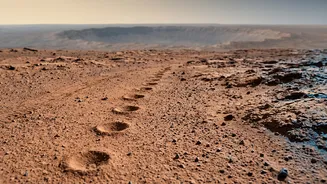
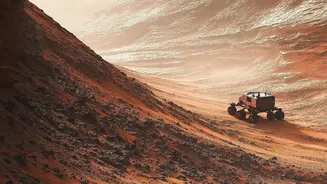
For years, NASA's Curiosity rover has been exploring Gale Crater, a vast, dry lakebed dominated by the towering Mount Sharp. It has seen bizarre rock textures and surprising minerals, but a recent find in a region called Valle Grande presented a new kind
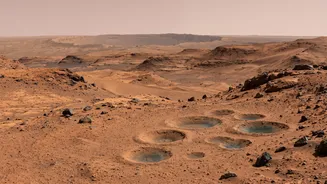
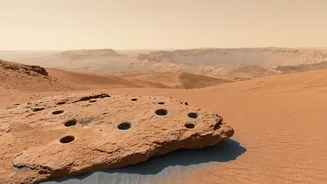
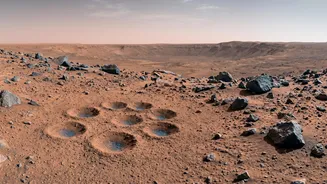
of weird. While trekking through sulfate-rich rock layers, the rover came across a series of small, shallow divots in the ground. Holes on Mars are nothing new; the planet is constantly peppered by meteorites. But these pits are different. They are unusually broad and shallow, and crucially, they lack the debris that would normally be associated with an impact or a known geological process.
The Usual Suspects Don't Fit
On both Earth and Mars, one common way small pits form is when hard pebbles or mineral nodules are embedded in softer rock. Over eons, the softer surrounding material erodes away, and eventually, the harder pebble is dislodged, leaving behind a small cavity. However, the science team behind Curiosity noted that these new holes don't fit that model. There were no obvious pebbles or nodules nearby that looked like they once occupied the pits. The features were simply too broad and shallow compared to these typical formations, forcing researchers to look for other explanations. Meteorite impacts have also been largely ruled out for these specific holes.
Could It Be Erosion or Geology?
With the most common explanations looking unlikely, scientists are considering more unusual geological or erosional processes. Mars has a thin atmosphere, but its winds can be powerful, sandblasting rock surfaces over millions of years into strange shapes called ventifacts. Some previous discoveries of odd, coral-like formations have been attributed to this process, where ancient groundwater deposited minerals that hardened, and wind later eroded the softer rock around them. It's possible these holes are the result of a similar but previously unseen erosion pattern. The rover is also documenting rapid changes in the surrounding rock beds, where some layers resist erosion differently than their neighbors, suggesting a complex geological history.
The Challenge of Remote Investigation
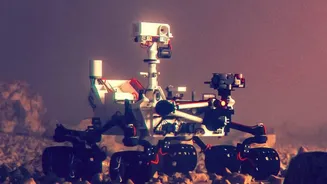
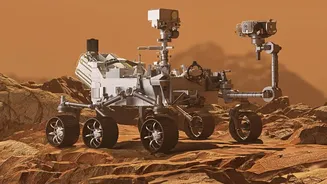
So, why can't scientists be sure? The core of the mystery lies in the immense difficulty of doing geology from another planet. The Curiosity rover is a marvel of engineering, but it is not a human geologist. It has a limited set of tools and can only perform the analyses it was designed for. To get a definitive answer, scientists need more data. The rover is using its Mars Hand Lens Imager (MAHLI) for close-up shots and its Mastcam to create 3D models of the pits to measure their exact shapes and depths. This will help them work backward to figure out how they formed. However, confirming a novel geological process without being able to physically handle the rock, crack it open, or run a full suite of lab tests is incredibly challenging. Every new discovery is a slow, methodical process of gathering clues and ruling out possibilities.