







A Subsurface Glacier Revealed
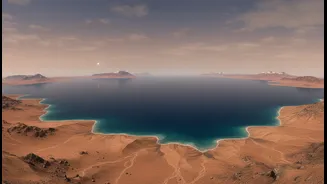
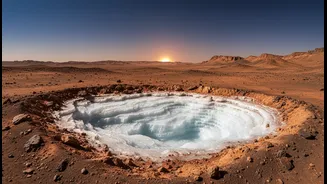
Scientists, using data from NASA's Mars Reconnaissance Orbiter (MRO), have uncovered compelling evidence of a massive, relatively pure sheet of water ice buried just beneath the surface of Mars. Located in a region known as Arcadia Planitia, this deposit
is not just another patch of frost. Analyses based on ground-penetrating radar from the orbiter's SHARAD instrument suggest the ice layer is widespread and could be tens of meters thick. This isn't just a scientific curiosity; it's a potential resource goldmine, a frozen reservoir waiting in a location far more hospitable than previously confirmed ice deposits.
Location, Location, Location
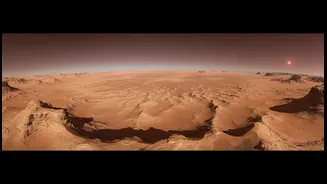
What makes the Arcadia Planitia discovery so significant is its address. Most of Mars's known water ice is locked away at its poles, which are incredibly cold and dark, making them treacherous and impractical for landing and sustaining a long-term human presence. Arcadia Planitia, however, is in the northern mid-latitudes. This region offers a crucial compromise: it is cold enough to keep the ice stable just below the surface, but it receives enough sunlight for solar-powered missions and has more moderate temperatures than the poles. Furthermore, the terrain is relatively smooth and flat, which is a critical safety factor for landing a spacecraft carrying human astronauts. This combination of accessible resources and favorable landing conditions is precisely what mission planners have been searching for.
Why Ice is a Game-Changer for Mars Missions
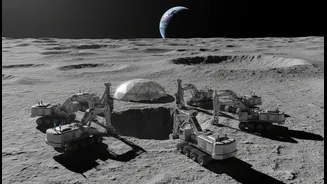
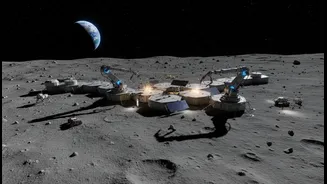
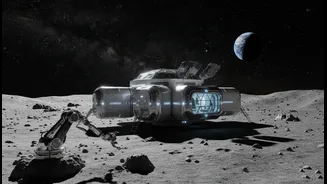
For future astronauts, water ice is the most valuable resource on Mars. The cost of launching every kilogram of supplies from Earth is astronomical, so the ability to live off the land—a concept known as In-Situ Resource Utilization (ISRU)—is essential. This newly identified ice could be excavated with relative ease, perhaps with robotic equipment not much more complex than a backhoe. Once extracted, it can be melted for drinking water. More importantly, it can be split into its component elements: oxygen for breathable air and hydrogen for manufacturing rocket propellant. Having a ready supply of these essentials on Mars could drastically reduce the mass and cost of a human mission, making a return journey to Earth feasible without hauling all the fuel from home.
Recalibrating the Exploration Map
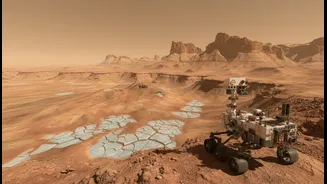
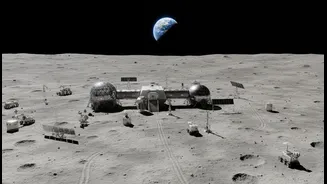
This finding immediately elevates Mars's northern plains on the list of potential destinations for the first crewed missions. For years, agencies like NASA have been meticulously mapping the planet, weighing the scientific interest of various sites against the logistical challenges. While rovers like Perseverance explore ancient lakebeds for signs of past life, the strategic imperative for human missions is finding resources to sustain them. The confirmation of such a large and accessible ice sheet in Arcadia Planitia provides a powerful new focal point for mission architects. It could shift the strategic center of gravity for human exploration away from other compelling but resource-poor regions, streamlining the site selection process for the monumental first steps of humanity on another planet.
Next Steps: From Orbit to the Ground
While the data from the Mars Reconnaissance Orbiter is incredibly persuasive, the next logical step is on-the-ground verification. Future robotic missions, potentially including concepts like the Mars Ice Mapper, could be designed specifically to further characterize these subsurface deposits. These missions would confirm the ice's purity, depth, and the exact engineering requirements to extract it. Beyond its utility, the ice also represents a pristine record of Mars's climate history, holding clues about a time when the planet may have been more Earth-like. Sampling these ancient ice layers could answer fundamental questions about the planet's evolution, and perhaps, its potential to have ever supported life.