






A Look at the Numbers
Recent data disclosed by the Ministry of Health and Family Welfare presents a concerning picture of food safety across the nation. During the 2025-26 fiscal year, a staggering 40,023 out of 2,23,808 food samples analysed were found to be “non-conforming”
with regulations. This means that nearly one in every five food items tested failed to meet the required standards. This statistic is particularly relevant during festive periods like Navratri and Diwali, when the production and consumption of sweets, dairy products, and snacks skyrocket. The Food Safety and Standards Authority of India (FSSAI) has noted this seasonal risk and has directed states to ramp up inspections to prevent unsafe products from reaching consumers.
What 'Non-Conforming' Really Means
The term “non-conforming” covers a wide spectrum of issues, not all of which mean the food is immediately dangerous. It is crucial to understand the distinctions. A product can be classified as sub-standard, meaning its quality does not meet the prescribed benchmark. For example, ghee may have a lower fat content than required. Another major issue is misbranding, which involves incorrect or misleading information on the packaging. This can include everything from a missing manufacturing date to false nutritional claims. The most serious category is adulterated or unsafe food, which contains harmful additives, contaminants, or substances that are injurious to health. Recent raids have uncovered thousands of kilograms of adulterated khoya and paneer, some containing detergent.
The Usual Suspects: Foods at High Risk
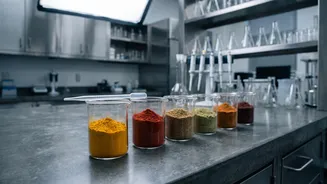
During festivals, certain food items are more prone to adulteration due to high demand and the potential for high profits. Milk and milk-based products like khoya, paneer, and ghee are primary targets. Khoya is often bulked up with starch, while ghee can be mixed with cheaper vanaspati or animal fats. Sweets are another major area of concern. Unpermitted, bright artificial colours are often used to make them look more appealing. The decorative silver foil (vark) is frequently replaced with cheaper aluminium foil, which is toxic when consumed. Other items under scrutiny include edible oils, which can be mixed with the highly toxic argemone oil, and spices like red chilli powder, which may contain brick powder.
How Authorities Are Responding
In response to these persistent issues, FSSAI has ordered intensified surveillance and enforcement drives across all states, particularly for the festive season. These drives focus on hotspots known for food adulteration and include extensive sampling of high-risk items. The regulator has also encouraged the deployment of 'Food Safety on Wheels'—mobile testing labs that can conduct on-the-spot tests and raise consumer awareness. For businesses found in violation, the penalties can be severe. They range from monetary fines, which can go up to ₹10 lakh for misleading advertisements or selling unsafe food, to imprisonment. In serious cases where adulterated food causes grievous injury or death, offenders can face life imprisonment. Additionally, authorities can suspend or cancel FSSAI licenses, effectively shutting down non-compliant businesses.
Your Festive Food Safety Checklist
While regulators are taking action, consumers are the first line of defence. Being a vigilant shopper can significantly reduce your risk. First, always buy from reputable and licensed vendors; look for the FSSAI license number displayed on the premises and packaging. When buying packaged goods, carefully check the label for the manufacturing date, 'best before' date, and ingredient list. Be wary of sweets that are excessively colourful. For loose sweets, FSSAI has made it mandatory for shops to display a 'best before' date. Simple home tests, outlined in FSSAI's DART manual, can help detect common adulterants. For example, a drop of pure milk will flow slowly down a slanted surface leaving a white trail, while milk adulterated with water will flow quickly without leaving a mark. Similarly, you can detect starch in khoya by boiling it with water, cooling it, and adding a drop of iodine—a blue colour indicates adulteration.