


A New Window on the Cosmos
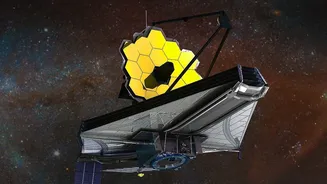
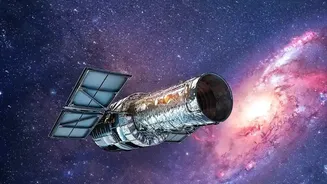
Imagine trying to see through a thick fog. That’s the challenge astronomers face when studying the birth of stars and planets, which are shrouded in dense clouds of cosmic dust. While telescopes like Hubble see in visible light and the James Webb Space
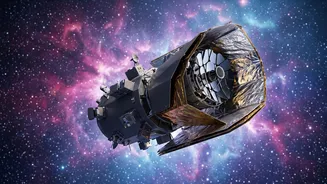
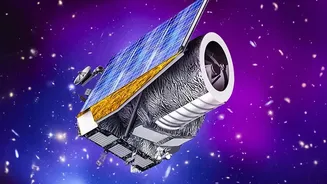
Telescope (JWST) specializes in near- and mid-infrared, a huge portion of the universe remains obscured. This is where far-infrared light comes in. NASA’s newly announced PRIMA mission is being designed specifically to capture these longer, cooler wavelengths. By doing so, it will bypass the cosmic dust and reveal processes that are currently invisible, bridging a critical gap between what JWST can see and what ground-based radio telescopes can detect. It will feature a 1.8-meter (5.9-foot) telescope, cryogenically cooled to reduce thermal interference, making it vastly more sensitive than previous far-infrared missions like the European Space Agency's Herschel Space Observatory.
Answering Foundational Questions
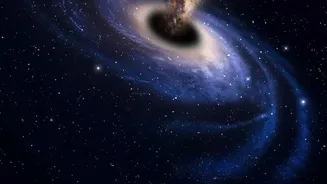
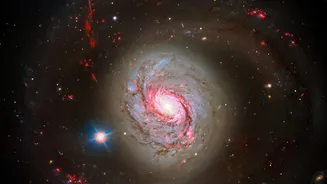
The PRIMA mission has ambitious goals that strike at the heart of astrophysics. Its primary objective is to untangle the complex story of cosmic evolution. Scientists plan to use it to study how galaxies and their supermassive black holes grow and evolve over billions of years. The telescope will also investigate the lifecycle of heavy elements and dust—the very building blocks of planets and people—tracking how they have accumulated throughout the universe's history. According to Nicky Fox, an associate administrator at NASA, the mission will help us better understand everything from the formation of planets to how water on Earth may have originated. It offers humanity a new window into the deep universe, promising to unveil what has long been obscured.
The Hunt for Water and Life's Origins
One of PRIMA's most compelling tasks will be to follow the trail of water across the cosmos. This specific wavelength of light is perfect for detecting water vapor in the vast disks of gas and dust surrounding young stars, which are the nurseries where new planets are born. While JWST has revolutionized our understanding of exoplanets, it cannot detect the specific spectral lines needed to quantify water's role in planet formation. PRIMA will be able to measure the total mass of these protoplanetary disks and their chemical composition, revealing where and how planets, including those similar to our own, begin to form. This capability is crucial for understanding the conditions that might lead to habitable worlds.
A New Class of Mission
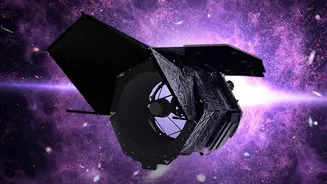
PRIMA is not just another telescope; it represents a new strategic approach for NASA. It is the first mission in a new category called Probe Explorers, which was recommended by the National Academies as a way to conduct powerful, high-priority science at a more constrained cost. With a projected cost cap of $1.2 billion (excluding launch), PRIMA is designed to be a significant scientific tool without the massive $10 billion price tag of a flagship mission like JWST. This new class allows for more frequent launches of highly capable observatories, keeping the cadence of major astronomical discovery moving forward following the recent launch of the Nancy Grace Roman Space Telescope. PRIMA is a truly global effort, with contributions from the space agencies of Canada, France, Germany, Japan, and others, managed by NASA's Jet Propulsion Laboratory.
The Path to Launch in 2033
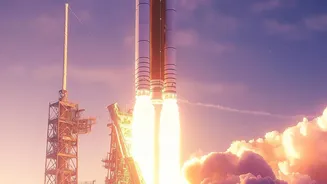
While the scientific promise is immense, PRIMA is not yet a certainty. In September 2026, NASA announced that the mission has advanced to Phase B. This is a critical stage where the preliminary design is refined and the necessary technology is developed. The mission must now undergo a rigorous confirmation review where NASA will assess its technical feasibility, programmatic progress, and cost performance. If it clears this hurdle and moves to the next phase, NASA will target a launch no earlier than 2033 for a planned five-year mission. This review process ensures that ambitious projects remain on track and can deliver on their promises before full-scale implementation begins.