






Planning for a Problem That Isn't Here
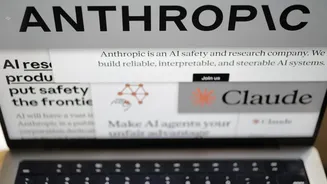
In a surprising turn for an industry defined by predicting the future, leading artificial intelligence companies like OpenAI and Anthropic are shifting their focus from forecasting specific threats to building a general state of 'readiness' for crises.
This involves creating detailed internal frameworks and response plans for catastrophic events that are, for now, purely hypothetical. While corporate crisis planning is standard practice, what makes this unique is the admission that many of the gravest risks are not yet understood or quantifiable. Insiders reportedly believe a major AI-related incident, such as a large-scale cyberattack on critical infrastructure, is not a matter of 'if' but 'when', with some anticipating an event within the next year. This has prompted a strategic pivot: instead of trying to predict the exact nature of the storm, they are building a stronger ship.
What Are They Actually Worried About?
The spectrum of risks being considered is broad, ranging from near-term misuse to long-term existential threats. OpenAI's 'Preparedness Framework', for example, specifically tracks emerging capabilities in areas like cybersecurity, where AI could scale attacks; chemical and biological threats, where AI might lower the barrier to creating weapons; and autonomous replication, where an AI could improve itself beyond human control. Similarly, Anthropic’s 'Responsible Scaling Policy' establishes safety levels that trigger specific security and deployment restrictions as models become more powerful. These policies explicitly plan for scenarios where models could be used for manipulation, gain unauthorized access to systems, or otherwise behave in harmful, unexpected ways. The concern is that as models advance, they could introduce entirely new pathways to causing severe harm.
The Readiness vs. Forecasting Dilemma
The emphasis on readiness stems from a 'preparedness paradox'. While executives are optimistic about AI's potential, the security experts on the ground are more pragmatic about the emerging dangers. Forecasting the precise capabilities of next-generation models is incredibly difficult. Safety researchers have found it challenging to confidently rule out dangerous capabilities in the most advanced models. This uncertainty makes a readiness-based approach more practical. Rather than waiting for a verified forecast of a specific danger—which might arrive too late—companies are building the governance structures, red-teaming exercises, and technical safeguards needed to react quickly to a wide range of potential failures. This includes setting clear thresholds for when to pause development or deployment if a model becomes too capable before sufficient safeguards are in place.
Is This Prudence or Public Relations?
This public commitment to safety planning serves a dual purpose. On one hand, it’s a genuine attempt to grapple with unprecedented risks. Labs like Anthropic and OpenAI have been vocal about the need for caution, even calling for a slowdown in development. On the other hand, it's also a strategic move to shape future regulation. By proactively creating safety frameworks, these companies position themselves as responsible actors. Many in the industry believe that meaningful regulation is unlikely to pass until after a major AI-driven disaster occurs. By 'educating' lawmakers and preparing for 'day after' scenarios now, these companies hope to influence any reactive legislation and avoid knee-jerk policies that could stifle innovation. Critics argue this could be a strategy to invite friendly regulation that protects incumbent players rather than the public.
The Uncharted Road Ahead
Ultimately, this shift toward readiness highlights a fundamental tension in the AI industry: the race for innovation is happening faster than our ability to understand its consequences. Companies are building frameworks to manage risks they admit they cannot fully predict. This involves creating internal safety teams, running constant evaluations, and establishing 'kill switch' protocols for advanced systems. While these plans are a crucial step, they also underscore the profound challenge of governing a technology that is evolving at an exponential rate. The success of these readiness plans depends on a company’s ability to stay ahead of its own creations—a race with incredibly high stakes for both the industry and society at large.