

Our Guide: Earth's Magnetic Shield
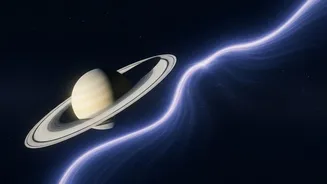
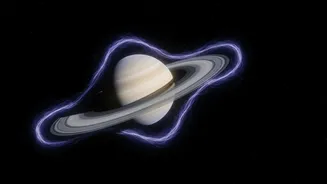
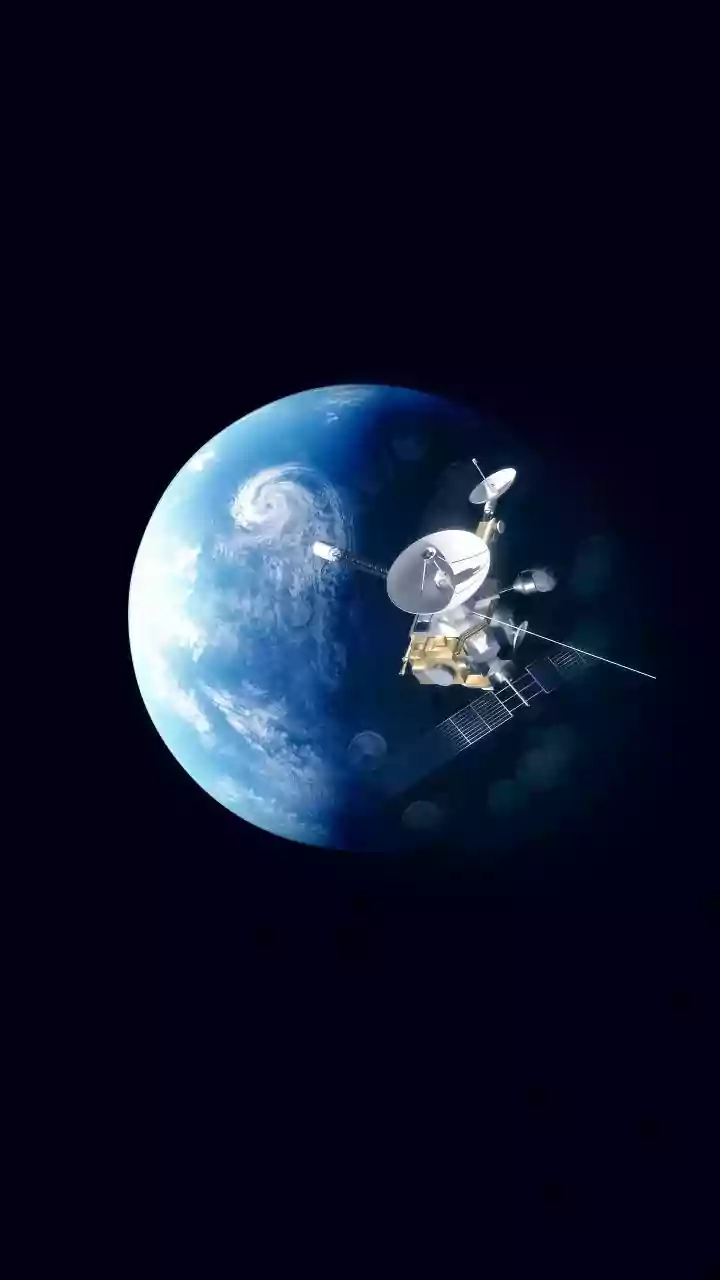
To understand what’s happening at Saturn, it helps to start with our home planet. Earth is wrapped in a protective magnetic bubble called a magnetosphere. This shield, generated by our planet’s core, deflects most of the high-energy charged particles
constantly streaming from the Sun, known as the solar wind. However, this shield isn't perfect. Near the poles, there are funnel-shaped openings called cusps, where solar wind can sneak in, creating phenomena like the aurora. On Earth, these cusps are generally located on the side of the planet facing the Sun, around noon local time. For decades, this has been our primary model for how a planet’s magnetosphere works.
The Saturnian Puzzle
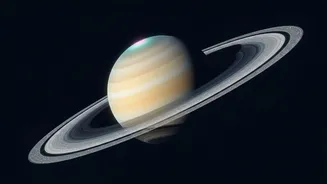
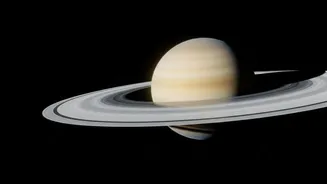
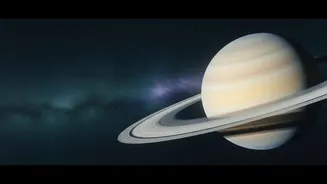
Saturn, however, is a different kind of beast. It’s a gas giant that spins incredibly fast, completing a day in just under 11 hours. Its magnetosphere is enormous, extending more than ten times the width of the planet itself. Scientists have long suspected that the rules governing Earth's magnetic field might not fully apply to Saturn. Early observations from the Pioneer and Voyager missions, and later Cassini, confirmed that Saturn's magnetosphere was complex, but the full picture remained elusive. A major question was whether the Sun's solar wind was the main driver of its shape, as it is for Earth, or if something else was in control.
Cassini's Data Reveals a New Twist
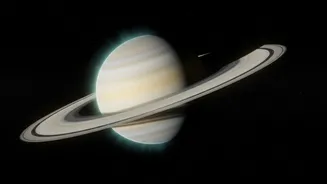
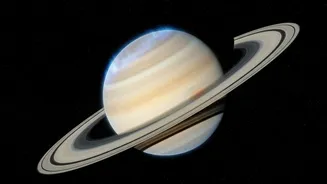
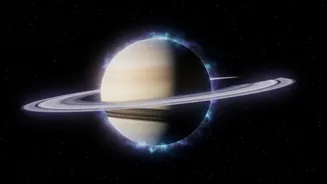
Though the Cassini mission concluded its journey by plunging into Saturn in 2017, the treasure trove of data it collected is still being analyzed. In a recent study, scientists sifted through six years of Cassini's observations to map out Saturn's magnetosphere in detail. They found something surprising: Saturn’s magnetic cusps are not where they are supposed to be. Instead of being centered around noon, they are significantly and consistently shifted toward the dusk, or afternoon, side of the planet, often appearing between 1:00 PM and 3:00 PM local time, and sometimes even later. This lopsided structure points to a system that is fundamentally different from Earth's.
The Culprits: Fast Spin and a Watery Moon
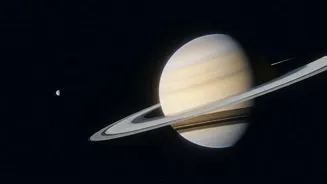
So what is causing this dramatic distortion? The new analysis confirms it’s a one-two punch from Saturn itself and one of its most fascinating moons. The first force is the planet's breakneck rotation. This rapid spin essentially tries to fling the magnetic field outward. The second, and crucial, ingredient is a massive cloud of plasma—a soup of ionized gas—originating from the geysers on Saturn’s icy moon, Enceladus. This material from Enceladus gets caught in Saturn’s magnetic field and, due to the planet’s fast spin, is dragged around with it. This heavy, rotating plasma creates an internal pressure that overpowers the influence of the solar wind, effectively warping the entire magnetic bubble and pushing the cusps far into the afternoon.
Why This Asymmetry Matters
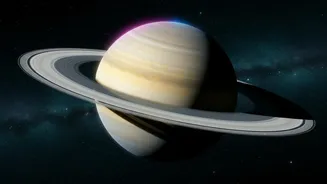
This discovery does more than just solve a planetary puzzle; it has major implications for our understanding of gas giants. Knowing the true location of Saturn's cusps helps explain the behavior of its bright auroras and tells scientists where to look for explosive energy releases in the magnetosphere. It forces a rewrite of the models for how these giant planetary systems work. Furthermore, this provides a vital new template for understanding worlds beyond our own solar system. As we discover more exoplanets, many of which are fast-spinning gas giants, this new understanding of Saturn's internally-driven magnetosphere will be crucial for interpreting what their environments might be like.