



The 'Child of Krakatoa' Awakens
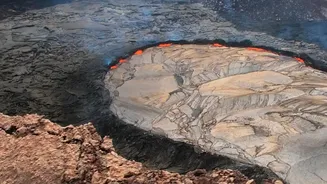
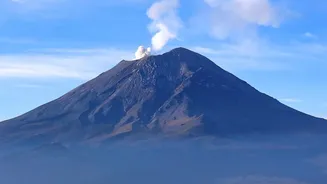
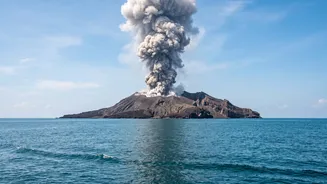
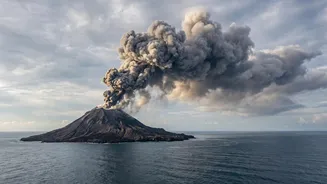
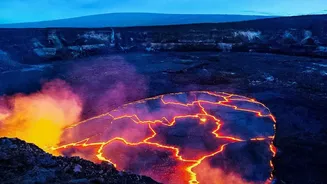
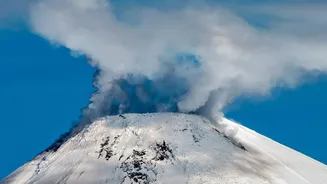
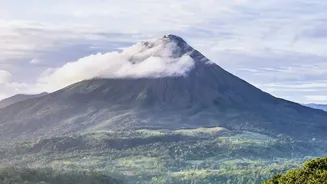
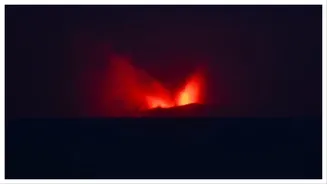
Situated in the Sunda Strait between the Indonesian islands of Java and Sumatra, Anak Krakatau, or 'Child of Krakatoa', is a volcano born from the cataclysmic 1883 eruption of Krakatoa. In early September 2026, it roared back to life with a series of eruptions.
These events sent plumes of volcanic ash thousands of metres into the atmosphere, forcing the temporary closure of at least eight airports, including Jakarta's main Soekarno-Hatta International Airport. Thousands of passengers were stranded as over 1,500 flights were cancelled or delayed, a stark illustration of how a single volcano can impact a vast and busy aviation network. The volcano's alert level was raised to Level III (Alert), with authorities advising against any activity within a several-kilometre radius.
Why Ash and Engines Don't Mix
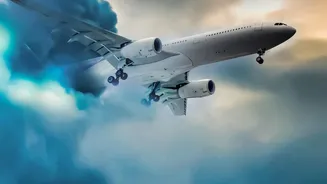
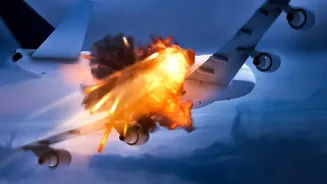
To a passenger, a volcanic ash cloud might look like a regular weather cloud, but to an aircraft, it's a severe hazard. Unlike the soft soot from a fire, volcanic ash is composed of tiny, jagged particles of rock, minerals, and volcanic glass. These particles are highly abrasive and can sandblast cockpit windows, impairing pilot visibility. They can also clog the pitot tubes, which are vital sensors for determining an aircraft's airspeed. The most critical danger, however, is to the jet engines. The internal temperature of a modern jet engine is high enough to melt the ash particles. This molten glass then solidifies on cooler components like turbine blades and fuel nozzles, forming a ceramic-like coating. This process, sometimes called 'glassification', disrupts airflow, chokes the engine of power, and can lead to a complete engine flameout and failure.
A Global Network of Watchers
The aviation industry is not defenceless against this threat. Following several dangerous encounters in the 1980s, the International Civil Aviation Organization (ICAO) established a worldwide network of nine Volcanic Ash Advisory Centers (VAACs). Each VAAC is responsible for a specific geographical area, operating 24/7 to monitor volcanic activity. When an eruption occurs, these centres use satellite data, pilot reports, and sophisticated dispersion models to predict the movement and concentration of the ash cloud. They then issue Volcanic Ash Advisories (VAAs) and graphics that map out the hazardous zones. This information allows air traffic controllers and airlines to make crucial safety decisions, such as rerouting flights, changing altitudes, or grounding aircraft to avoid the ash entirely.
Echoes of Eyjafjallajökull
The recent disruption in Indonesia, while significant, is reminiscent of a far larger event that brought European aviation to a standstill. In 2010, the eruption of Iceland's Eyjafjallajökull volcano created a massive ash cloud that drifted across some of the world's busiest airspace. Because the ash was ejected directly into the powerful jet stream, it spread widely, causing the largest air traffic shutdown since World War II. Over an eight-day period, more than 100,000 flights were cancelled, stranding millions of passengers and costing the airline industry billions of dollars. The event was a watershed moment, forcing aviation authorities and engine manufacturers to refine their safety protocols and establish specific tolerable ash concentration limits to manage future eruptions more effectively.